Category: Blog

  • Segmentation for Non-Profits: An overview that may help re-think your approach or join the trend.

    Segmentation for Non-Profits: An overview that may help re-think your approach or join the trend.

    Segmentation has played – and continues to play – an important role in how non-profit organizations present their needs to their constituents. The best way to raise money is to leverage connections with your reader, whether that be through messages or images.

    Segmenting is a means of dividing your full mailing list into smaller groupings based on common attributes. These groupings allow you to use specific words, phrases or images to which a constituent is likely to have a personal connection.

    Think of it this way: You may have direct mail piece being sent out to alumni of a fine arts college. Messaging that is recognizable to musicians may not have that same connection with those in theater, dance or visual arts. By creating a segment for each of these groups, you can have specific messaging which speaks to each group.

    The advent of digital print has provided everyone from businesses to non-profits the ability to segment in that way that personalizes messaging and images that may have a strong affinity to the reader.


    Creating Your Segmentation Strategy

    Your segmentation strategy should be focused on what you wish to accomplish. Is it about messaging? Page design? Testing? All of the above?

    Of course, how you capture, track and maintain data plays a role in how you can segment your piece to your audience. The more data you can collect and accurately maintain gives you a plethora of options to create any number of segments for your direct mail campaign. As Eric Clapton sang: “It’s in the way that you use it.”

    JHL works with a number of advancement offices in higher education that use varying amounts of segmentation. The most common is breaking up the list by colleges or degree programs, as well as donor groups. Those are usually the easiest alumni-related data points to track.

    What are some other segments you could consider?

    • Age/generation: How do you message to groups born in different generations (i.e.: Millenials, Gen X, etc)? Are the use of hashtags or emojis appropriate for certain groups based on generation?
    • Location: For a national fraternal organization, is there benefit in using imagery or member highlights centered on certain regions?
    • Married couples from same school: Couples who met in school might not be from the same degree program. How do you message to them?
    • Income: Do you have a separate segment (or different mailing) for those with the giving capacity to be recognized in a leadership annual giving society?
    • Affinity Groups/Athletics: Can you segment out Greek organizations, marching/pep band, intramurals, student clubs or those who participated on athletic teams?
    • Upgrading Gifts: Do you have donors who give the same amount year after year? Could you target them with specific messaging asking for a small (or not so small) upgrade?

    The ultimate goal is to raise money. While the need for unrestricted giving is important, sometimes promoting funds that a non-donor or lapsed donor may have an affinity towards can get them back into the habit of giving. Once that is established, promoting the importance of the general unrestricted fund comes easier.


    Test Segments (or A/B Testing)

    Using A/B testing segments gives you the opportunity to see what will give you the best response – and ROI – from your current donors…or future donors. It’s an opportunity to take part of your list and try a different approach to see if the response rate changes. This allows you to use what you’ve learned on future mail campaigns.

    From personal experience, there will always be that nagging concern of whether you will anger a donor and lose their gift if the format or messaging changes. On the flip side, are you losing out on added gifts or upgraded gifts by sticking with the same formula year after year?

    If that is a concern you can’t shake, perhaps you could consider testing with a lapsed or non-donor group. It would have the largest upside as we are talking about individuals who either haven’t given in a few years or never at all.

    What you use for your testing can be simple or complex. It is really based on a number of factors: comfort level, time, resources, creativity, data integrity and budget.

    Here are some ideas to consider:

    • Formal vs. casual salutation
    • Static ask ladder vs. percentage increase ladder based last gift
    • Postcard vs. letter vs. self-mailer (pick two)
    • Tear-off vs. reply card
    • Early fall vs. late fall (or any timing-based mailing)
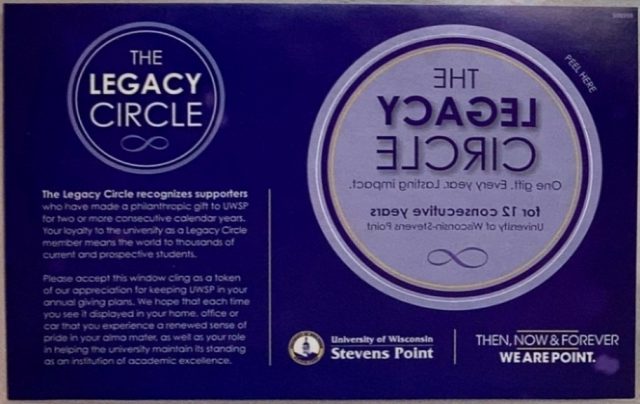
    • Free-mium vs. non free-mium (something added to the letter, like a sticker, cling, etc)
    • Direct mail followed by email vs. email followed by direct mail

    There is some advanced planning involved with the process. While you are making your plans internally, be sure to work with your direct mail vendor to make sure your ideas still meet USPS regulations.


    Personalization vs. Segmentation

    Segmenting your list doesn’t limit your ability to personalize your piece, but using variable fields to personalize your direct mail doesn’t necessarily mean you are segmenting. Using a static letter with a “Dear Mr. Smith” salutation is more about personalizing than it is about segmenting.

    The same could be said for other data points, such as an ask ladder or gift designation. Including an attractive ask amount or preferred fund list based on a donor’s giving history are additional ways you could personalize a letter to each donor with minimal preparation.

    Personally, I recommend making the giving experience as easy as possible. Including name, address, recommended gift amounts and funds eases the burden of the donor to make out a gift. If we can use variable fields on the letter, we can do the same on the reply card.

    (It’s also worth mentioning that your gift processing team will appreciate having the constituent ID and appeal code included on the reply card. It’s another simple way to keep everyone in the office happy, especially during times of high gift volumes.)


    In conclusion, implementing a segmentation strategy is another tool in the toolbox you can use to increase donors, dollars or both. Digital printing allows for a seamless production process for any number of segments or variable fields you wish to use.

    It is important to talk to your account representative beforehand to make sure files are formatted correctly, spreadsheets are labeled appropriately, and enough preparation time is provided to produce digital proofs…and your final piece.

    JHL is happy to work with you on your segmentation strategy, whether it’s re-thinking your current strategy, trying something new or starting from scratch. Reach out to us to get the conversation started.


  • Choosing The Right (Measurable) Outcomes for Direct-Mail Campaigns

    Choosing The Right (Measurable) Outcomes for Direct-Mail Campaigns

    There’s some new research from the B2B marketing-research firm Ascend2 about the value of direct mail.

    The firm surveyed 441 marketing and sales decision-makers and found that 84% of respondents believe direct mail helps them improve their company’s image, while even more said that direct mail drives leads for their business and generates brand awareness.

    In addition, marketers said direct mail helps them:

    • Drive traffic to a website — 53%
    • Convey detailed information about products/services — 39%
    • Drive more foot traffic to physical locations — 36%
    • Complement online marketing efforts — 32%
    • Improve overall marketing ROI — 32%

    That’s impressive support for direct mail’s ability to perform many of marketing’s core tasks: brand-building, driving leads, driving web traffic, and increasing foot traffic.

    These outcomes speak to the why of direct mail. So let me ask you: What outcomes are you expecting from your mailing – and are they as direct as these?


    The end in mind

    Outcomes are the logical result of purposeful direct mail. As the 7 Habits of Highly Effective People folks say, it’s important to begin with an end in mind – and the more specific, discrete, and measurable the better.

    Let’s take an appeal mailing as an example. Obviously, donations are the desired outcome, but how much and how many?

    You need a specific number, but getting one requires backing out an amount from your organization’s financial goals and the historical patterns of donation, repeat donations, and lifetime donor value.

    No matter how great your mailing is, it’s probably not going to bust out of those historical parameters. Accepting that, and knowing the desired financial outcome, you can set well-defined goals for your mailing, and structure your mailing to maximize your chances of reaching them.

    As an example, if your campaign goals are built around an average number of people donating $50 each, suggest a $75 donation in your mailing. If you do that, people will be unlikely to donate less than $50, and many will donate $75.

    To up the number of people donating, make it frictionless. Make sure people have multiple means of donating that can be tied back to the mailing – a QR code and a landing page and a toll-free number and a dedicated envelope.

    If you take this approach, you’ll have four discrete measurement points providing you a very good idea of the effectiveness of your mailing – and a mailing set up to get more people to donate more money.


    Now let’s talk outcomes

    With that out of the way, let’s drill down into some of Ascend2’s findings. The research found that the top three things that marketers are expecting direct mail to do are:

    • Improve their company image
    • Drive leads
    • Improve brand awareness

    The first thing you may notice about these desired outcomes is how soft they are, especially compared to something like a “donate now!” CTA in a fundraising appeal. However, there are good ways to measure these outcomes despite their softness.


    Brand awareness and company image

    Let’s combine brand awareness and company image, because they’re two dimensions of the same idea – people liking your company or brand.

    The most obvious way of measuring brand “lift” from a mailing is to do two brand-favorability studies, one before the mailing and one after.

    Realistically, few organizations have the resources to do this kind of back-to-back research, and the ones that have the resources aren’t going to do it for fear of burning out their respondent pool.

    Instead of back-to-back studies, more expedient ways of measuring brand lift include:

    • Post-mailing survey: Ask respondents who likely received your mailing whether they recalled it, and whether it impacted their opinion of the organization
    • Web traffic: Not just quantity but quality, as measured by pages visited, more time on site, more actions taken, and more conversions
    • Social: More time spent on high-quality interactions like video views
    • Reviews: More reviews and better ratings
    • Sales: The ultimate measurement

    Many of these measurements won’t register instantaneous change. It may take a year or longer for the impact of a mailing to be felt in increased sales, and things like star ratings and the sales pipeline take a while to populate.

    For that reason, it’s imperative that you keep higher-ups from rushing to judgment on the value of a mailing.

    Any calculation of the brand-lift outcome ultimately comes back to sales (or donations, if you’re a non-profit). How much is a customer worth short-term (per sale or donation) or long-term (over their lifespan)?

    Assuming you know that, you can move on to quantify and correlate the following multiple post-mailing measurables with sales:

    • Reviews
    • Social media
    • Web traffic


    Reviews

    What’s the ratio of five-star reviews to sales? If every five-star review is “worth” 10 sales, and sales are worth x dollars, and sales changed by y amount post-mailing, you have a number.

    It’s rough, and someone is sure to question its validity, but does anyone have a better measurement?


    Social media

    You can take a similar approach with social-media metrics. How much is a “like” worth? It’s some small percentage of an average sale that varies by industry, product line, distribution method, social activity, and much more.

    Often the best you can do is make an educated “guesstimate” of that number, but if your methodology is logical and you apply it consistently before and after a mailing, the numbers you derive are going to be internally consistent and ultimately useful.


    Web traffic

    Web traffic is another metric that’s easy to measure but hard to quantify in the context of brand lift generated by direct mail.

    It stands to reason that the more someone bops around your website the more likely they are to be a customer, so if your website isn’t set up to move people through a funnel, page views, repeat visits and time spent on site become your de facto funnel stages.

    For all these measurements, movement is the key. If five-star reviews and time spent on site go up by roughly the same amount after a mailing, what does that tell us?

    At worst, it suggests there’s a correlation between the mailing and some key brand-lift measurements.

    We all know that correlation doesn’t equal causation – that is, just because two sets of numbers track it doesn’t mean one caused the other. That’s a worthwhile caveat in medical research but less valuable in marketing.

    If you track two sets of marketing numbers over time and they move the same ways over the period, there’s more than enough to declare a positive outcome.

    Or, as Franklin Pangborn said in the comedy classic Easy Living, “Wherever there’s smoke  … there’s somebody smoking.”


    Leads

    Leads should be one of the prime outcomes of any mailing, but you’d be surprised at the number of mailings that aren’t adequately set up to measure leads.

    A mailing should be set up in conjunction with the sales team. They need to know the mailing’s coming, first and foremost, but they should also have the ability to leave off certain prospects as well as add others to the list.

    Then once the mailing’s out and responses (whatever they look like) are coming in, the sales team needs to have access to them to make follow-up contact, answer questions, and move prospects into and through the sales funnel.

    From a marketing standpoint, your sales team should also be validating some of the aspects of the mail piece – the offer, the call to action, what it said about the brand, and so forth.

    Just about any mailing with a response component is going to get you leads and customers of a sort, but these days that’s not enough. You have to have the infrastructure set up to efficiently manage these leads/customers, characterize, and maximize their potential.

    This should mean building data-capture points in your mailing that will feed into your customer relationship-management system.

    Properly structured, a mailing will trigger events in your CRM and will also update important metrics like:

    • Leads within the sales funnel
    • Repeat purchases
    • The number of contacts necessary to move a prospect in the funnel
    • Conversion percentages

    All of this speaks to the necessity of setting up a mailing with calls to action, QR codes, form-fills, and/or landing pages to make it easy for you to extract and qualify leads and related data from your mailing.

    It’s nice to see direct mail getting some love, because the survey respondents were spot-on:  Direct mail can be an excellent brand-builder and lead-generator … if you set it up properly.

    For that reason, it’s good to have a friend in the business – someone like JHL Digital Direct. We have more than four decades’ experience in direct mail. We can help you prep your mailing for success.

    Contact us and let’s talk.

  • From Recycled to Read: How Personalization Can Power Your Annual Appeal

    From Recycled to Read: How Personalization Can Power Your Annual Appeal

    Opening your mailbox is a daily ritual. You check what’s inside, pull it out and start sorting through what to keep and what gets recycled. Getting past that first

    hurdle is important (taking note of available real estate on the outer envelope that may catch your eye) and let’s assume that by keeping it, you are going to open it as well. What you see and read will ultimately play an important role in the following action you take.

    When it comes to your annual campaign, you want your audience to open their letter and take action by making a charitable gift. Using static text across an entire campaign mailing may come across as something that’s cold and effortless.

    Fortunately, digital print makes segmenting and personalization easier than ever. It’s not just for letters, either; postcards, self-mailers, and other formats can be completely personalized to the recipient.

    Let’s discuss some best practices to segment and/or personalize your appeals.


    Generating a List and Hierarchy

    Personalizing your appeal starts with data. How you leverage it depends on a few key factors:

    • The amount and type of data you gather and maintain
    • Your confidence in the accuracy of the data you plan to use
    • What you wish to accomplish
    • Your ability to envision how to manipulate content

    Here are a couple of questions to ask yourself before pulling a mailing list:

    • What specific data points are necessary to segment and/or personalize the way I want?
    • Who’s included? Who’s excluded or suppressed? (e.g. Major donors? Non-donors? Current/recent donors? Certain demographics?)

    Additionally, you may need to create a hierarchy to determine which variable field takes priority over others. This could include:

    • Funds or specific programs
    • Volunteers or leadership roles (National vs. regional vs. local)
    • Donor types
    • Recognition and giving levels or societies

    For example, you may wish to target lapsed donors who are past scholarship recipients. How great would it be if you could list the scholarship(s) they received as a student? However, if you don’t have consistent data or have missing scholarship data for some alumni, creating a separate segment that incorporates specialized messaging for that group may be necessary.

    If you aren’t confident in the accuracy of your records, prioritizing data cleanup is a crucial first step. You can always revisit your plans once they’re ready.


    Prepping Your Letter and Mailing List

    For a basic level of personalization, placing a name in the salutation or targeting frequent gift designations are essential variable fields to include. For those who are looking to take your personalization to the next level, you can consider adding variable elements directly to your layout, such as:

    • Variable paragraphs
    • Tailored sentences or phrases
    • Specific pull quotes
    • Targeted Imagery
    • Personalized URLs (PURLs)
    • Dynamic QR Codes

    As you write your appeal letter, you will likely identify natural areas where variable fields should be placed. Using the data you have, you can sort columns to help group specific segments and add the personalized text you wish to use.

    There are a number of ways to accomplish this task within your spreadsheet. I tend to give certain segments and columns a code or abbreviation so I can easily sort as needed if changes need to be made later. Once sorted, I can type my preferred text at the top of an empty column, highlight the rows assigned to the code and use Ctrl+D to automatically fill each row with that text.

    Pro Tip: The Ctrl+D function is also a lifesaver when using the “CONCAT” or “CONCATENATE” commands in Excel to merge multiple columns into a single field (like combining a city, state, and zip code, or building a custom ask string). Just remember: your layout software only needs the final text, not the live formula. Simply copy the entire column and paste it into an empty column as “Values Only” to lock it in.


    Test… Test… and Test Again

    Once you have your variable fields incorporated into your document, testing is a crucial final step. The more personalized you get, the greater the chance for errors. Stepping too far past your comfort zone can slow your progress down to a crawl if your staff has to double-, triple-, or quadruple-check every single record.

    The best thing you can do is analyze your current use of variable fields and consider one or two ways you could expand your personalization. Always start with broad, generalized opportunities before drilling down into more specific data points.

    Pro Tip: Pay special attention to those fields that have varying punctuation at the end, or columns that alternate between empty and full fields. Microsoft Word doesn’t automatically adjust spacing for what is displayed in that variable field and can leave behind a double space—or no space at all.

    These variances can be incredibly tedious to fix manually within the raw data. Instead, point out these specific fields to your direct mail vendor. Their data processing team can easily write rules to handle those spacing adjustments as they merge the data into the letter layout.


    Why the Effort Pays Off

    Putting in the extra time and effort to personalize your letter can be the definitive factor in whether it gets read or ignored. Consider these powerful direct mail benchmarks:

    • 52% of consumers expect direct mail to be personalized.
    • Personalizing direct mail with the recipient’s name can increase response rates by 135%.
    • The average American receives 16.8 mail pieces per week, which carry an average lifespan of 17 days. In that same time span, we receive more than 600 emails with a lifespan of only 17 seconds.
    • Direct mail yields an average response rate of 4.4%, compared to just 0.12% for email.

    And if you think print is only for older audiences, think again. While the majority of charitable dollars currently come from Boomers and Gen X, the younger generations are highly receptive to the mailbox:

    • 75% of Millennials say direct mail makes them feel special or valued.
    • 72% of Gen Zers say they would be disappointed to no longer receive physical mail.

    Ultimately, personalizing your annual campaign appeals creates a vastly stronger connection. It shows your donors that you care enough to acknowledge their specific affinities, history, and connection to your organization.


    Reach Out

    If you would like more information or guidance on incorporating variable fields to better personalize your next annual campaign piece, we are happy to help. Contact us today to set up a virtual meeting to review your data and walk through the steps to make your next campaign a success.

  • Microtargeting vs. Personalization

    Microtargeting vs. Personalization

    Back in January 2021, JHL posted an article on our blog titled “5 Direct-Mail Success Strategies for 2021.” It was a great read to help get a jump on how to utilize trends in your upcoming direct mail plans, but there was one thing I didn’t understand: “microtargeting.”

    I’ve heard the term used before, but I can’t say that I knew what it meant. So I Googled it. According to MNI.com:

    Microtargeting is a marketing strategy that uses consumer data and demographics to create audience subsets/segments. It’s possible to predict the buying behavior of these like-minded individuals, and to influence that behavior through hyper-targeted advertising.

    That’s some amazing stuff, but how are businesses collecting this data?

    • Have you ever shopped on Amazon? (Who hasn’t?) They know everything you buy and can help their vendors with their advertising strategies.
    • Do you have a Target Red Card? That’s another collection point whether it’s online or in person. (Don’t forget that five percent savings on purchases.)
    • Do you receive coupons from the grocery store with things that you buy regularly? If you use a savings card provided by the store, they link the purchased items your account. (My family makes cinnamon rolls every Sunday for breakfast. Funny how I get coupons for that exact brand every month.)

    It’s not just about coupons and advertising. Microtargeting allows stores to look at your purchasing history to help predict other things you may need to purchase in order to maintain your loyalty and business. Let’s say you bought a tent and some sleeping bags. The system might determine that you are a camper. It’s not going to give you a coupon for another tent (why do you need two?), but there may be some other items you would consider, for example: a small grill, flashlights or an air mattress.


    Can Microtargeting Work in Advancement

    Microtargeting might work well in commerce where shelves are stocked with thousands of product options and brand names made available to fit the needs of any person’s needs or appetite at any time, but could it work in your fundraising efforts?

    When one goes grocery shopping, you can spend $100 and have 50 different items in your cart. Each item is generally something that you need.

    Alternately, a donor could make a $100 gift to a university (or any non-profit), but they aren’t breaking it down so that 50 different funds get two dollars each. It’s highly probable they are giving to one fund, maybe two. By trying to give a little to everything, the impact of the gift is wasted, the true passion of the donor is lost…and your gift processing team might get a bit flustered.

    Depending on its size, many university foundations have hundreds, if not thousands, of different available funds. Advancement offices provide a “shopping list” to the donors of funds where the need is the greatest and create a compelling message to direct gifts to support that effort. The buyer (aka: donor) either goes with that list or something else they wish to support.

    Going back to the original question of whether microtargetting could work in advancement, the answer is “maybe.” When it comes to fundraising, we are asking individuals to support what you need – not what they need. It’s not a transaction of goods. It’s a charitable gift that is made by choice. That doesn’t mean that we give up on personalization.


    What Are Some Ways We Can Personalize?

    The ability to personalize depends on the data you collect and how savvy you are to use the data to your advantage. Starting off your letter with “Dear (fill in the blank)” is pretty common practice nowadays, but what else can be done?

    1. Do you use a reply card, tear off or remittance envelope? How much information could be pre-filled with the data you have to save your donor time filling out forms? If it saves them time, they are less likely to put it off to later…or never.
    2. Many schools provide 1-2 fund options along with the school’s general fund. Perhaps it’s the college they graduated from or a fund that supports their degree program. If you have a lapsed donor who hasn’t given 5 or more years, why not merge the last fund that individual supported as an option to see if giving to that fund would generate a gift again.
    3. Variable text is good, but what about variable imaging? Wouldn’t it be great to have a chemistry major see an image related to their degree, while a biology major sees another? The message might not need to change even if the visual impact does.
    4. Sometimes one sentence is adjusted or a whole paragraph is rewritten to make your letter more direct to each specific audience. These variable text options can be easily merged into each mailing segment, but note that the length of these changes need to be considered to ensure it doesn’t affect the page layout. Let’s look at an example:

    Leading up to their 125th anniversary celebration in 2019, the UW-Stevens Point Foundation mailed an appeal targeting six segments. Here is the content written to their non-donor segment:

    In honor of UW-Stevens Point’s 125th anniversary in 2019, we’ve compiled a list of “125 Points of Pride.” Each point recognizes a facet of the university that, in some way, is noteworthy, admirable, unique or beloved.

    Among our most treasured Points of Pride are the alumni and friends, like you, who support UWSP by giving to the Annual Fund. Gifts to this fund go toward several areas of greatest need, including student scholarships, faculty support, facility maintenance and more.

     Demonstrations of pride are, of course, a matter of personal preference. During this milestone year for UWSP, we hope you will consider making a gift to the Annual Fund as a sign of Pointer Pride.

    Our Points of Pride come in many forms. None would be as timely, though, as your gift to the Annual Fund before the university’s 125th year comes to a close. Thank you for keeping UWSP uppermost in your giving plans, as well as in your mind and heart.

    Please take note of the highlighted and bolded text above. This part of the content was the only part to change within the following five segments – all of which targeted donors. The variable text for each of those donors segments is below:

    Segment #2: Second Ask

    “You already demonstrated Pointer Pride when you renewed your support of UWSP this year. Please accept our thanks for your generosity and belief in this university. If you would like to make an additional gift to the Annual Fund in 2019, in honor of the university’s 125th anniversary, we’ve provided a personalized gift envelope for you.”

    Segment #3: 10+ Consecutive Year Donors

    “You’ve demonstrated that UWSP is a priority in your life by giving generously to the Annual Fund year after year. We are so grateful for your continued support, and hope you will honor the university again with a gift during this milestone year.”

    Segment #4: First time donor

    “We are grateful for your first gift to UWSP, given in 2018. A follow-up gift this year, in any amount, would go a long way toward helping the university celebrate its 125th anniversary and continue its mission well into the future—an act that should be a true source of Pointer Pride.”

    Segment #5: LYBUNT

    “You demonstrated tremendous Pointer Pride when you made a gift in support of UWSP last year. We are grateful for your generosity, and hope we can count on your support again this year as the university celebrates 125 years of academic excellence.”

    Segment #6: Lapsed Donors

    “You’ve demonstrated Pointer Pride by supporting UWSP in the past. We are grateful for your generosity, and hope we can count on your renewed support during this, the university’s quasquicentennial year.”

    UW-Stevens Point does an excellent job of adapting one paragraph around the rest of the appeal’s content to distinguish a donor’s relationship to the university.


    Is Anything Predictable?

    I think back to the solicitation pieces and phone calls I’ve received from my alma mater over the years where the first ask is substantially higher than my last gift. Are they rolling the dice hoping that I say “Yes” to that first ask, or do they have data that shows something I don’t know? (FYI: This would be a great time to get into A/B testing, but that is a whole posting on its own. More to come…)

    Data is used on our donors to determine their passions and likelihood to support our cause. What is gathered and recorded is based on what is important to know and the amount of time and resources you have to enter into a database. Oftentimes, we are researching the frequency of their gifts, what funds they tend to support, if they are upgrading their gifts and their capacity to support at increased levels. This usually plays a role when identifying or upgrading leadership annual giving and major gifts prospects and donors when it is more likely to involve personal contact.

    Much like the weather, nothing is guaranteed. There is no message that will move every person to give. Every school has donors who will give year after year, alumni who will never give and those in the middle who need many reminders and a little prodding. While having data is great, sometimes we can simply look at past messaging and presentation to see what has worked (or didn’t work) to help predict the best way to reach your alumni and donors and give them a reason to support your cause.


    In conclusion

    It comes down to the size of your shop and the resources you have available. A large number of segments calls for a high level of preparation and scrutiny to make sure each person has been categorized correctly.

    It’s also hard to ignore the importance of return on investment. Sometimes the hours needed to take on a large task such as microtargeting can be a drain on already tight resources without the guarantee of a return large enough to make up the difference of time spent in developing your plan.

    How data is used to personalize your messaging will always play a role in your solicitation and stewardship plans. JHL can work with you to find new ways to leverage it without breaking the bank. With the right amount of communication and planning, we have the necessary tools to help you drill down your data and get to a level that personalizes your campaigns however you wish.

  • 5 Direct-Mail Success Strategies For 2021

    5 Direct-Mail Success Strategies For 2021

    Direct mail is expected to generate $31.2 billion in revenue in 2021, according to Ad Age, which puts it at the top of the local-media marketing mix. Given that, it’s time to implement these five marketing strategies to help make your direct-mail marketing more successful:

    • Clean your mailing list
    • Segment your mailing list
    • Keep it personal
    • Use QR codes
    • Maximize the sensory aspect

    Here’s what you need to know and do to maximize the effectiveness of these proven approaches:


    Clean your mailing list

    There’s been a lot of upheaval in the last 12 months, and address changes have been just a part of that upheaval. That means a mailing list that was solid one short year ago may be a mess today.

    You may not know how to clean your mailing list, and that’s okay. We do. JHL Digital Direct has been cleaning and maintaining mailing lists for decades. We know the steps to take to clean your list, and the things to do to keep it clean.

    It’s a brand-new year with many changes, either in the offing or already here. It’s vital to start your marketing efforts with a clean mailing list.


    Segment your mailing list

    Here’s a subject we’ll come back to time and again: 2021 is the year to get more personal than ever with your customers.

    By “personal,” we don’t mean that embarrassing, TMI kind of personal. We mean that 2021 is the year to really shape your appeals to the important individual characteristics of the people you’re marketing to.

    At least for now we have access to a treasure trove of demographic data that can be appended to your mailing list and used to microtarget your appeals.

    Of course, that approach doesn’t really work unless you can also microtarget your printing and mailing efforts, so that each microtargeted segment has its own highly personalized message.

    JHL has continually invested in technology over the years that gives it the ability to deliver highly targeted messaging to defined segments of your mailing list.

    And that leads us to another topic: Microtargeting and variable printing also mean it’s easier than ever to test multiple messages with small audiences.

    If you’re trying to find the exact messaging and packaging that resonates with key audiences, direct mail gives you that flexibility. It’s like having the multiple-messaging capabilities of digital without a lot of the uncertainty surrounding delivery, open rates, click-through rates, and more.

    If it seems like the best of both worlds, that’s because it is.


    Keep it personal

    We told you we’d come back to this.

    Personalization has been a crucial aspect of marketing for at least the last decade. Well, it’s even more important in 2021.

    People are staying home more, and they’re not interacting with other people nearly as much. There’s less “groupthink” going on because there are fewer groups. That means messaging has to be more individualized than ever, and has to focus on where each customer is in their personal journey.

    No medium or no algorithm will ever get to that point where they’re delivering messages or content that are precisely what that end user wants at that particular time. However, direct mail gives you the ability to deliver something tangible into people’s hands that’s been individualized to a remarkable degree.

    JHL Digital Direct has extensive experience in creating personalized, individualized direct-mail pieces that have that necessary “wow” factor.

    It’s what you need to do in 2021 to get your message out.


    Don’t neglect QR codes

    If you’re like a lot of people, you probably thought the QR code would be extinct by now.

    It’s not – in fact, just the opposite is true: The humble QR code is experiencing something of a rebirth. And there’s a very good reason why.

    Consider an average direct-mail piece. What’s the call to action? In many cases, it’s no longer filling out and mailing a form but visiting a website.

    A QR code is an express lane to the web, the crucial bridge between print and electronic media.
    On top of that, a QR code can lead a customer to a personalized URL or a unique landing page, where they can be delivered a highly customized marketing message.

    Maybe QR codes aren’t the flashiest technology. (Full disclosure: They’re not.) However, QR codes may be just the thing your marketing project needs to deliver maximum impact.

    At JHL Digital Direct, we know the best ways of incorporating QR codes into your direct-mail campaign. If you’re looking for that bridge between print and digital, we know the way.


    Maximize the sensory aspect

    If you’re working from home, like a lot of people, you know what’s important. A warm cup of coffee. The smell of bread baking. Soft, comfy clothes.

    Especially these days, we’re looking for things and experiences that soothe our senses. Direct mail can deliver sensory delight in a way few other marketing tools can.

    Obviously direct mail can deliver eye candy. However, it can also put in people’s hands things that are soothing to the touch, or things that smell nice. It can even – though it’s rarely done anymore – be used to send samples of foodstuffs or music.

    Point is, direct mail simply has more ways to delight the senses than other media, at a time when sensory delight is more important than ever.

    If you’re looking to delight the senses of your customers, call us. We love creative challenges, and we have the equipment to cut practically any challenge down to size.

    Hopefully this has given you ideas on how to incorporate these success strategies into your 2021 marketing. If you have ideas that you’re looking to bring to life, call us. 2021 is the year for direct mail – and we’re the direct-mail specialists.

  • Small Team, Bigger Reach: Rethinking Direct Mail for Small and Mid-Sized Nonprofits

    Small Team, Bigger Reach: Rethinking Direct Mail for Small and Mid-Sized Nonprofits

    Nonprofit organizations come in many shapes and sizes. For every national organization—think of American Red Cross, United Way, Goodwill—there are a vast number of small and mid-sized organizations quietly support their local communities. Whether it’s a local animal shelter, a community food pantry, an afterschool program, or a university foundation advancing higher education, these teams form the heart of their cause.

    Every nonprofit organization has a mission. To support that mission, they need a reliable revenue stream to cover operations and salaries. More often than not, that comes down to donor support.

    How do small shops or departments with limited budgets and tight bandwidth build that lasting donor support? Websites are great, but you still need to drive traffic to them. Email campaigns are quick and efficient, but inboxes are already cluttered with hundreds of daily messages. Getting noticed within the digital jungle often fails to yield the return you need.

    Instead, smart small shops put direct mail to work. Here is why a physical mail appeal remains the ultimate secret weapon for small-shop fundraising.


    Build Real, Local Connection

    While large organizations have the budget to run massive digital campaigns, small local nonprofits thrive on authentic relationships. Direct mail puts your organization directly onto the kitchen table.

    A physical mail piece gives local donors something tangible to hold, read, and stick on the fridge. It feels intimate and builds a personal, physical connection to your cause that a quick scroll on a screen simply can’t replicate.

    You aren’t limited to an appeal asking for money, either. A mailed invitation to a social or fundraising event that brings people together can build networks and strengthen connections within your community and donors.


    Cut Through the Digital Noise

    Inboxes are overflowing, ad-blockers are everywhere, and digital fatigue is real. The tactile nature of physical mail offers a rare moment of undivided attention away from a screen.

    For a small shop, a well-crafted letter or postcard doesn’t just ask for help—it bypasses the digital clutter and lands directly in the hands of the people who care most about their immediate community.

    Studies have shown that a mail piece has a longer shelf-life than a digital piece AND that it is more likely to be opened and read. While an email can get pushed off a screen—and likely forgotten about—within an hour of landing in your inbox, a mail piece can stay on a kitchen table or counter and be rediscovered days, or weeks, later.


    Maximize Every Fundraising Dollar

    Small teams don’t have the time or staff to manage endless, complex marketing campaigns. Direct mail consistently yields one of the highest returns on investment for donor retention and acquisition.

    Partnering with a direct mail vendor allows you to create highly personalized pieces while freeing up your team to focus on mission-critical work. If you run a quick audit of the staff hours—and associated labor costs—spent assembling mailings in-house at First-Class rates, you’ll often find that a professional partner can execute the project for a similar total cost while handing you back dozens of hours.


    Not Sure What to do Next?  Let Us Help.

    In my July blog, I shared ideas on how you can utilize data to personalize your mail campaign and drive better results. These are practices that any nonprofit organization can put to work. For a smaller shop, this might mean keeping things simple—focusing on your current resources and data—and finding simple ways to refine your approach as you learn more about your donors.

    With more than 40 years of experience, JHL has worked with organizations of every type and size. Our expertise can help you find cost-effective ways to reach those who support your cause without overwhelming your day-to-day operations.

  • AI suggested I write about programmatic direct mail. So I did.

    AI suggested I write about programmatic direct mail. So I did.

    If you’ve experimented with AI, you know the frustration that comes from an AI tool not understanding the task, or performing a task in such a way that your work time is no longer spent creating something but fixing the tool’s misguided creative efforts.

    In fact, I’m doing that right now. What a tool!

    My current batch of AI-powered busywork started when I asked AI to look over the JHL blog and suggest a topic that hasn’t been covered.

    It’s a legitimate request, and frankly, something that AI generally does well.

    Claude didn’t disappoint. It came up with a robust list of virgin topics which it then prioritized based on queries and web visits, and at the top was: programmatic direct mail.

    Sure. Everybody knows that’s a hot topic … except most folks who run small marketing operations down in the trenches.

    Given that programmatic direct mail is water-cooler stuff for AI tools but Greek for the rest of us, I’m going to largely ignore the piffle that AI wrote about the topic and give you an intro to programmatic email, from one human to another.


    What is ‘programmatic’?

    If you follow marketing you know that “programmatic” has been a buzzword for a while.

    It’s usually used in the context of advertising, and refers to the automated buying and selling of mostly digital ad campaigns. Ads on sites like YouTube, Walmart.com and Amazon are often bought programmatically.

    It’s fair to assume that most of you reading this aren’t doing a lot of programmatic ad buying.

    Programmatic direct mail is another cat entirely. It’s a mail piece sent in response to a defined action or inaction.

    Someone donates? They get mailed a programmatic thank-you note several days later.

    An abandoned cart? The abandoner gets a programmatic reminder if the cart remains unbought 72 hours after it was filled.

    Other programmatic-mail triggers could include:

    • A website visit
    • A big change in purchase frequency or pattern
    • A life event, like a home purchase
    • An anniversary or renewal
    • A signal from your CRM

    The CRM’s the key. A functioning CRM can track many of the major events that would trigger a programmatic mail piece, including donations and purchases, purchasing-behavior changes, anniversaries, and renewals.

    Other behaviors meriting direct-mail responses, like website visits, are trickier. It’s possible you have the trackers in place, but it’s more likely that you’ll have to work with someone who specializes in IP-to-household mapping that connects online identifiers to real-world addresses.

    With that in place the process pretty much runs itself. The trigger prompts the printing and mailing of a personalized piece, with a one-to-three-day turnaround from trigger to mailing.


    The Speed’s The Thing

    Programmatic mail’s a big deal because it does what email does really well – provide timely followups based on programmed triggers – and applies it to the tangible word.

    The results, measured by response rate, can be two to three times higher than traditional mass mailings, simply because the mailing hits the household at the proper time.

    We’ve cited these stats in previous blogs, but a financial-services company’s programmatic retargeting program had a 10.9% response rate, and an e-commerce retailer’s retargeted postcards  produced a 370% return on ad spend … mostly because the mail piece arrived at the right time.


    Mind Your Triggers

    Now if this sounds good, bear in mind that not all triggers are created equal. This is the low-hanging fruit:

    1. Website retargeting. Someone visits your site, browses and leaves. An identity-resolution service matches their device to a physical address, and a personalized piece goes out within two to three days. It’s the programmatic equivalent of a retargeting ad — except it lands in the physical world, where there’s far less competition and no ad blocker.
    2. Cart abandonment. Very, very low-hanging fruit – like dragging-on-the-ground low-hanging fruit. A person wanted to buy or donate but didn’t, because of forgetfulness, a crying baby or second thoughts. A timely personalized postcard can get them moving again.
    3. Lapsed-customer recovery. Bain & Company found that a 5% increase in customer retention can lift profits 25% to 95%. A triggered piece to lapsed customers sent 30-90 days out from the first sign of ghosting can stop the bleeding.
    4. Welcome to the neighborhood. A new person at a new address is in active buying mode for home services, coffee shops, healthcare providers, gyms, banks, hair stylists, dance studios, and more. They don’t know the local charities. They don’t have established loyalties. A well-timed welcome piece positions you as the obvious local choice.
    5. Lead nurturing. For B2B sales and consumer shopping products, a direct-mail piece at a key point in the sales cycle — after a prospect downloads a white paper or attends a webinar — can be the tangible, unignorable nudge that moves a relationship forward.


    Programmatic Direct Mail Is For You, Too

    If your first reaction to IP-to-household matching was, “Well, that’s going to be expensive and complicated,” fair enough. A few years ago it was.

    The platforms have become more accessible and the prices have dropped. And it’s cost-effective on its face, because you’re printing only as many pieces as you have triggers for.

    Programmatic direct mail is at its cost-saving best when it’s using data from your own CRM – mailings to lapsed customers, anniversary pieces to high-value accounts or reorder reminders to customers with predictable purchase cycles.

    If your CRM has the data you just need to create a trigger that can remind you or be sent to your fulfillment partner to print and send a batch of pieces.


    The Catch(es)

    This all sounds great, but it’s not perfect.

    Like so many other things in CRM-marketing-land, if your data is garbage this won’t work well. (And if your data is garbage, don’t be ashamed. Many companies larger than yours have garbage data, too. Some folks find that fact weirdly reassuring.)

    You also need a good piece that’s capable of driving the desired behavior. A bad piece that arrives on time is still a bad piece.

    Finally, make sure any third-party data meets privacy standards. Like mother says, first-party data is best.


    Where to Start

    Start by picking an apple off the ground. Take a group of lapsed customers/donors and build a simple test: Group A gets a triggered mailing; Group B gets nothing.

    Run the test for 90 days, measure it, account for the fact that someone getting something is always more liable to take action than someone getting nothing, and ask whether the numbers justify expanding the programmatic campaign. AI says it will – and you might have to agree with it for once.

    Successful programmatic direct mail starts with a production partner that can quickly turn your data files into highly personalized mail pieces.  JHL provides the data processing, personalization, and production expertise needed to make it work. Contact us to discuss your goals.

  • The Silent Budget Killer: Avoiding the Unwanted “Return” on Investment

    The Silent Budget Killer: Avoiding the Unwanted “Return” on Investment

    As non-profit leaders, you are expected to stretch every dollar, negotiating printing costs and obsessing over the “ask.” But in 2026, one of the biggest drains on a nonprofit’s budget isn’t the printing—it’s the $1.93 “Weighted Fee” hiding in your mail carrier’s pouch when a mail piece is returned if you use an ancillary address service.

    One of my customers asked why they are receiving so much returned mail and then getting charged for it. It was the same question I had ten years ago when I was working in advancement. I thought my blog for April might be a good opportunity to look at each of the “Ancillary Services” provided by USPS for standard rate mail.

    As you read on, you will see that the devil is in the details. Depending on what you hope to get, there is something else you will have to give up. Should you decide to consider any of these options—or if you already use them—you can review your mail campaign plans to decide if, and when, you should use them.


    Address Service Requested (The “Forwarder”)

    Best for: Donor acquisition where contact is vital.

    • What happens: USPS forwards the mail to the new address within the first 12 months after a forwarding report is submitted.
    • How you get info: If the piece is undeliverable or the forwarding order has expired (after one year), the physical mail piece is returned to you.
    • Cost: See “Cons” bullet below.
    • Pros: Maximized Reach; ensures your message actually reaches the recipient.
    • Cons: Expensive return fees. If the forwarding order is expired or the address is “Undeliverable as Addressed” (UAA), the piece is returned to you. For Nonprofit Standard Mail, you are charged a “weighted fee” for these returns.

    Note: The Weighted Fee exists because USPS essentially charges you to “upgrade” your 18-cent nonprofit letter to a First-Class return trip, plus a penalty for handling. It is calculated as the Single-Piece First-Class price x 2.472.

    • Returned Postcard: $0.61 x 2.472 = $1.51
    • Returned Letter: $0.78 x 2.472 = $1.93


    Return Service Requested (The “Boomerang”)

    Best for: High-value mailers or sensitive documents (e.g., tax receipts).

    • What happens: The mailing is not delivered or forwarded; it is sent back to you immediately.
    • How you get info: The new address or reason for failure is printed directly on the returned mail piece.
    • Cost: You pay the same weighted fee per return as detailed above.
    • Pros: Cleaner database; physical mail pieces come back quickly with info printed on them.
    • Cons: Zero Forwarding. The donor never sees the mail piece if they have moved.

    Pro Tip: If you are sending something that may include a premium item, such as stickers, luggage tags or magnets, that could be repurposed instead of discarded, you may wish to consider this option. If sending a tax receipt or other essential information to alumni or donors, first-class postage should be considered.


    Change Service Requested (The “Data Only” Option)

    Best for: Large-scale newsletters or “low-stakes” updates where budget is the priority.

    • What happens: The mail piece is destroyed/recycled by the USPS. It is never delivered or returned.
    • How you get info: You receive a separate physical notice with the new address.
    • Cost: A flat $0.75 fee per physical notice.
    • Pros: Cheapest strategy; avoids expensive “weighted fees.”
    • Cons: Waste (you paid to print and mail a piece that was recycled); no physical return.

    Pro Tip: This is a good option with bulky items that would have additional costs attributed to them as a first-class piece. Magazines (flats) face an even steeper penalty; a returned flat can cost $4.02 per piece. ($1.63 x 2.472 = $4.02).


    The Reality of Modern Mail

    The USPS does provide something called “Full-Service ACS” that an organization can qualify for. While it offers free data, the “cost” is often measured in staff hours. In an industry with high turnover, the time spent training a new team member to navigate the Business Customer Gateway can far outweigh the few hundred dollars saved in manual fees.

    At the end of the day, the “cheapest” option on paper isn’t always the best in practice. Whether you choose to prioritize reach, data, or savings, knowing these options ensure your budget isn’t unexpectedly impacted after your piece is mailed out.

    JHL provides an NCOA report to its customers on every mail project. Updating your CRM with the details in these reports helps to minimize these fees, making the “budget killer” feel more like a “scratch.”

    Confused by these codes? Let JHL help you choose the right strategy. Contact our team today!

  • The Problem Is Not With Your Mailing: Where To Look When Your Direct-Mail Campaign Falls Flat

    The Problem Is Not With Your Mailing: Where To Look When Your Direct-Mail Campaign Falls Flat

    When it comes to the harsh realities of direct mail, it doesn’t get harsher than this: Not every mailing is going to succeed. Some are going to be meh. And some are going to fall flat on their faces.

    When that happens, we blame the mailing because it’s easy and obvious. The mailing wasn’t good enough. So eventually we try again, either with another mailing or some other marketing tactic. And maybe that works or maybe that fails.

    Whatever it does, it doesn’t answer the fundamental question: Why did the mailing fail?

    As much as we want to answer to be simple and superficial, sometimes it’s not.


    A Refresher On Attribution Research

    There’s actually a branch of marketing research devoted to analyzing why your mailing was a dud.

    Well, maybe not your mailing specifically. And maybe not why it failed. But certainly why and when people act or don’t act on marketing messages.

    This field of marketing study is attribution research, and like a lot of marketing research it starts off neat and clear-cut and devolves into a chaotic mess.

    Attribution research tries to determine what marketing message actually caused someone to take action. It starts by assuming the last message someone saw caused them to buy or click, then looks at the first message someone saw, and finally settles on a weighted-average approach that looks for changes – a spike in web traffic or social-media engagement, for instance – as a pretext for impact on a purchasing decision.

    It becomes gobbledygook passed off as science, which brings us back to our mailing.

    Attribution theory might say your mailing didn’t fail but it wasn’t the trigger that caused people to buy, though it might contribute to a purchase or donation down the road.

    This is unhelpful because it assumes everything works and everything contributes. And as marketers we know that just isn’t so.

    Instead of giving this mailing a participation medal, why not look on it as a canary in a coal mine alerting you to more fundamental problems with your marketing?

    If you look at the failed mailing as a symptom and not another brick in the wall, you might be surprised at what you find. For instance:


    Your website is flawed.

    A mailing might point up lots of website issues. It could show navigation errors – a landing page that doesn’t easily take you back to the main site, a home page with too many calls to action or too many nav bars, or the dreaded 404 error.

    These are obvious issues. Less obvious issues include:

    • Form-fills that don’t go anywhere.
    • QR codes that go to the wrong page.
    • Website copy that doesn’t parallel the mailing, either in tone or content.
    • Outdated information on the website, whether it’s showcasing old events or delivering past brand messages.

    People don’t do well with dissonance. If what the website says doesn’t align with what the mailing says or the process doesn’t work the way they think it should, people are going to be turned off. And they’ll likely place blame on the mailing, even though the mailing talks about the brand or organization as it is while the website talks about the organization as it was.

    But it’s the website, the repository of your brand. And the mailing is just a mailing. Who are you going to believe?


    Your social media is going in the wrong direction.

    This is a related problem.

    Marketing is an integrative function. That’s not a math term; it means that marketing integrates various marketing tactics to execute strategies and eventually achieve goals.

    For marketing to work, the website has to line up with what sales is saying, which is amplified and enhanced through social media, which is expounded upon through print materials and echoed through statements from executives and other influential people.

    Again, people don’t like dissonance. When your social media is going in a different direction from your website and/or mailing, when it’s talking about National Toast ‘n’ Jelly Day when it should be talking about messages in your mailing, you’re going to lose people. And you can’t afford to lose people.

    If your marketing team consists of you, yourself and your shadow this is less of a possibility – but not impossible. An actual team of discrete people can get scattered unless someone is watching over everything.

    It sounds incredibly obvious, but what makes integrated marketing integrated is integration – everything working together. Organizations that don’t work together need to focus on alignment before blaming the mailing.


    Your mission-vision-values isn’t resonating (or isn’t being communicated).

    Ah, the MVV. It should be the touchstone for purpose-driven organizations. But too often folks lose track of the why and just do things to get them done.

    It’s easy to do. So much happens in a day, it’s easy to forget about what’s really important.

    Before you do your next mailing, look at your organization’s mission, vision and values. Ask whether they’re still relevant. Ask whether your organizations still lives them out. Ask if they’re implicit in all your external communication.

    Be honest with yourself, and if the truth is you’ve gotten away from your MVV or your MVV has gotten away from you, examine it in the context of your organization. Shift away from your MVV only as a last resort, but if it’s not what you’re about now and in the future, plan to move on.


    Your brand needs refreshing.

    On the other hand, it might not be your mission, vision and values. It might be your brand.

    Brand and MVV are two different things. They can be closely related – they might even share some of the same words – but they’re not the same thing.

    Your MVV is codified. Your brand is how your organization lives in people’s minds.

    Scouting is a great example of how this can operate – and things can separate.

    Scouting America changed its name from the Boy Scouts of America in 2024-25 as part of an effort to be more inclusive. The brand changed but core elements of the organization’s mission, vision and values remained, and people’s image of scouts didn’t change much.

    In other words, Scouting found itself with:

    • A new brand
    • Organizational mission, vision and values in transition
    • Long-held brand impressions still being held by key audiences

    Has the rebrand gone smoothly? Not particularly. And with that particular set of circumstances, it’s no wonder.

    Any mailing an organization does when these three key elements are in three different places is probably going to fail. Is it the mailing’s fault? Hardly.


    Your target market is going away.

    Time passes. The Beatles are in their 80s now. The people who supported your organization even five years ago may not be your current supporters.

    Your target market is evolving. It’s getting married, having kids, seeing kids leave home, saving for weddings, taking care of grandkids, transitioning to assisted living, transitioning out of assisted living. At some point, saying the same thing the same way to these same people is not going to work.

    You need to look at your mailing list before you mail, keeping your eyes open for demographic shifts. Sometimes the shifts will be in your favor, as they often are with new empty-nesters. Sometimes they won’t be, as in the case of Baby Boomers shuffling off this mortal coil.

    A mailing that’s meant to appeal to a well-defined group may fail with other groups, so making sure your target group still exists should be step one.

    You know what can help with this process? Direct-mail experts who can examine your lists and tell you what they show.  JHL has experts like that who can help you understand who you’re mailing to before you mail.

    Let’s talk about your next mailing, and how we can optimize it for success.

    It’s what we do.

  • Greatest Bits, Vol IV: Advancement Gold in our Marketing Blogs

    Greatest Bits, Vol IV: Advancement Gold in our Marketing Blogs

    Before joining JHL in 2020, I spent just over 15 years in alumni affairs and annual giving, working for both a national music fraternity and a comprehensive public university. In both cases, resources were often tight and we had to figure out how to maximize results with limited means.

    I would often sit in on webinars and listen to schools with annual giving staff larger than our entire advancement team to learn how they were engaging their alumni and supporters. There were unbelievable initiatives being taken on…but most were beyond our scope to enact.

    My goal was usually to find one or two things that we could mold into our programs to enhance or refresh them. I referred to them as “nuggets.” If I could sit for an hour and find a small piece of “advancement gold,” my time was worth it.

    Approaching a new year, I read through all the JHL Blog posts from the last calendar year that were written by my colleagues. Their contributions are primarily aimed at printers and marketers, but they can offer valuable perspectives that nonprofits can leverage.

    To save you the time of reading through all of them (if you haven’t already), I’ve compiled some nuggets – or “greatest bits” – that I found to be worth their weight.


    Get Ready: The Hyperpersonalized Era of Direct-Mail Marketing Is Here (January 2025)

    Smart marketers use unified customer data platforms for physical mail and digital campaigns because they provide consistent personalization across channels and offline/online environments.

    That’s great, but you know what’s ever better? It’s efficient. In an ideal world you create copy once and repurpose it for the web, for digital marketing and print marketing. One set of copy ensures consistent messaging – and it saves time and money.

    Multichannel marketing is smart … but then there’s smart multichannel marketing. Creating copy once is the key.

    Advancement Gold Translation:

    For small advancement teams, this is a lifeline. If you are planning a print appeal, a follow-up email, and social media post for the same campaign, stop writing three unique versions. Write one master copy that contains the core message, mission, and ask. Then, simply modify the intro/outro for each channel. This guarantees message consistency and, more importantly, frees up the hours you need for high-value work like personal thank-you calls.


    Complete Data (March 2025)

    You need to train your people thoroughly – not just on the “hows” but also the “whys.”

    If all you do is show them how to enter data but don’t tell them why complete data is so important, it’s a lead-pipe cinch you won’t get complete data.

    If, on the other hand, you show them all the great things you can do with the data and how it directly impacts revenue and how much they get paid, they’ll be your biggest boosters.

    Because marketing is a companywide thing, train everyone on complete data collection, because you never know when someone might be in a position to add to your organizational knowledge.

    Advancement Gold Translation:

    This is an absolute must-do for any non-profit struggling with dirty data. Gift processors, event coordinators, and student workers aren’t always aware how their tedious work affects the outcome. Show them how a successful donor segmentation report led to a major gift announcement. Perhaps you demonstrate how consistent data recording helps to easily segment and personalize solicitations. When they understand the “why,” they become powerful advocates for clean data.


    Winning the Attention Battle: How Direct Mail Cuts Through the Digital Noise … Now and in the Future (May 2025)

    Research from the Royal Mail’s “The Private Life of Mail” study found that physical mail creates 70% higher brand recall compared to digital advertising, and physical materials leave a deeper footprint in the brain.

    In direct mail, that can mean:

    • Substrate variance: Papers with specific roughness, smoothness, or temperature-reactive properties
    • Textural contrasts: Multiple tactile experiences within a single piece
    • Weight psychology: Leveraging the correlation between physical weight and perceived importance/value

    Want to see these techniques in action? Check out trading cards. They’ve been trying to dazzle people with cutting-edge printing for decades.

    Advancement Gold Translation:

    Think about your target audience or the significance of an event and put your resources into the feel of the mailing. Is this a major donor, or is it a young alumnus being asked for their first gift? Maybe you are sending an RSVP for a prominent award banquet.

    To a major donor, a thick, heavy envelope signals importance before it is even opened. A non-traditional, recycled stock might resonate better with a young graduate. These tactile differences break through the clutter precisely because they make the mailing feel valuable and different from the usual deluge of glossy brochures.


    The Do’s and Don’ts of Using AI in Direct Mail (August 2025)

    You may ask ChatGPT or Gemini to write you a fundraising solicitation, and you may love what it gives you. There are complete sentences! And paragraphs! And room for personalization and a call-to-action at the bottom, and we’ve never had that before!

    Hey, great. But you need to understand: What AI gave you is just a start. The real work starts when you really look at that output and start breaking it apart.

    Look at the sentence construction. Every general-purpose AI tool loves tripartite construction. What’s that? This: AI loves sentences that mention three things, all separated by commas, and referencing related things. See that structure, with three items separated by commas? That’s tripartite construction. It’s a dead giveaway that something’s AI-generated, and it’s tiring.

     Also, look at how long sentences and paragraphs are. Verbosity is the scourge of direct mail. In a good direct-mail piece, every word earns its keep.

    Advancement Gold Translation:

    AI is a powerful first-draft tool for a time-strapped staff, but it is not a replacement for heart. Advancement is all about personal connection and authentic voice. Use AI to draft the boring parts (like event logistics or background history), but when it comes to the appeal, your editing time should be spent making the appeal feel warm, human, and directly related to the donor’s values, not just checking grammar.


    When Direct Mail Outperforms Digital: 5 Scenarios Where It … Uh, Delivers The Mail (November 2025)

    According to the Data & Marketing Association, the direct-mail response rate for 18-21-year-olds is 12.4% compared to just 0.12% for digital ads. And 91% of 18-24-year-olds bought something because they’d received marketing mail in the previous six months.

     In case you haven’t noticed, young folks are drowning in digital noise but starved for tangible experiences. According to multiple 2023-2024 studies, 82% of 18-24-year-olds like marketing mail, with 59% finding it personalized to them. More striking: Three-quarters of Gen Zers think real-life experiences are more important than digital ones.

     And consider this: Those studies took place before the AI tsunami hit. Right now the desire for things that are real and tangible is even greater among Gen Zers – and the more AI slop they’re exposed to, the stronger those feelings will get.

    This is important, so let’s emphasize it. When you print something you make it real.

    Advancement Gold Translation:

    If your young alumni engagement is failing, stop assuming digital is the default solution. The data is clear: print is the counter-cultural move for Gen Z. Instead of spending money on constantly changing digital ads that are ignored, invest in a simple, highly personalized, and tangible postcard or small gift (a sticker, magnet, or window cling) sent via mail. Sometimes being different is the key to cutting through the noise.


    The Common Thread

    Through all these takeaways—from maximizing copy efficiency to using physical mail for Gen Z—is strategy over size. We may not have the budget for massive data platforms, but we absolutely have the resources to implement these high-impact “nuggets.” For small advancement offices and nonprofits, it isn’t about being the biggest or flashiest, it’s about being the smartest.

    By focusing on clean data, efficiency, and making meaningful, tangible connections, the small team can deliver results that are truly worth their weight in gold.

  • When Direct Mail Outperforms Digital: 5 Scenarios Where It … Uh, Delivers The Mail

    When Direct Mail Outperforms Digital: 5 Scenarios Where It … Uh, Delivers The Mail

    Know those folks who they think they can speak Portuguese because they listened to “The Girl From Ipanema” or AI because they asked Google Gemini where to find snickerdoodle ice cream in Perth Amboy?

    Some marketers are like that about direct mail because they once got a key in the mail that was supposed to unlock a new car but instead unlocked an interminable visit to a used-car dealer.

    A lot of marketing conceptions about direct mail are actually misconceptions. And none is bigger than this: digital marketing gets noticed more.

    Actually, the average person receives 121 emails per day while the average household receives just four pieces of direct mail daily – and opens 90% of it.

    Sometimes old-school wins. Here’s the top five scenarios when direct mail beats digital.


    When You’re Targeting High-Value Customers

    Digital appears cheap. That’s its blessing … but also its curse.

    When Lloyds Banking Group wanted to convert cold prospects in the small-and-medium-business market, it faced a challenge: How do you convince business owners to switch banks? For businesses of this size, it’s a move fraught with tremendous anxiety.

    Lloyds addressed this challenge by building a direct-mail campaign around a powerful truth: For 11 consecutive years, CFOs had voted Lloyds as the “Best Bank for Service.” The campaign used formats like interactive quiz mailers that asked business owners to evaluate their current bank against Lloyds.

    The result? Lloyds convinced 707 prospects to switch – a staggering 280% above its target of 250 switchers. The first mailing alone delivered 176 switchers, which was 352% above the mailing target and 70% of Lloyds’ annual goal.

    Why did it work? Because when you’re asking a business to switch something as fundamental as their banking relationship, a 47-cent email feels … well, cheap. And common. A thoughtfully designed mail piece that clearly cost $15 to produce signals that you’re serious – and that you value them.

    According to Focus Digital, financial-services direct mail is opened almost half the time and responded to at a rate of 3.95% – positioning financial services among the top-performing industries for direct-mail engagement.

    The lesson? The more valuable the customer, the more you should invest in reaching them. Digital is democracy; direct mail is diplomacy.


    When Your Audience Is Over 55 (Or Under 25)

    Here’s a fun fact: Millennials and Gen Z respond to direct mail at least as well as Boomers do.

    According to USPS, 62% of Millennials had visited a store in the past month based on mail they received – higher than Gen X (55%) or Boomers (52%). And more than half of Millennials are more likely to buy from a company that markets to them via direct mail and digital.

    For older audiences? Baby Boomers have cited direct mail as the single most important influencer on their purchase decisions, ranking it even higher than word-of-mouth recommendations.

    Why? Older audiences simply prefer mail. They’re more likely to have established routines around checking their mailbox, reading mail at the kitchen table with their morning coffee or afternoon tea, and responding to offers.

    But what about Gen Z?

    According to the Data & Marketing Association, the direct-mail response rate for 18-21-year-olds is 12.4% compared to just 0.12% for digital ads. And 91% of 18-24-year-olds bought something because they’d received marketing mail in the previous six months.

    In case you haven’t noticed, young folks are drowning in digital noise but starved for tangible experiences. According to multiple 2023-2024 studies, 82% of 18-24-year-olds like marketing mail, with 59% finding it personalized to them. More striking: Three-quarters of Gen Zers think real-life experiences are more important than digital ones.

    And consider this: Those studies took place before the AI tsunami hit. Right now the desire for things that are real and tangible is even greater among Gen Zers – and the more AI slop they’re exposed to, the stronger those feelings will get.

    This is important, so let’s emphasize it. When you print something you make it real. Gen Z buys and reads actual books – millions of them. Why? Because the printed word is indelible. It can’t be erased with a keystroke.

    As AI takes over real experiences increase in value. Direct mail is a real experience.


    When You’re Selling Something Complex

    Try explaining a variable annuity in a Facebook ad. Go ahead; I’ll wait.

    Some products simply don’t work in a 15-second TikTok video or a 280-character tweet.

    PostcardMania documented the case of a dermatologist who mailed 12,000 postcards explaining their services and special offers. Maybe those services could be described in a series of podcasts or TikToks or YouTube videos, but they were most efficiently described via direct mail.

    The dermatologist’s campaign generated $22,500 profit and a 239% ROI. Compare that to typical digital-ad performance, where the average ROI for paid search is 88% and social-media advertising is 81%.

    Here’s another. Real-estate investors using the REsimpli platform generated $26.7 million from direct-mail campaigns in 2024, with direct-mail leads generating six times more revenue per lead than digital leads.

    Why does complexity favor direct mail? Because direct mail isn’t deleted with a click. Direct mail hangs around a recipient’s home an average of 17 days. It sits on the counter. It gets picked up multiple times. It guides the reader through a journey.

    So when you hear that individuals spend 108% more time reading content in direct mail than digital marketing materials … that’s why.


    When You Need to Break Through In A Local Market

    When everyone zigs, the smart money zags.

    It’s understandable for new, smaller, local businesses to try to break through on social because it’s “free.” (It’s not, of course. Even organic social requires your time – and more time than you think.)

    The result is that particularly in local markets, businesses have oversaturated digital channels at the expense of direct mail. But did you know that direct mail is the reason why 39% of consumers try a business for the first time?

    And for those of you who think that digital advertising is still dirt-cheap, have you looked at your Facebook and Google ad spends lately?

    While the digital kings change higher admission prices for their walled gardens, the average price to mail a postcard only increased 1.57% – a 14-fold difference.

    The more this trend continues, the better direct mail looks.

    It’s fine to chase clicks. But don’t forget the importance of showing up in the mailbox … which leads to the final point.


    When You Integrate Your Campaigns

    The best results don’t come from choosing between direct mail and digital – they come from a combination of the two, chocolate and peanut butter.

    The data is overwhelming:

    • 89% of consumers prefer campaigns with a mixture of physical and digital elements.
    • 97% of marketers report that multichannel integration improves campaign performance.
    • When direct mail is included in a multichannel mix, marketers report an ROI lift of 12%, and a 27% boost in overall response rate with a direct-mail/email mix.
    • After receiving direct mail, 55% of consumers visit the sender’s website.

    SG360° case studies demonstrate this power across industries. For instance:

    • A financial-services company’s integrated retargeting program delivered a 10.9% response rate.
    • An e-commerce retailer’s retargeted postcards, run over the top of digital ads, produced a 3.7 return on ad spend – more during the holidays.
    • An automotive company’s personalized self-mailers to digitally qualified customers increased customer loyalty 5.2%.

    Whether you use direct mail to open the door or seal the deal, the digital/direct-mail combo platter crushes single-channel approaches.


    When You’re None Of These Things

    Even marketers who weren’t working with high-dollar customers or complex products or working in a local market or mixing their chocolate and their peanut butter still saw great performance from their direct-mail campaigns.

    In fact, two-thirds of all marketers achieved direct-mail response rates of more than 3%, while one-third saw response rates of 5% or better.

    Considering that typical digital-ad click-through rates hover around 0.1%-0.5%, that’s so much better.


    The Bottom Line: Direct Mail Is On Top

    Direct mail is thriving. It delivers an average 161% ROI to house lists – the highest of any paid marketing channel. Letter-sized-envelope campaigns produce a 112% ROI, trouncing text (102%) and email (93%).

    That sort of performance gets the bucks. In 2024, 82% of enterprise marketers increased their direct-mail budgets, up from 58% in 2023.

    If you’re not seeing these results and/or you’re not increasing the amount you spend on direct mail, what’s going on? Maybe you’re outside one of these optimal use cases – or maybe you need a little help crafting a memorable direct-mail campaign.

    That’s where we come in. We have decades of experience working with marketers to produce their direct-mail campaigns so they hit the right people with the right message the right way.

    Give us a call and let’s talk. And let’s get you blowing through your revenue goals.

  • The End-of-Year Mailer Panic (And How to Fix It)

    The End-of-Year Mailer Panic (And How to Fix It)

    In the fast-paced world of advancement, fall campaign season is a blur. You’re trying to secure last-minute major gifts, scheduling visits with donors during football games, and juggling Homecoming responsibilities. And let’s not forget the awards banquet for key supporters.

    Then, you stop and think… “Oh wait, did I start the end-of-year solicitation mail piece yet?”

    As the drive continues to do more with less – no matter the size of your shop – inevitably, something falls through the cracks. The question then becomes: How do you create a polished, effective mailer in hours, not weeks, and still get it to your donors on time?

    Here are a few ideas that will help you move quickly and meet those upcoming mail deadlines.


    Stay “Inside the Box”

    Now isn’t the time to create that piece you’ve been dreaming of doing. There isn’t time for die-cuts, specialized envelopes or “free-miums” to include. This is the time to know what you do well and stick with it.

    Your donors may expect to see a specific format for your end-of-year piece. If you have been mailing the “traditional letter in a #10 envelope” for years, do it again. If a self-mailer is your format of choice, use it this year. If your donors expect to receive a remittance envelope as opposed to a simple reply envelope, don’t change.

    What you put together should be quick and simple not just for you, but also for your donors. They still need to reply and mail it back. Anything that delays or changes their habits is one variable you can still control with your final format.


    Don’t Overdo It with Data

    One thing that most advancement offices do well is maintain their databases. Having clean data is the most important tool you have at your disposal to construct accurate messaging for your donors.

    Despite many fail-safes, you still need time to double check – or at least spot check – to make sure your data is listed correctly. Depending on how you segment your donors, you may need to check that everyone is in the right category (LYBUNT, SYBUNT, Second Ask, etc.). Of course, that takes time. If you don’t have enough of it, you open yourself up to a potential error.

    When you are up against a deadline, stick with the basics. A personalized salutation and your assigned appeal codes are a given. Consider personalizing the name and address on the reply piece to make it easier for your donors. Anything past that should be carefully considered. It can be really easy to open the personalization floodgates.

    When time is of the essence, keep segmentation generalized (donor vs. nondonor) and variable data minimal.


    Planning for Production

    The final piece of the puzzle is print and production. Here are a few things to consider:

    • Talk with your print/mail vendor before you get too far into the design to see what would guarantee the fastest turnaround.
    • Give advanced notice to your printer/mailer if you already started designing and the piece will be “coming in hot.” Any early communication will help them prepare for a quick turnaround.
    • Ensure you are using high-resolution pictures in your design and include bleeds and trimlines in your final files. You’ll be in a rush to try to get this out the door. Missing these simple, but important, details might not create a significant delay, but it will add stress to your day to quickly fix them.
    • Remember to proofread. Basic text can be easy to fix by your printer assuming basic fonts are used. If any text is designed and needs to be fixed, it will need to be addressed by your designer.
    • Send early drafts to your printer/mailer for review and catch potential red flags that could delay production.

    Before you think to yourself, “I’ll just plan to send an e-blast,” remember that direct mail remains the best way to get your message across to your constituents. For older generations, mail is still a preferred method of communication. For younger generations, mail has become an opportunity to get away from their screens.

    Before you stress out too much, remind yourself to take a deep breath and say “You got this.” Just know that when the going gets tough, JHL Advance is available to get you going.

  • The Do’s and Don’ts of Using AI in Direct Mail

    The Do’s and Don’ts of Using AI in Direct Mail

    AI is everywhere – and it’s everywhere faster than just about anyone outside of the AI industry has expected.

    You’ve probably experimented with AI. And if you’re like a lot of people, you’ve been vaguely disappointed in the results, or you’re looking to find some other applications for it.

    We’ve talked about AI and direct mail before, so you might be thinking of using AI more extensively in your direct-mail program.

    That’s great – but before you get too far down that path, here are some do’s and don’ts that from our experience can make or break your AI-powered direct-mail campaign.


    Do use AI in some form.

    AI tools can do so many things related to a direct-mail campaign that it’s silly not to use it in some fashion.

    • AI is extremely useful in marketing planning, so you can use it to help fit a direct-mail campaign into an overall marketing scheme.
    • It’s very good at isolating themes in marketing materials, so if you feed it your marketing emails and collateral material it can identify themes you should be emphasizing in your direct-mail pieces.
    • AI has also hoovered up all the writing on marketing best practices and the uses of direct mail in marketing, so if knowing what a large chunk of the marketing world does is important to you, AI can provide it without you having to dive into the deep end of the Google pool.
    • It’s a fair writer and designer – but if everyone in your organization is a less-than-fair writer or designer, that’s a step up! (With some caveats that we’ll get to shortly.)
    • It can add facts to your writing, and only some of them are made-up. For some direct-mail pieces that’s also an improvement, though we’re on the side of all facts in direct-mail pieces being … you know, factual.

    As you can see, there are better and worse applications of AI in direct mail, but even some of the worse applications may be better than where you are now.

    So pick and choose, but by all means, use AI.


    Don’t just hand it the keys.

    We touched on some of the reasons why, but to reiterate:

    • It tends to give middle-of-the-road outputs.
    • Its facts aren’t always facts.
    • It can be wordy.
    • As more people rely on it for writing, everyone’s stuff will increasingly look the same and standing out with purely AI-generated output will become a challenge.
    • It can struggle to understand the nuances of your brand and/or business.

    There are many reasons why your business or service is unique, and AI doesn’t do unique all that well. If you hand over things entirely to AI and don’t provide adequate oversight, you’ll have given away everything that makes you special.

    AI is a great tool, but just like you wouldn’t let a belt sander or a chainsaw run without your hand on it, you need to be in control of it, and not the other way around.


    Do try different tools.

    For all the same things they do, the main AI tools are very different.

    Given the low cost of entry, it behooves you to try different tools and choose favorites.

    Give them the same prompt for the same project and see how they perform. You’re going to be amazed at the variance in outputs.

    Your mileage may vary, but in general:

    • Claude is the best writer for most applications.
    • ChatGPT is the best all-purpose tool, strong in planning, research and content creation.
    • Gemini is an excellent research tool thanks to its connections to the Googleverse.
    • Copilot is an easy reach for people working in the Microsoft platform.
    • MetaAI and Grok are good social-media tools because of their roots, but use with care.

    Because these tools are so fast, there’s very little time lost by doing some comparison-shopping. And once you find a tool you like, go back to the others frequently and see if they’ve improved. Things change so quickly in AI that chances are they probably have.


    Don’t just cut-and-paste.

    Closely related to the point above, you may ask ChatGPT or Gemini to write you a fundraising solicitation, and you may love what it gives you. There are complete sentences! And paragraphs! And room for personalization and a call-to-action at the bottom, and we’ve never had that before!

    Hey, great. But you need to understand: What AI gave you is just a start. The real work starts when you really look at that output and start breaking it apart.

    Look at the sentence construction. Every general-purpose AI tool loves tripartite construction. What’s that? This: AI loves sentences that mention three things, all separated by commas, and referencing related things. See that structure, with three items separated by commas? That’s tripartite construction. It’s a dead giveaway that something’s AI-generated, and it’s tiring.

    Also, look at how long sentences and paragraphs are. Verbosity is the scourge of direct mail. In a good direct-mail piece, every word earns its keep.

    You can prompt AI from here to Sunday to cut down the words, and it either fails or gives you bullet points, not that sweet spot in-between. So get in there and start cutting.

    Words are at the heart of your direct-mail campaign. You only want the most powerful, compelling words. AI won’t necessarily give you that.


    Do use it to check spelling and grammar.

    It’s happened to just about everyone who’s ever sent a direct mail piece: the mailing’s out the door, it lands in people’s hands, and then someone points out, “Hey, you know you spelled your business name wrong at the bottom.”

    [Sound of hand slapping forehead]

    The truth is, even the best proofreaders miss things—especially when you’ve looked at the same copy a hundred times. That’s where AI can save the day.

    Instead of relying only on a quick spell-check, run your final draft through an AI tool. It won’t just catch spelling mistakes – it can also flag grammar slips, and even suggest clearer wording. Think of it as a second set of fresh eyes that never gets tired.


    Don’t accept facts verbatim.

    If you’re using AI to write a direct-mail piece about the benefits of direct mail and you ask it to include facts, beware: Those facts may be totally fictitious.

    AI will make up facts. It will make up links or include broken links.

    You need to vet every fact AI gives and test every link. If a citation seems a little dodgy, get rid of it.

    Your credibility is on the line. Don’t trust that to an AI tool that routinely makes up stuff.


    Do ask it about latest trends.

    If you feel that the world is changing at an ever-increasing pace, that’s because it is. And marketing is changing faster than anything.

    Especially if marketing is not your main job, you may feel like you’ve lost track of what the latest trends are, or what’s best practice.

    Ask AI. Yes, it makes up things, and yes, some of the “experts” it cites can be crackpots, but for the 10,000-foot view of what successful marketers are doing it’s pretty good.

    And remember: Just because Gemini says this or that is the latest craze doesn’t mean you should do it. You are in control, you know your business, and you need to filter what it says through your lens.


    Don’t expect it to know the nuances of your business, organization or brand.

    Even with extensive training on proprietary models AI struggles with brand voice and especially brand-voice differentiation.

    Your organization may be a garden-variety humane society, but it’s still special. As the caretaker of that brand, you need to overlay your brand knowledge on what AI gives you.

    This is especially true in direct mail, where brand differentiation may not be everything but it’s pretty darn close.


    Do use it for organization, planning and coordination.

    Do you feel your marketing is sort of haphazard? Lots of people do, especially if they wear several hats within an organization.

    AI is your friend here. It can:

    • Coordinate email, direct mail, social media, and events
    • Suggest things to talk about at different times of the year
    • Come up with a schedule and a to-do list for marketing in advance of an event
    • Help you determine ways of measuring the success of your marketing
    • Decide where to spend money

    These are great tasks to sic AI on because you want standardization in these areas. You want to follow the path everyone else follows when it comes to timing mailings and publishing social-media posts, because it’s been proven to work.

    AI is best at structure – structuring your marketing, not necessarily doing creative. Structuring a post, not actually writing it. Play to its strengths.


    Don’t use it to replace the person in charge of organization, planning and coordination.

    What’s been lost in the AI revolution? A whole lot of institutional knowledge.

    You might ask why that matters in a world that’s changing at neck-cracking speed. The answer: Institutional knowledge provides insight into why you’re special and unique.

    Let the marketing planner keep their job, but give them AI tools to help. Productivity will increase and you’ll still hang on to all that sweet institutional knowledge.

    (Also, don’t use AI to replace your direct-mail expert. They have more insight than any AI tool on the planet.)

    AI is amazing, but remember this: In an increasingly AI-generated world where everything’s made of ticky-tacky and it all looks just the same, you are the secret sauce. Your unique perspective is what’s going to set you apart from the rest of the world. Without it, your direct mail will likely be bland and mediocre.

  • Winning the Attention Battle: How Direct Mail Cuts Through the Digital Noise … Now and in the Future

    Winning the Attention Battle: How Direct Mail Cuts Through the Digital Noise … Now and in the Future

    The battle for consumer attention is raging with unprecedented fury.

    You might not think of “battle” or “fury” when you think of the ongoing competition for eyeballs, but it’s true: Especially on the digital side, everyone is after consumers’ attention, and AI-driven marketing has just upped the floor for effective email and social messaging.

    The eyeball battle is no less intense with print. While there are fewer competitors, who’s out there is getting better all the time.

    Now, we hold fast to the idea that direct mail done right can win it all through higher open rates, longer message retention and better response rates. But doing that takes next-level personalization and strategy.

    Let’s explore the cutting-edge techniques that the cool kids are using to maximize attention and win business.

    Who knows? Maybe there’s something in here you can steal for your next campaign.


    ‘Hand-crafted’ personalization

    Standard personalization like names and basic demographics? We all know that’s table stakes. What the latest and greatest personalization techniques do is leave recipients feeling that each piece was crafted specifically for them.

    Personalization that responds to real customer actions

    Rather than scheduling campaigns by the calendar – “it’s March, so it’s time for a spring sale!” – top marketers are using trigger systems that respond to specific customer behaviors.

    So, for instance, when a high-value customer abandons a big online purchase, it triggers production of a personalized, three-dimensional mailer containing things like:

    • A miniature version of the product they considered
    • Incentives based on that customer’s price-sensitivity patterns, determined by observed behavior and/or survey data
    • Messaging that addresses specific friction points, shown by browsing behavior or aggregated Google Analytics data

    Even if you don’t have the time or resources to crank out a 3-D-printed mini-something, you can still give them something special to remind them of what they missed out on.

    It doesn’t have to be big. For years one of Delta Dental of Wisconsin’s best incentives was a “flosscard” – a supply of dental floss in a business-card size and shape – because it:

    • Was inexpensive
    • Mailed well
    • Was practical
    • Was ridiculously on-brand

    Does your business have a “flosscard” that can be worked into a hyper-personalized campaign? It wouldn’t be a surprise if you do.

    Micro-segmented personalization

    AI-powered predictive models have the potential to deliver unique messaging in its most correct sense – that is, a marketing message crafted solely for one single individual.

    The ingredients are:

    • Thousands of data points – purchase history, browsing behavior, and third-party lifestyle data
    • Predictive algorithms that identify moments of receptivity
    • Dynamic content-generation systems creating unique, relevant messaging

    So maybe you don’t have a couple hundred variables that you can use to create consumer segments – but you have more data than you realize between Google Analytics, social analytics, purchase history, and your customer/donor database.

    AI is built to synthesize stuff like this. What you need to do is:

    • Collect it, usually in spreadsheet form
    • Feed it to the AI tool of your choice (many of the new “deep research” tools are great for this)
    • Be specific and detailed in your prompt – ask for exactly what you want, in as much detail as you can think of to include
    • Ask again if you don’t like what you get the first (or second) time

    Real-time dynamic personalization

    Really sophisticated mail campaigns use “real-time dynamic content assembly,” where each piece is assembled individually based on near-real-time customer data and whisked out the door, folded, stamped and fresh from the oven.

    This technique takes multisource data from a CRM, web analytics and inventory systems and uses AI to determine content combinations. At that point, content is printed digitally, finished, addressed, and mailed.

    That’s beyond a lot of organizations’ capabilities, but it works. According to Keypoint Intelligence, print-service providers implementing real-time variable data printing see an average 30% improvement in response rates compared to static campaigns.

    And the good news is, even if your organization isn’t ready for this level of sophistication, the tools to make this happen are becoming more affordable, accessible and user-friendly, so the day isn’t far off.


    The multisensory mail experience

    As we’ve mentioned in past blogs, direct mail has the ability to engage all five senses. The best campaigns are leveraging this in new and exciting ways.

    The touch factor

    Research from the Royal Mail’s “The Private Life of Mail” study found that physical mail creates 70% higher brand recall compared to digital advertising, and physical materials leave a deeper footprint in the brain.

    In direct mail, that can mean:

    • Substrate variance: Papers with specific roughness, smoothness, or temperature-reactive properties
    • Textural contrasts: Multiple tactile experiences within a single piece
    • Weight psychology: Leveraging the correlation between physical weight and perceived importance/value

    Want to see these techniques in action? Check out trading cards. They’ve been trying to dazzle people with cutting-edge printing for decades.

    If you’re not intimately familiar with the latest hot baseball-card technology, ask your nephew, or the guy down the street. And then think about how you might use that in your organization’s marketing.

    What’s even better: The U.S. Postal Service is offering special incentives for tactile, sensory or interactive mail, including a 4% discount for mailings that use specialty inks and other interactive elements.

    Check out the USPS downloadable guide for more info.

    The scent connection

    One thing about digital: It don’t smell. Direct mail can and does.

    Researchers have found a correlation between scented mail and higher recall of marketing messages.

    Sophisticated marketers are taking advantage of that by:

    • Creating mail pieces that release specific scents when opened, touched or scratched
    • Pairing scents with key messaging points
    • Creating brand-specific “scent signatures” that build recognition

    The movement … uh, movement

    Traditional direct mail is giving way to pieces that move, interact and surprise. Here’s how leading brands are pushing the envelope (literally).

    Rather than sending identical dimensional pieces, cutting-edge campaigns now incorporate variable mechanical elements where components change based on customer data and interactive bits are customized to individual preferences.

    Some larger organizations are also incorporating embedded technologies that bridge physical and digital experiences, like:

    • Paper-thin LED displays showing dynamic content
    • NFC chips that do away with QR-code scanning
    • RFID sensors that track mail-piece movement
    • Battery-powered video screens with personalized messaging

    U.S. Postal Service research suggests that such interactive mail pieces increase engagement time by up to 30% compared to traditional formats.

    The potential downsides: In addition to being expensive, these technologies may be the gimmick du jour, and once everyone does them their effectiveness fades.

    But for now, they’re delivering.


    The orchestrated experience

    The most effective mail campaigns don’t operate in isolation – they’re part of a carefully orchestrated customer experience that spans channels and touchpoints in individual customer journeys.

    This approach involves timed information reveals where:

    • Direct mail introduces the narrative, creates intrigue
    • Digital channels reveal additional elements based on engagement
    • Further interactions unlock new content or offers

    This can span across physical and digital touchpoints and can involve multiple senses and stimuli. For instance:

    • Haptic mail elements corresponding to digital animations: Audi’s award-winning “Feel the quattro” direct-mail piece incorporated embossed tire-tread patterns that matched tread animations featured in digital ads. The campaign’s cross-channel approach won it multiple Direct Marketing Association awards.
    • Color psychology applied across touchpoints: Color Marketing Group research has found that consistent color usage across touchpoints strengthens brand recognition by up to 80%.
    • Digital sound elements referencing physical interactions: According to research, sonic branding elements can increase brand recognition by up to 46%.
    • Language patterns built across channels: The Content Marketing Institute reports that narrative consistency across channels can increase conversion rates by 16%.

    Making It Happen

    Want to implement cutting-edge approaches like these? You need to:

    • Invest in data integration that enables true real-time personalization
    • Develop content systems capable of dynamic assembly based on complex variables
    • Build production partnerships with people like us, who offer advanced fulfillment capabilities
    • Test, and test some more
    • Measure in ways that capture immediate responses and long-term influence

    Maybe you’re not a cool kid quite yet, but you can steal their secrets – consistency, multisensory engagement and a commitment to innovation – to deliver the same sort of personally relevant, high-performing experiences.

    If you do that, you can transcend the noise, capture genuine attention, and create the meaningful connections that drive business results. And that’s pretty cool.

    If you’re ready for that, so are we. Let’s talk.

  • Complete Data

    Complete Data

    It’s a shame that for all the great tools invented for organizations to systematize their data, some data still has the logic and organization of a landfill. And not one of the better landfills, either.

    This is a particular problem as we navigate into the Era of Hyperpersonalization, where all communication you receive from organizations recognizes that you just spilled queso on your favorite shirt.

    If your organization is suffering from Messy Data, how do you un-mess it so that you can do all the wonderful marketing things organized data lets you do?

    These tips can help.


    Consider the level of organization in your organization.

    Is your org … disorg’d?

    This is a totally serious question. Often messy data in an organization is symptomatic of larger issues of dysfunction and disorganization which can manifest themselves in:

    • Multiple platforms doing the same thing
    • Siloed organizations
    • Data stored on individual computers
    • Disconnects between key business units – like marketing and sales, for instance
    • Poor project management
    • Lack of awareness of organizational missions and goals
    • Disconnects between organizational missions and organizational acts

    If any of these are you, sorry, but getting all your data aligned shouldn’t be a priority until you address these larger systemic issues.

    You need to get your house in order before you can get your data warehouse in order.

    There’s no panacea for getting this done, but the two best ways to turn around organizational dysfunction are:

    • Leadership spearheading
    • Effective project management

    Getting the big bosses on board – truly on board – with organizational change is the No. 1 best way to make it happen. And empowered project managers dedicated to interdepartmental teams and clear communication will ensure that organizational change actually occurs.

    It’s really hard to have great data in a misaligned organization. Fix the big problems first, then focus on your data.


    Look at where your data comes from.

    Like your mom used to say when someone dissed you, consider the source.

    When it comes to your marketing data, consider the sources of that data. Specifically:

    • Where are they getting it from?
    • Is it clean?
    • Is it fresh?
    • Is it trustworthy?
    • Is it complete?

    This is a particular issue with any non-first-party data, but all of these can be issues with first-party data, too.

    Consider prospect data. You may have a prospect list that you think is complete and up-to-date, but:

    • The main contact left the organization a year ago.
    • The address is for a branch office, not the main office.
    • Everyone’s working remotely.
    • The company changed names.
    • Your predecessor bought the contact from a data broker, and that’s not indicated anywhere.
    • A previous salesperson contacted them, but didn’t update the listing.

    And so forth. You have every right to be suspicious of any data that you or someone you trust didn’t personally enter into your database. And while you can trust it, you should verify it.

    Verifying a database is no fun, and unfortunately, AI can’t really help. But it really needs to be done before jumping into database-reliant marketing with both feet.


    Focus on data completeness.

    Very often non-profits struggle with data completeness.

    Here’s what we mean. Your non-profit hosts a fundraiser that includes ticket sales at the door. All that’s captured from those door sales is a name and an email. Think of everything you don’t have that you could use to create a personalized appeal to those people:

    • Address
    • Phone
    • Demographics
    • Interests
    • How they found out about you
    • What motivated them to buy

    And for all you know, they may be in your system already, but you can’t read their handwriting and you create a new data record for them and they get two appeals from you and hate you forever.

    Slight exaggeration, but just about everyone encounters a form of this problem as they’re building their database.

    Again, there’s no cure-all, but the best way to minimize the risk of this happening is for your entire organization to commit to gathering complete data. That means having people fill out a form when they come to an event – or better yet, sign in on an iPad. It means salespeople not stopping until they get full contact information. Same for customer-service reps and people working tables at events.

    Complete data doesn’t just happen. You have to be motivated to collect it.


    Have an easy-to-use place to put data.

    Note the modifier – “easy-to-use.” If it takes too much time for someone to enter complete data, they won’t do it. Or they’ll fudge it. Or they’ll enter partial data anyway.

    You have to do the work on the front end with your CRM or database or whatever you have to capture data to make sure the process is something people want to go through. This means:

    • An engaging user interface
    • Drop-downs instead of form-fills
    • Attention paid to the flow of data entry
    • Testing, testing and more testing

    Remember Field of Dreams? The only reason people came when the guy built the ballfield was because it was cool and sincere – sort of a baseball version of the pumpkin patch in “It’s the Great Pumpkin, Charlie Brown.” They wouldn’t have come if it was a vacant lot full of bedsprings and tin cans.

    Your data-entry functionality has to be like that – cool, clean and honest. And your back-end has to be robust enough to let you get at that data and break it apart in multiple ways.

    Build that and they’ll come.


    Teach your children well.

    Sorry for the old-guy rock reference, but you need to train your people thoroughly – not just on the hows but also the whys.

    If all you do is show them how to enter data but don’t tell them why complete data is so important, it’s a lead-pipe cinch you won’t get complete data.

    If, on the other hand, you show them all the great things you can do with the data and how it directly impacts revenue and how much they get paid, they’ll be your biggest boosters.

    Because marketing is a companywide thing, train everyone on complete data collection, because you never know when someone might be in a position to add to your organizational knowledge.

    Getting better marketing data is always a work in progress. It’s never done. The good news is that if you feel your data isn’t where it needs to be, you can get it there. It starts with the want-to.

    It wouldn’t hurt to talk to an expert, either. We have decades of experience in getting organizations’ data right. Reach out and let’s talk.

  • Get Ready: The Hyperpersonalized Era of Direct-Mail Marketing Is Here

    Get Ready: The Hyperpersonalized Era of Direct-Mail Marketing Is Here

    Everyone knows that the personal approach is best, whether you’re talking about interpersonal relationships or direct-mail appeals. But how good is “best” – and how personal is personal enough?

    We’ll get into detailed numbers in a bit, but let’s start here: According to the Data and Marketing Association, personalized direct mail generates response rates six times higher than generic mailings.

    Six times higher is nice – but it’s just a start. Let’s see how far we can go down the personalization path, and what we might be expected to reap as a result.


    Beyond Basic Personalization

    Gone are the days when doing a mail merge was personal enough. Today’s direct mail leverages sophisticated data analysis to create truly individualized experiences.

    How individualized? How about different images based on different demographic profiles, or different delivery times based on recipient behavior patterns?

    This isn’t just dropping in a name three times in a letter. This is modifying the entire look and feel of a piece to reflect interests and behaviors.

    If you’re a non-profit, this has a couple different ramifications.

    First, it requires intentionality. You have to craft an appeal that from the outset can accommodate variable fields (and not just text fields) for a donor’s giving history, preferred causes and past interactions.

    This can be simple or less simple. A donor whose giving patterns are centered around events may get a different appeal than one who gives like clockwork on Jan. 1.

    Perhaps a humane society can craft appeals based around dog lovers versus cat fanciers, or a university may be able to personalize its viewbooks to reflect prospective students’ academic interests, extracurricular activities or geographic location.


    It’s all possible.

    It’s all possible, but … it costs money. For instance, if you want to switch out images based on demographics, you need to have the images and you need to have someone with the technology to print the variable images.

    There may be setup costs associated with such a switch, meaning you have to ask yourself: Is this actually going to move the needle?

    In addition, you may want to create QR codes or set up PURLs – personalized URLs. The cost of a QR code is minimal; the cost of thousands of PURLs may not be.

    Again, just because you can do something doesn’t mean you should.

    And ultimately, it’ll only be as good as the data you are able to compile (more on that in our next blog). Regardless of whether you make flanges or raise money for homeless animals, if you’re going to truly leverage personalization you need lots of data that’s well-organized, accurate, updated, segmented, and authorized for marketing use.

    If you don’t have that, put your big personalization plans on hold until you do.

    Getting this done requires a final element. Sometimes it might mean hiring a database manager, but often it requires outside help, namely a direct-mail provider who’s able to work with next-level personalization.

    Spoiler alert: JHL Digital Direct can. But let’s not get ahead of ourselves.


    How Personalized is Too Personalized?

    Have you ever discussed something in conversation with a friend – how much you like giraffes, for instance – and then seen an ad for stuffed giraffes pop up in your social feed shortly after?

    Maybe you like that, but a lot of people find it creepy.

    There is an underlying creep factor that can go with a hyperpersonalized mailing that seems to know all about your love for dogs or your desire to major in interior design.

    However, for most folks and in most settings the personalization in a direct-mail campaign will never approach the talk-about-giraffes/see-giraffes level mentioned earlier, so you’re safe.

    For now.


    How AI Can Help

    As we’ve mentioned in previous blogs (and will discuss in future blogs), artificial intelligence has revolutionized personalization. Machine-learning algorithms can analyze massive datasets to identify patterns and predict messages that will resonate with specific recipients.

    At their best, with the right platforms and solid prompts, AI tools can:

    • Generate dynamic content variations based on demographic and psychographic data
    • Optimize send times for individual recipients
    • Create predictive models for donor/prospect behavior
    • Automate personalized follow-up sequences
    • Test and refine messaging in real time

    In addition, as we’ve covered previously, AI can create an entire campaign for you, though it should only be viewed as a starting point. The generic nature of AI-generated copy doesn’t align with the super-specialized nature of hyperpersonalization.

    Remember: You know your donors and customers better than AI will ever know them. Play to your strengths.

    Finally, don’t forget that with AI it’s garbage in/garbage out. It all ties back to your data.


    Integration is Key

    Something else we’ve talked about frequently: Direct mail doesn’t exist in a vacuum. The most successful campaigns integrate personalized direct mail with digital touchpoints like:

    • Personalized landing pages that match direct-mail creative
    • Triggered email follow-ups based on mail delivery dates
    • Mobile app notifications that complement direct-mail offers
    • Social-media retargeting aligned with mail campaigns

    Smart marketers use unified customer data platforms for physical mail and digital campaigns because they provide consistent personalization across channels and offline/online environments.

    That’s great, but you know what’s ever better? It’s efficient. In an ideal world you create copy once and repurpose it for the web, for digital marketing and print marketing. One set of copy ensures consistent messaging – and it saves time and money.

    Multichannel marketing is smart … but then there’s smart multichannel marketing. Creating copy once is the key.


    The Numbers Don’t Lie

    This stuff works – and the numbers back it up:

    • A mailing featuring an item the recipient recently viewed online has almost a 60% better chance of being opened.
    • Response rates increase by 135% when using variable data printing.
    • 84% of consumers say they’re more likely to open mail that’s personally relevant.

    ROI improvements of up to one and one-third times over? Yes, please.


    Making It Happen

    To wrap it up, if you’re going to be successful with hyperpersonalized direct mail, you’re going to need:

    • Clean, comprehensive customer data
    • Sophisticated variable-printing capabilities
    • Strong data-security protocols
    • Regular testing and optimization
    • Integration with other marketing channels

    If you’ve got that, you’re in the club. Congratulations.

    The future of direct mail is hyperpersonal, data-driven, and seamlessly integrated with digital marketing efforts. JHL Digital Direct has the know-how to optimize the direct-mail portion of your marketing, and the technology to deliver hyperpersonalized solutions.

    Questions on what that might look like with your organization? Let’s talk.

  • Greatest Bits, Vol III: Sifting Through the Substance in our Marketing Blogs

    Greatest Bits, Vol III: Sifting Through the Substance in our Marketing Blogs

    I have the privilege of collaborating with incredibly talented and knowledgeable direct mail experts at JHL. Their guidance was invaluable when I worked in higher education. As a member of the JHL team, they continue to help me navigate the ever-evolving direct mail landscape today.

    The JHL Blog offers a regularly updated collection of insightful articles. While my contributions focus on topics for advancement offices, their content is primarily aimed at printers and marketers. However, they often share valuable perspectives from their work with nonprofits.

    While the subject matter is geared towards current and potential clients, I still find information that is incredibly helpful as I am working with those in annual giving and alumni engagement. To save you the time of reading through all of them (if you haven’t already), I’ve compiled my annual “greatest bits” from the posts written by my colleagues that I found to be the most impactful.


    Choosing The Right (Measurable) Outcomes for Direct-Mail Campaigns (Feb. 2024)

    Many of these measurements won’t register instantaneous change. It may take a year or longer for the impact of a mailing to be felt in increased sales, and things like star ratings and the sales pipeline take a while to populate.

    For that reason, it’s imperative that you keep higher-ups from rushing to judgment on the value of a mailing.

    Any calculation of the brand-lift outcome ultimately comes back to sales (or donations, if you’re a non-profit). How much is a customer worth short-term (per sale or donation) or long-term (over their lifespan)?


    AI and Direct Mail: Part 2 (Apr. 24)

    Maybe the best things of all are the AI-powered tools inside the Adobe Creative Suite.

    Historically, Photoshop and Illustrator have been as powerful as they are user-unfriendly. They’re not fun for people who aren’t graphic designers by training but occasionally have to do design or graphic work.

    One of the greatest challenges for non-designers pressed into design service is removing the background from photos. In Photoshop you can ask its Firefly tool to remove a background and voila! More often than not, the background is gone.

    Note “more often than not.” If the background isn’t clearly defined, or if you give Photoshop an unclear instruction, you may get something truly warped. But keep at it! You’ll eventually get to a good spot.


    Effective Fundraising Appeals for Nonprofits: A Comprehensive Guide (June 2024)

    Effective fundraising appeals are a mix of personalization, storytelling and clear calls to action.

    If that sounds beyond your skill level or pay grade, don’t be afraid to use ChatGPT to jump-start the process. Just remember that ChatGPT will give you an appeal that sounds like everyone else’s appeal, so change it up to make it authentic and impactful.

    Finally, remember to incorporate SPAF into all your appeals.

    What’s SPAF? It’s an unwieldy acronym that stands for:

    • Storytelling
    • Personalization
    • Action / Appeal
    • Follow-up


    Transactional Fundraising (Aug. 2024)

    Direct mail provides a physical touchpoint. It makes the digital transaction real. It can supply concrete proof of how donations are being used.

    In a digital world where everything is malleable and mutable, direct mail is tangible. And it’s that characteristic which non-profits must turn to their advantage in their direct-mail fundraising appeals.

    However, if you take that to mean that direct mail should only be used to provide tangible proof while digital channels serve as conduits for fundraising revenue, not so fast.

    Direct mail is still a great way for non-profits to raise funds. And digital channels have the ability to tell success stories via video and audio. The secret sauce comes in when the two maximize their strengths in service of a coordinated campaign.


    Gen Z and Fundraising (Oct. 24)

    There’s no question that Gen Z is more willing to interact with physical objects and more resistant to digital messaging.

    What does that mean for your fundraising operations? Print is not a bad idea when you’re trying to reach Gen Z.

    It can’t be just any print, however. For Gen Z, you need to focus on authentic stories of the good your organization does. You need to show diversity, while at the same time showing people like them being involved.

    You need quality pieces that aren’t ostentatious. The sweet spot is small, but it’s not nonexistent.

  • Gen Z and Fundraising

    Gen Z and Fundraising

    Here’s a stat for you: Around 40% of Gen Z’ers buy used clothing.

    As my dad used to say, so what does that have to do with the price of eggs? This: Gen Z has a different relationship with stuff than older generations.

    Okay, but what does that have to do with the price of eggs? This: Because Gen Z has a different relationship with stuff, they have a different relationship with money.

    And we won’t ask the question again: Because they have a different relationship with money, they have a different relationship with the idea of giving money away.

    Now we can come back around to the 40% of Gen Z that buys used clothing. Not only do they buy used clothing, but they shop at rummage sales and buy used books and embrace the upcycling and recycling concepts.

    At least some of that shopping is done at a non-profit storefront or a time and place that supports causes.

    That is charitable giving, every bit as sure as you sitting down and writing a check to the United Way (which plenty of Gen Z also do). It’s a not-new way of giving that only seems new because it’s what many Gen Z’ers lead with when it comes to charitable endeavors.

    They aren’t giving at church as much, they aren’t giving to their college, they may not be all hepped up about the United Way, but they are giving.

    In fact, according to research from Abacus Cooperative, Gen Z adults make an average of 5.3 donations each year – more than the 4.8 made by Millennials or the 4.7 made by Gen X.

    But again, that translates differently: Only about one in five give money directly to an organization, though more than four out of five support causes through actions like volunteering or advocacy.


    Gen Z and mail

    Here’s something else important about Gen Z: They really like getting mail – and they really don’t mind direct mail.

    Consider that:

      • 85% of Gen Z respondents consider direct mail useful.
      • For 18-21-year-olds, direct mail gets 100 times the response of digital ads– 12.4%, versus 0.12% for digital media.
      • Two-thirds of Gen Z consumers are more excited about direct mail now than they were a year ago. That positivity level is the highest of any generation – even Millennials.
      • Almost three-quarters of Gen Z said they’d be disappointed if they stopped getting mail.
      • Almost nine in 10 Gen Z’ers physically interact with their mail instead of tossing it immediately.

    What else do we know about Gen Z?

      • They’re adventuresome. It’s early, but they look to be the generation to travel more, explore more, try more new things, go further afield, and then come back home and apply what they’ve learned.
      • They’re more financially savvy than their parents. They saw what it was like to grow up with parents struggling with student-loan debt, and many of them have vowed not to let that happen to them, even if it means working three jobs to afford school.
      • Along those lines – and back to buying used clothing – they’re careful with how and where they spend their money.
      • Because they’ve been bombarded with marketing messages since they were in the cradle, they’re more distrustful of ads and can see through the embedded marketing messages in games and shows.
      • They value authenticity, even if it’s coming from someone they know is a paid influencer.

    Using Gen Z’s traits to craft winning direct mail

    Okay, let’s try to make sense of all this from a non-profit-marketer’s perspective.

    How can you craft effective fundraising messages to reach Gen Z?


    Keep it authentic.

    You’re not going to flim-flam this generation, so don’t even try.

    Tell true stories, make them engaging, and craft them in a way that they can be told across media. In fact, you can create a story arc that starts with a letter, moves to a microsite, proceeds to a video, and ends with a print piece.

    Since this generation wants to know where their money goes, tell them where their money goes, be transparent.

    Provide them opportunities to meet you in person and see your work. They’re likely to give more if it’s personal.

    That ties into a second point:


    Provide multiple points of contact.

    The old mail-invite-to-a-wine-tasing paradigm won’t work with Gen Z.

    What will?

      • An invite to a thrift sale.
      • An invitation to volunteer, with an optional event afterwards.
      • Links to stories that they can see and share.
      • A campaign that integrates print, digital, social, video, volunteerism, and personal contacts.
      • Open lines of communication.

    If it seems all over the board, that’s because it is. There’s no one best way of reaching all of Gen Z; there are only small ways of reaching a portion of the group for a moment.

    This approach can’t be “solved” with a mailing – but it can’t be solved with a website or a social campaign, either. It requires holistic approaches with an emphasis on interactivity, knowing that a not-insignificant portion of your audience will prefer to stay at home with a book and share the stories of your event.


    Meet them where they are.

    Many Gen Z’ers would like to donate but many can’t … so give them a volunteer opportunity.

    Many Gen Z’ers don’t have a car to get downtown … so provide a shuttle, or a ride, or make an event bike – or mass-transit-friendly.

    Many Gen Z’ers may be steps away from needing the help your organization provides … so be grateful for anything they do.

    These may seem to be miles from direct-mail fundraising, but they’re messages that can be communicated via direct mail that can lead to donations. Dismiss their importance at your peril.

    Meeting people where they are is just another way of playing the long game. A Gen-Z-targeted mailing with an immediate revenue goal is likely to fall short of that goal, but it many recoup the investment many times over given ample time.


    Don’t go 100% digital.

    It’s too early to say for sure, but print may be making a comeback. Vice magazine recently announced a print edition, joining Nylon and Spin as titles that recently resumed print operations.

    There’s synergy between print and the things Gen Z values – reused items, nuevo-retro aesthetics, spending time with tangible items like books and records.

    There’s no question that Gen Z is more willing to interact with physical objects and more resistant to digital messaging.

    What does that mean for your fundraising operations? Print is not a bad idea when you’re trying to reach Gen Z.

    It can’t be just any print, however. For Gen Z, you need to focus on authentic stories of the good your organization does. You need to show diversity, while at the same time showing people like them being involved.

    You need quality pieces that aren’t ostentatious.

    The sweet spot is small, but it’s not nonexistent. And the process of creating these stories will help inform everything else you do, so it’s worthwhile work.

    The bottom line on Gen Z: Their hearts are open; you just need to give them some time and space. And they’re very open to print and direct mail as a medium; you just need to craft your message very intentionally.

  • Transactional Fundraising

    Transactional Fundraising

    If you haven’t noticed, the way we pay for stuff has changed.

    Go into some establishments and they’re totally cashless. Go to others and they won’t take credit cards, because the fees are out of hand. Shop online and the list of payment options spills down the page.

    Non-profits somehow have to keep up in this environment while continuing to make donations frictionless, so that donors have to do little more than think about donating to actually donate.

    How can non-profits turn this level of transactional change to their benefit – and what role does direct mail have?


    The Shift in Donor Behavior

    Not only has the way we pay for stuff changed, but donors behave differently than they did a decade ago.

    They expect to give the way they make other payments, with a tap or a wave of their phone or automatically, with no surplus motion whatsoever.

    More specifically, this means:

    • A preference for digital transactions: Many donors now prefer to give online because it’s how they do things.
    • Phone-centric giving: If they can do it on their phone, so much the better.
    • Transparency: Once they give, donors expect clear, detailed information about how their contributions are used.

    Given these trends, how can sending a letter, having it be opened and read, filling out a form, writing a check, putting it in an envelope, adding a stamp, and putting it in the mailbox hope to compete?

    Here’s the good news: It doesn’t have to.


    Direct Mail’s Role

    All things considered, the new ways are better ways to give. They’re faster. They’re smoother. They require less handwork. They can more easily be set up to be recurring.

    Handled properly, modern means of donating can generate more funds for non-profits than the old ways.

    Direct mail’s job is to help.

    So much of the new payment paradigm is ephemeral. Money is just a number that moves from the donor’s account to the nonprofit’s. A receipt is an email on a phone. A thank-you is an email that can be deleted with a tap.

    Direct mail is not that. Direct mail provides a physical touchpoint. It makes the digital transaction real. It can supply concrete proof of how donations are being used.

    In a digital world where everything is malleable and mutable, direct mail is tangible.

    And it’s that characteristic which non-profits must turn to their advantage in their direct-mail fundraising appeals.

    However, if you take that to mean that direct mail should only be used to provide tangible proof while digital channels serve as conduits for fundraising revenue, not so fast.

    Direct mail is still a great way for non-profits to raise funds. And digital channels have the ability to tell success stories via video and audio.

    The secret sauce comes in when the two maximize their strengths in service of a coordinated campaign. And that may require some changes in the way your non-profit does business.


    The database

    It’s old news to state that a clean, deep, detailed database can drive effective fundraising through its ability to deliver the personalization vital to digital and direct-mail appeals.

    However, it’s fair to ask whether your database is equipped to handle the exigencies of the modern world of multimodal transactions.

    If you’re not tracking silent-auction bidders against your database, that’s a problem. If you’re not adding the sponsors of individual fun-runners to your database, that’s a problem.

    Non-profit fundraising is messy. There are off-the-cuff cash contributions, checks passed along by third parties (like fun-runners) and digital transactions.

    You’re not going to capture the backstory on every $20 slipped into an executive director’s hand. But you have to be diligent and disciplined about recording as many transactions as you can, and committed to getting as complete information as you can on the sources of these funds.

    If you can get that into your database, and you put that database into the hands of a skilled direct-mail service provider for segmentation, then you’re onto something.

    Until then, it’s going to be more hit-and-miss.


    Coordinating storytelling

    In non-profit fundraising, very often the best story wins. In multichannel fundraising, the best story told in the most different ways across channels wins.

    People relate to stories about living things – most often people, but also pets, birds, and other wildlife. The more relatable and live you make your stories, the better people will understand and react to them.

    That means different things across different channels.

    On digital channels, words are less important. They’re often harder to read, and many people go to these channels to be entertained by visuals or audio.

    On the other hand, people are willing to read stories in direct mail. Great writing in a direct-mail piece that includes a QR code to see great video is going to be a winner. And by having opportunities to give on both the digital and print sides, you’re maximizing your chances of having that winning piece be a winner on the income side as well.

    The core message should be the same across all channels, and the stories can be the same. The important thing is that they work together.


    CTAs and payments

    Okay, but this post is about changes in transactional commerce and how they threaten to upend a nonprofit’s business model. What does that have to do with storytelling?

    Whether in the digital realm or in direct mail, your story should conclude with a call to action. That CTA should be to give. And here’s where the upheaval starts.

    Your call to give should lead with the giving mechanism that’s easiest for your customers – not you, them.

    When you look at successful e-checkouts, they offer multiple ways to pay: multiple credit cards, e-transfer, PayPal, Venmo, Zelle, and so forth. They can be set up to do installments. Autofill is enabled.

    This is the sort of experience you have to emulate online. Auto-populate as much as you can. Store payment information and allow it to be retrieved easily. The whole goal is to reduce the number of clicks between the intent to give and the gift.

    When you’re outside of the digital realm, the goal is to reproduce that online experience as closely as possible, meaning pre-filled donation forms, QR codes, or personalized URLs that take you to a largely pre-populated giving field.

    Does this require more heavy lifting from your database and your CRM? Absolutely. Does it put the onus on your IT team to create a frictionless giving path? Yes. Does that require testing and troubleshooting? Definitely.

    Emulation is not easy, but it’s necessary.


    Managing Mailing Lists

    While you’re tearing up your business by the roots, you may as well repair your mailing lists. Start by removing duplicates, correcting inaccuracies, and updating and validating addresses. Use address-validation software and National Change of Address services to ensure data quality.

    Next, examine your segmentation. Is your list segmented …

    • Behaviorally? Based on donor behavior, such as past giving patterns, event attendance, preferred giving method, and website interactions?
    • Demographically? Based on age, location, gender, marital status, and income level?

    You also have to decide whether you want to try to convert your mail donors to online, or send mail to your online donors.

    It sounds simple but it’s not. A mail piece to an online donor may be a waste … or not. A QR code sent to a longtime mail donor may be a nothingburger.

    It’s not a one-size-fits-all world. It’s not even a 26-sizes-fit-all world. You may wind up with a couple dozen traits that have to be managed, with some level of personalization for each.

    Is your mailing list/database prepared for that?


    Automation Tools

    Along those same lines, are your marketing-automation tools up for that? Can your CRM handle inputs from a mailing with a QR code, digital giving, and checks sent in envelopes? And if your customer journey is set up to deliver thank-you messages after gifts, is the timing the same with each form of giving?

    It’s a black eye if a digital gift generates an immediate thank-you but a check in the mail doesn’t produce the same message until weeks have passed.

    We just mentioned the term “customer journey.” A lot of the new transaction paradigm ties back to a customer-slash-donor journey. You need to document all the variations of customer journeys – how people discover you, how they interact with you, how they give to you, and how they’re encouraged to give again.

    Only by deeply understanding your customer journeys can you effectively manage the messaging and mechanisms necessary to keep the dollars flowing.


    Adapting to Economic Changes

    And of course, all of this changes all the time.

    Economic fluctuations impact donor behavior, and you have to be flexible and responsive to these changes.

    It comes back to making things frictionless and having a robust, well-set-up database. If you’re able to take payment however people want to pay in whatever amount, and if your database is able to reflect changing circumstances, you’re in good shape.

    If you’re not able to do these things, you’re in … less good shape.


    Thinking BNPL

    In cases where it seems like economic straits are affecting donations, consider the BNPL model.

    BNPL stands for “buy now, pay later.” It was first introduced on a large scale with the site Klarna but has made its way across many e-commerce verticals.

    BNPL lets consumers make a purchase and pay for it in pieces, usually four equal payments. There’s no interest and payments can be auto-deducted in many cases.

    In the same way that BNPL lets consumers get what they want now and pay for it over time, it lets nonprofit donors get the satisfaction of helping a cause they support and paying for it over time.

    You can argue that it’s the same as a recurring donation, and it is on your side of the transaction … but it’s not on the consumer’s side. By adopting the language of BNPL and adapting it to the nonprofit realm you’re speaking in terms consumers understand, making them an offer they’re familiar with.


    Engaging Younger Donors

    One of the end goals of this exercise is reaching younger donors.

    The impression is that young people don’t have money to give to charity. They do, but they’re extremely pragmatic about the donations they make, and their donations come with expectations.

    For instance, younger donors are often motivated by social responsibility and environmental sustainability. They want to know your organization’s commitment to sustainability. They’d like you to be carbon-neutral. They can smell greenwashing a mile away.

    And if you’re not inclusive, don’t even bother.

    So while it’s great if you use recycled materials for your mailings, it’s better if your stories show genuine inclusivity, support community development, and play an active role in environmental conservation.

    It’s even better if you do all that and are totally transparent about everything.

    Younger donors appreciate direct mail, but they also expect seamless digital experiences. Your social-media posts containing CTAs had better lead to a frictionless donation process.

    Oh, and it had better be optimized for a mobile experience, too.


    Practical Steps to Take

    That’s a lot. It’s a lot to take in and potentially a lot to change. But like any other elephant, you eat it piece-by-piece. That means:

    • Reviewing your donor journeys. Make it your obsession to understand how people find you, interact with you, give to you, and do it again.
    • Looking at larger trends. Understand how people are buying things, paying for things, and prioritizing what they do with their money. And then figure out how you fit in
    • Partnering up. Find a good direct-mail partner who’s an expert at working with databases, segmenting, targeting, and personalizing.
    • Remembering that it’s not about you. It’s not about adopting processes that make it easy for you. It’s about making things easy for your donors.

    Transactions have changed – and largely for the better. With the right prep, and a boost from direct mail, you can turn those changes to your advantage.

  • Effective Fundraising Appeals for Nonprofits: A Comprehensive Guide

    Effective Fundraising Appeals for Nonprofits: A Comprehensive Guide

    Craving a Mission: Impossible moment? How about this?

    Your mission is to create effective fundraising appeals for your organization. If you fail, kids go hungry, blood goes uncollected and the homeless will remain so.

    This tape will self-destruct in five seconds. Good luck, Jim.

    No pressure in that. No sirree.

    With so much on the line, crafting the right message is essential, whether you’re trying to:

    • Retain current donors
    • Attract new ones
    • Re-engage those who’ve fallen off

    Here’s how to make each appeal type work for your organization.


    Renewing donors

    Retaining and growing existing donors should be the top priority. They’re as low-hanging as the fruit gets.

    Since this audience already believes in you, all you need is an effective reminder of why they should keep supporting you.

    But of course, you want to leave nothing to chance. To ensure maximum return, it’s important to:

    • Personalize: Use the donor’s name and mention their previous contributions. The more personal touchpoints the better, but make them genuine. Don’t drop in a name just to drop in a name.
    • Highlight impact: Share specific examples of how their donations have made a difference, and speak in terms of future impacts if they donate. Concrete outcomes resonate more than abstract goals.
    • Add urgency: Create urgency by setting a deadline or highlighting a matching gift opportunity.
    • Don’t waste time: Respect the recipient’s time. Remember that “time is money” works both ways: The more time they spend reading your appeal the more money it costs them, and the less time they have to spend reading your appeal and understanding what’s expected of them, the more money they’ll be willing to donate.

    For example, a donor renewal letter might include this message:

    “Dear [Donor’s Name],

    Your generous support last year helped us provide 500 meals to homeless families – but your continued partnership is crucial. Please renew your gift by June 30 to help us reach an additional 25 families.”


    New donors

    Acquiring new donors is harder, but it’s how you grow. And for them to support you, you need to make a strong case.

    Follow these tips for effective case-making:

    • Know your audience: Tailor your message to your potential donors’ interests and values. Do your audience research beforehand and combine it with previous lessons learned to segment your audience.
    • Compelling story: Share a powerful story that illustrates your mission. Just make sure the story aligns perfectly with the subject of the mailing. Don’t stick with an amazing story just because it’s amazing; make sure it furthers your cause.
    • Clear ask: We both know why you’re here. Stop dancing around the topic and come right out and ask for what you want. Specificity breeds trust and transparency.

    Here’s an example of a message to include in a donor-acquisition appeal:

    “If you dream of a world where every child has access to education, join us. A $50 gift can provide school supplies for a year. Let’s make a difference together!”


    Lapsed donors

    Lapsed donors represent untapped (or sporadically tapped) potential. Converting them into active donors requires understanding why they stopped giving and acknowledging those reasons.

    • Express gratitude: Thank them for their past support. Acknowledge it’s good to have them on your side. Appreciate them.
    • Update progress: Share what your organization has achieved recently, and your plans for the future. Show them the ongoing impact of past gifts.
    • Invite back: Encourage them to re-up with a special invitation or incentive like matching funds or exclusive updates.

    A lapsed-donor message could include something like:

    “Dear [Donor’s Name],

    We miss you! Your past donations have helped us build a new community center and so much more. Please donate today and help us continue this important work.”


    Welcomes and Thank-Yous

    Welcoming new donors and thanking all donors are key steps to building strong relationships. Creating a memorable customer experience never stops – especially for non-profits. That includes:

    • A warm welcome: Acknowledge new donors promptly with a heartfelt welcome message. Introduce them to your organization and its mission. Make it as personal as possible, down to a handwritten note from your executive director.
    • A sincere thank-you: Always thank your donors, no matter the size of their gift. Remember that while many give from their abundance, some give from their lack of abundance. A personalized thank-you reinforces a donor’s decision and makes them feel valued.

    An effective welcome message might incorporate something like:

    “Welcome to the [Nonprofit Name] family, [Donor’s Name]! We’re honored and gratified by your support. We’re excited to have you on board and can’t wait to start changing the world together.”

    And a thank-you message might include this:

    “Thank you, [Donor’s Name], for donating $100 so we can provide clean water to communities in need. We’re making a difference in the world … together.”


    Acknowledgements

    Acknowledging donations promptly and properly is another big key to donor satisfaction and retention. Don’t let grass grow under your feet; you literally can’t afford to.

    • Promptness: Send acknowledgements as soon as possible after receiving a donation. This shows you value their contribution.
    • Details: Include specifics about the donation and how it’ll be used. Be direct. Focus more on the benefit rather than the means to that benefit.
    • Personal Touch: Where possible, add a handwritten note or a personal call. Avoid the temptation to give the personal touch only to large donations. As noted fundraiser Bruce Springsteen once sang, “from small things big things one day come.”


    Here’s a sample portion of an acknowledgement letter to cover this:

    “Dear [Donor’s Name],

    Thanks so much for your generous [$ amount] gift on [date]. Your donation will go directly to helping children learn to read and write. We deeply appreciate your commitment to our cause.”


    The importance of SPAF

    Effective fundraising appeals are a mix of personalization, storytelling and clear calls to action.

    If that sounds beyond your skill level or pay grade, don’t be afraid to use ChatGPT to jump-start the process. Just remember that ChatGPT will give you an appeal that sounds like everyone else’s appeal, so change it up to make it authentic and impactful.

    Finally, remember to incorporate SPAF into all your appeals.

    What’s SPAF? It’s an unwieldy acronym that stands for:

    • Storytelling: Share real stories of people or communities benefiting from your work. Not every story has to be Oscar-worthy, but they all should be relatable.
    • Personalization: Use the donor’s name, mention their past contributions, and tailor the message to their interests. Remember that direct mail is just trying to scale a one-on-one interaction.
    • Action / Appeal: Be clear and specific about what you want the donor to do – donating, volunteering, or attending an event. Make it so easy that the donor doesn’t even to think about it.
    • Follow-up:  Thank those who did and provide updates on the impact of their donation. For those who didn’t, offer another opportunity to contribute.

    A fundraising appeal with SPAF will create more engaging, effective messages that resonate with your audience and foster relationships.

    This is a relationship business, after all, and you have to evaluate any direct-mail appeal in terms of its relationship-building ability.

    Crafting a powerful fundraising appeal is a lot, but it’s not Mission: Impossible.

    If you have questions, contact us. That’s what we’re here for.

  • AI and Direct Mail:  Part 2

    AI and Direct Mail: Part 2

    Roughly a year ago we did a blog on AI and direct mail. Since AI is growing and changing faster than a Labrador puppy, it’s a good time to revisit the topic and identify more ways AI can help you create a winning direct-mail campaign.


    More choices

    When we tackled this topic a year ago, your choices were basically ChatGPT and the laugh factory known as Google Bard.

    That’s changed.

    Bard is out to pasture, having been replaced by Google’s new-and-mostly-improved AI tool, Gemini.

    Perplexity AI is still around, but is no longer 100% free, and has ambitious plans to match the tens of millions of dollars thrown at it by Amazon’s Jeff Bezos.

    And then there are a whole new generation of tools, some very specific in their purpose and some much more general.


    H2O.ai

    H2O.ai is a new favorite. It gives you results in one screen from four different AI tools – MistralAI, HuggingFace, H2OAI, and H2OGPT 3.5 – and the free version is plenty robust.

    It’s always good in this fast-changing environment to have a consistent set of challenges for each new AI tool that comes along, so you can benchmark and compare.

    A favorite is to ask a tool to strategize a campaign for a fictional product – in this case, Glass Rodeo glass cowboy boots.

    When you do that with H2O.ai, t will give you four takes on the strategy in one place, allowing you to combine elements, pick and choose, and create a more custom campaign.

    Do four takes on a prompt simply mean four times the mediocrity? Sometimes.

    Several of the tools inside H2O.ai do an adequate job with the strategy part. H2OAI suggests targeting horse and rodeo enthusiasts, while HuggingFace recommends going after the fashion market.

    H2OGPT 3.5 stresses segmenting the target audience, crafting compelling copy and designing eyecatching visuals – real Direct Mail 101 stuff.

    On the other hand, MistralAI skips this step altogether.

    As for the multi-piece portion of the prompt, most tools suggest an introductory postcard followed by a more robust piece, a brochure or a letter. The third piece is usually a thank-you card, though H2OAI opts for a catalog – but supplies some very un-catalogy copy for it.

    MistralAI, on the other hand, suggests pieces that are normally components of an email campaign, not a direct-mail campaign: An abandoned-cart reminder and an enter-code-at-checkout mailer.

    While it’s marketed as a tool for researchers, it’s not a bad writer. Overall, the H2OGPT 3.5 tool did the best job with campaign segmentation and components – but the beauty of H2O.ai is it gives you a lot to choose from and a lot to work with, in one place.


    Google Gemini

    After experimenting with most of the AI tools on the market, Google Gemini wins the award for best writer. Whether it’s trained on better data or just given more secret sauce in development, Gemini consistently turns out more usable copy than ChatGPT or its other competitors.

    Is it perfect? No. Should you cut-and-paste it into your next mailing? Absolutely not. But it will give you solid B-level writing to work with.

    Gemini still retains some wacky Bard DNA. If you ask it to come up with new and innovative product concepts, it will eschew the conventional and give you the “whisper bowl” – a smart cover for a food dish to minimize the sounds of eating.

    But other than that, Gemini is a much more grown-up tool than Bard. Thankfully.


    Image Generation and Editing

    Here’s where things get interesting. Some of the greatest advances in AI are in image generation, giving you lifelike, royalty-free images you can pop into mailings, making them more attractive.

    While AI-powered image generation has made great leaps, it’s still a work in progress. ChatGPT 3.5 remains fond of melted human faces and hands with 14 fingers. Ask it to produce a chart of North American birds or identify simple shapes and it drifts into la-la land.

    And it still can’t spell.

    On the other hand, ask it to produce a wordless logo for a business and it can do great things.

    (Gemini, before it took its image-generating capabilities offline due to its failure to generate representative images, was especially good at this.)

    If you’re looking for a background image, either a landscape or something more abstract, ChatGPT 4.0 can deliver the goods. It can also create accurate-looking but occasionally weird seasonal images.

    Maybe the best things of all are the AI-powered tools inside the Adobe Creative Suite.

    Historically, Photoshop and Illustrator have been as powerful as they are user-unfriendly. They’re not fun for people who aren’t graphic designers by training but occasionally have to do design or graphic work.

    One of the greatest challenges for non-designers pressed into design service is removing the background from photos. In Photoshop you can ask its Firefly tool to remove a background and voila! More often than not the background is gone.

    Note “more often than not.” If the background isn’t clearly defined, or if you give Photoshop an unclear instruction, you may get something truly warped. But keep at it! You’ll eventually get to a good spot.

    Adobe has made no secret about its plans to use AI to transform the graphics space. If it does nothing more than demystify Photoshop, it will have done a lot.


    Where We Stand

    As of April 2024, the best uses of AI in direct-mail campaigns are:

    • To provide multiple campaign concepts
    • To provide basic copy that you can tweak to your specifications
    • To provide background and supporting images, and generate logos
    • To power and simplify image editing, especially for non-graphic designers

    However, we need to keep this in mind about AI, as succinctly stated by J. Walker Smith in a MediaPost column: “I’m trying to get past consensus thinking, while ChatGPT can only report consensus thinking.”

    If you’re looking to break new ground and shatter preconceptions AI won’t be much help. If on the other hand you want to do what your competitors have done, only executed at a higher level, AI is up for that.

    As Smith noted, “AI technologies are rule-bound thinkers,” and most of the time in marketing we follow rules. By extension, that means AI tools can often be helpful.

    However, when you’re looking to do something barrier-breaking, whether in direct mail or marketing in general, AI is only good for certain well-defined tasks.

    The rest is up to humans. For now.

    If you’re looking to bring some human-powered innovation to your direct-mail, contact us. We have the people who can help.

  • Fundraising for Athletics: Leveraging Direct Mail to Support Your Donor Strategies

    Fundraising for Athletics: Leveraging Direct Mail to Support Your Donor Strategies

    Over my three years at JHL, I’ve been tasked with providing quarterly content for our blog for current and future JHL Advance customers. As a direct mail company, our focus has always been on how our product and services can be partnered successfully with solicitation or stewardship methods for advancement offices. In the field of education, this has usually been in support of academic initiatives.

    Remembering my time in annual giving at UW-Stevens Point, our advancement office started playing a centralized role in annual campaigns for the athletics department. From high school all the way to Div. I college athletics, there is a fundraising component to support each individual team within that program. While most coaches know there is a fundraising component to their job, many would rather focus their time and effort into coaching, instead of organizing a mailing.

    As I’m writing this blog, March Madness is right around the corner and will have likely come to its conclusion by the time you read it. The next school year will be upon us sooner than we think and planning on how to maintain or increase revenue to cover budgets will be on every athletic director and coach’s minds throughout the summer.


    Differences Between Div. I and Div. III Athletics

    Without getting too much into specific details on this topic, there is a vast difference in budgetary needs for each school which can depend on its size, the division in which it plays and number (and type) of teams it supports.

    There are approximately 360 Div. I schools and their athletics are most prominently represented on TV through football and basketball. Those tend to be the big revenue generators as they have become a nationwide spectacle between bowl games, post-season tournaments and player development leading to professional leagues (NFL, NBA, WNBA).

    Student-athletes at Div. I schools (as well as Div. II schools) have something that Div. III schools do not…athletic scholarships. The ability to recruit top-tier talent is driven by the ability to provide significant financial support to these individuals. (I’m not going to even talk about NIL.) Students who get recruited to play at a Div. I school often “eat, breathe and sleep” their sport. If they are receiving a performance-based scholarship, they are expected to be able to perform at the highest level.

    Div. I schools also have sophisticated funding and fundraising operations to allow their student-athletes to place a greater emphasis on training, performing and representing their institutions. The training and playing facilities reflect that.

    Those competing at a Div. III school (approximately 430 schools nationwide) are looking for an experience where academics and athletics play a more balanced role. If a scholarship is awarded, it is because of academic achievement as opposed to what they accomplish outside the classroom.

    Lastly, Div. I schools see revenue from television contracts, major donors with naming opportunities, national sponsorships and season ticket sales within facilities sometimes holding tens of thousands of seats. A Div. III school relies on a smaller pool of major donors, fundraising events, local sponsors, ticket sales…and charitable contributions from donors and players, not to mention family and friends of current student-athletes.


    Let’s take a glimpse at how three athletic departments from three Div. III schools handle their fundraising:

    University of Wisconsin-Stevens Point

    Located in central Wisconsin, the University of Wisconsin-Stevens Point is a public institution with more than 8,000 students enrolled. Since 1987, its thirteen team national titles have been won almost exclusively by winter sports. In the early 80’s, its men’s basketball team were represented on the court by future NBA All-Star Terry Porter and led by Wisconsin Hall of Fame coach, Dick Bennett.  In recent years, the men’s hockey team has seen a high level of success with 10 consecutive conference championships and two national titles.

    The athletic department at UW-Stevens Point oversees 26 Div. III teams. This is an increase from just five years with six new teams added within that time. This was part of a strategic plan to expand offerings to provide more opportunities for current and incoming students with athletic programs that have seen regional and nationwide growth.

    Additional teams bring budget implications for a department. While there were costs for uniforms, recruiting, and general start-up, most of the added sports didn’t include much additional overhead, especially when compared to sports like ice hockey and football.

    Still, there are coaches’ salaries and travel costs that need to be accounted for. According to Tony Romano, Major Gifts Officer for Athletics, that was planned for in advance during a feasibility study. Between state dollars, student segregated fees, general revenue (corporate partnerships, golf outings, raffles and ticket sales), and private giving their budget is the healthiest it’s been in years, despite general-purpose revenue (funding through the state) only accounting for about one-third of what is needed.

    UW-Stevens Point might be a bit of an outlier when it comes to donor tendencies. Coaches may send out emails with game recaps, off-season updates and giving links, but the target audience of alumni and community members still prefer traditional mail. Direct mail continues to be a strong response mechanism for donors. Even if a gift is given online, it is usually triggered by the mail piece they receive.

    The athletic department knows that they can’t rest on the laurels when it comes to fundraising. Over the past few years, they have been working to better collect and maintain data on the campus affinities where student-athletes have shown a connection; not just sports, but clubs, organizations and even dorms.

    All these data points will help the athletic department – and all advancement efforts on campus – to create stronger, personalized messaging packaged within an envelope and delivered to a mailbox.

    “The pendulum between mail and email continues to swing. I see at least fifteen e-mails in my inbox before I even sit at my desk. Most of them are junk,” said Romano. “Maybe that’s why a mail piece stands out.”

    St. Norbert College

    Just outside the “frozen Tundra” of Green Bay, St. Norbert College is a private liberal arts college in De Pere, Wisc. In fact, St. Norbert was host for the Green Bay Packers pre-season training camps for more than 60 years.

    Current enrollment at the college stands at around 1,900 students and the athletic department supports 23 Div. III athletic teams. Dating back to the early 1980s, athletic teams have made national tournament appearances more than 90 times. The Men’s Hockey teams has brought home a national championship five times within a ten-year span (2008-2018).

    About 80 percent of the athletic budget covers non-personnel expenses, such as in-region travel, practice gear, meals per diem and equipment. The remaining 20 percent is directed to support staff budgets, sports info and athletic training among other things.

    As a private institution, fundraising always plays a prominent role in operational costs. That is no different for the athletics department. A little more than 25 percent of their budget is offset through charitable contributions. Any “extras,” such as trips to Florida or abroad, as well as NCAA post-season opportunities, are organized by individual coaches.

    Speaking with Emily VanderLinden, director of annual giving, she mentioned how many coaches have started working with the advancement office to assist with their fundraising needs. There are still a few that have the background and resources to handle it on their own.

    While there has been some use of direct mail, they’ve leaned heavily into utilizing crowdfunding which has worked well for them. Many teams rely on student-athletes to ask family and close friends to make contributions to their respective sports teams.

    By providing a URL and QR code along with some pre-written content, coaches and players can send the crowdfunding site to potential donors which gathers important contact data directly from the source. This works much better than having student-athletes compile information beforehand for a solicitation which can sometimes be incomplete or unreliable. When using direct mail, this can end up being a drain on resources with information going to bad addresses or individuals with no clear reason or real capacity to give.

    With the implementation of the crowdfunding site, they have raised close to $40,000 through nine athletic-focused campaigns in its first year of use. Not only are they receiving gifts, but the advancement office is receiving real data information (address and email) from the donor. This allows the office to provide an accurate list of donors in subsequent years.

    Accurate mailing lists help get your message to your donors. Emails can easily get lost or forgotten in inboxes. Email accounts can easily be abandoned. Maintaining your mailing list can help you reach those individuals who have lapsed in their giving. Sending a targeted postcard with a link or QR code to a giving page can easily help re-engage a donor who hasn’t responded to electronic methods.

    University of Wisconsin-Whitewater

    UW-Whitewater is a public institution in southeastern Wisconsin with student enrollment just over 11,000 for the 2023-24 academic year. If it has any name-recognition outside of academics, it is likely due to a string of national championship appearances by its football team from 2005-2014, which included six trophies.

    The athletics department manages 20 NCAA teams. In its history, their teams have won 20 national championships with the vast majority taking place since 2000. Additionally, the department oversees intramural sports, club sports (with some fielding competitive teams) and a wheelchair athletics program that has won numerous championships for both its men’s and women’s basketball teams.

    According to Kiefer Sullivan, major gift officer for Warhawk Athletics, about 50 percent of operational costs comes from student tuition dollars. (Students get free admission to all events as a result.) Many teams have postseason aspirations every year, so a portion of those expenses are kept in consideration. Anything past that amount comes from team fundraising.

    Because efforts are not centralized, teams have the option of handling their own fundraising. Many focus their efforts by running summer camps (and day camps during the school year). During big sporting events, some teams will manage parking lots, run concession stands or hold a 50/50 raffle.

    When they need to target specific audiences like invitations to an alumni banquet or golf outing, they can lean on their advancement office to help identify their key constituents to focus their communication. The advancement office also provides the infrastructure of giving pages, QR codes and other collateral materials that coaches can utilize.

    One area of growth for the department is a relaunch of its “W-Club,” which provided a benefit program for past student-athletes who wished to continue supporting their team(s). The program was placed on hold as a result of the pandemic, but could see a re-envisioning as they look at ways to further steward their donors while bringing an additional revenue stream to support their teams.

    Whether it’s academic or athletic, a loyalty or benefit program regularly does well with direct mail. It provides a level of prestige that an email can lack. Oftentimes, the amount of information provided can be easily missed on a screen. Laid out correctly, having a tangible piece in a donor’s hands to read – and re-read – can be a great method to ensure your entire message is seen.

    If you are interested in how JHL can help with your next direct mail campaign, athletics or academics, please contact for dan.krueger@jhl.com

  • Greatest Bits, Vol. II: Hidden Treasures in our Marketing Blogs

    Greatest Bits, Vol. II: Hidden Treasures in our Marketing Blogs

    In the three years that I’ve been a part of JHL, I’ve been contributing a quarterly blog post with content specific to our JHL Advance customers. It’s usually been some combination of my past experiences in annual giving, current practices and upcoming trends in direct mail, supporting statistics as I find them…and a little bit of that “gut feeling.”

    Our relationship with those in advancement in just a small slice of the work we do. We work with a lot of printers and marketers in the private sector who need to get marketing pieces mailed out to current and future customers. We have other members on our team who contribute bi-monthly with content that speaks specifically to that customer base.

    Last year, I reviewed the blog postings to our printing and marketing customers and found some interesting bits of information that I thought were pertinent to customers in advancement, but were likely missed or skipped over. Each of those small bits were compiled together into my January 2023 entry as a means of presenting something new to you or providing additional information to support what you are currently doing.

    With the start of a new year, I thought it would be another opportunity to compile a new set of “greatest bits” from last year’s entries you may have missed.


    The QR-Code Primer, Part 1: Why People Don’t Use QR Codes (Dec. 2022)

    A direct-mail piece puts a message or offer directly into your best customers’ hands, and the QR code lets them easily be transported to the heart of your organization’s branding and merchandising – your website.

    At that point you can start them down a conversion funnel or on a customer journey – and the best part is that every step in the process is documentable and generates data.

    In part because of that, QR code adoption is increasing among mailers. Research from SeQuel Response shows that QR codes were used in 16% of mailings in Q3 of 2022; this represents an increase from the same period in 2021, which represented an increase from the same period in 2020.

    The trends are all in favor of QR codes … but only 16% of mailings?


    The QR-Code Primer, Part 2: The Best Ways of Using QR Codes in Direct Mail (March 2023)

    You want your direct mail to dazzle, but in these days of increased costs, you might consider having direct mail provide the sizzle and not the steak.

    Create an impressive-but-compact piece to entice customers to learn more about the product and include a QR code to send them to a microsite, where customers can get even more information about a product – product specs, reviews, videos, a 360-degree walkaround, and more.

    On the case of an appeal mailing, save your testimonials for the website – and make them videos. They’ll save space on the mailing and be more effective besides.


    AI and Direct Mail (May 2023)

    One of the tasks organizations struggle with is coming up with a unique fundraising event. If everyone on your team is fresh out of ideas, ask AI! It may be the creative spark you need.

    We asked Google Bard (ChatGPT’s wackier cousin) to come up with 10 unique fundraising events for UPSU, and it came up with: (read full list within the link)

    So not the most creative events ever, but you have to remember that AI tools just reflect what they find on the internet. If the internet struggles for creative fundraising ideas, you will too.

    And if you don’t like these ideas, hit the “regenerate response” button and get 10 more newish and only slightly recycled ideas.


    Best Practices for Direct Mail 2023 and Beyond (July 2023)

    The best direct-mail campaign doesn’t start with a great packaging concept or a nifty turn of phrase; it starts with a marketing plan that finds just the right spot for the direct-mail piece, to reach a selected audience, amplify a key selling point, or provide the final impetus to sign up, buy, or give.

    If you can give yourself six months from conception to mailing, you’ll have taken the time to ensure that the piece is well-designed, well-written, well-timed, and thoroughly designed to do what you need it to do.

    That’s not to say great direct-mail campaigns can’t be whipped up out of thin air in a couple of weeks. They can, but they shouldn’t be in the plan that way.


    Scheduling Your Direct-Mail Campaign for Maximum Impact: 7 Tips (Sept. 2023)

    You can mitigate the interminability somewhat by limiting the rounds of revisions and sticking to firm deadlines, but the safest approach is to build in a bigger time cushion than you think you’ll need, and then lie.

    Seriously. It’s basically keeping two sets of books – one for outside entities and one for yourself.

    So for instance, if your drop-dead deadline for copy review is Oct. 21, tell the reviewers it’s Oct. 7. You know they’ll procrastinate and put it at the bottom of their inbox, so account for that.

    This approach has the added benefit of you looking good when you magnanimously tell the person who missed the deadline, “It’s okay. I’ll make some calls and we’ll sneak you in under the wire.”

  • Best Practices for Using Catalogs in Direct-Mail Campaigns

    Best Practices for Using Catalogs in Direct-Mail Campaigns

    As digital marketing costs increase, privacy and copyright issues cloud AI’s future, and placement concerns dog digital advertising, retailers are turning back to catalogs.

    Nordstrom, Neiman Marcus, Ikea – and even digital natives like Wayfair and Amazon – have rediscovered the power of catalogs to engage customers and boost ROI.

    Suppose you want to join their ranks. How can you use the power of catalogs to boost your business?


    Consider The Catalog

    If you’re of a certain age, you remember when the Sears catalog was called “The Wish Book.”

    That appellation still holds for catalogs. A properly produced catalog has an unmatched ability to whet consumers’ appetites for your product.

    A catalog with high-quality photography and content that complements product listings has the power to stick for months in a consumer’s household. It can live by a nightstand or in a bathroom reading rack, and it can receive undivided attention in an era when such attention is one of the most valuable human commodities.

    People can take their time with a catalog, as opposed to the digital realm, where the emphasis is on rushing through this website to get to the next one.

    Furthermore, catalogs can be multisensory experiences, stimulating sight, touch, and in some cases, smell and hearing as well.

    On the production-and-delivery side, catalogs can be delivered with great precision to current and lapsed customers and lookalike audiences, enhancing your chances of connecting the right people to your products.

    In addition, content within catalogs can be personalized, showing products or making recommendations that are most likely to appeal to the recipient.

    Finally, QR codes or other links in your catalog can be used to drive traffic to your website or store.

    If you want your brand’s products to be considered, understood, and loved, a catalog is a great place to deliver all three.


    The Resurgence of Catalogs

    There’s also scholarly research that shows that catalogs work.

    Jonathan Z. Zhang, a business professor at Colorado State University, found that individuals who received catalogs and emails purchased 24% more products than those who only received emails, resulting in an impressive 870% return on investment.

    Zhang also found that catalogs are especially effective for promoting luxury items or “splurges.” Catalogs featuring products like cashmere throws, luxury watches, or high-end candies outperformed catalogs focused on utilitarian items like hammers, with a 120% higher ROI.

    In addition, a recent study from RRD, a company specializing in print solutions, revealed that almost half of retail businesses surveyed have reallocated their budgets to put greater emphasis on print channels like direct mail and catalogs.

    While there may be some built-in bias in a survey from a printer asking businesses if they’re using more print, independent research confirms this trend.


    Finding The Audience

    The days of “spray-and-pray” catalog mailing are long gone. Not everyone needs to receive your catalog, and in fact, you don’t want everyone to receive your catalog. Part of the new appeal of catalogs comes from their perceived exclusivity.

    (There’s also the environmental aspect to consider. The carbon footprint of a catalog is not only more overt than that of digital advertising, it’s also larger in many cases. That’s why the U.S. Postal Service, among other entities, is researching catalog effectiveness with a goal of making and sending only as many catalogs as are absolutely necessary.)


    Best Practices for Using Catalogs

    If you’re considering using catalogs as part of your direct-mail campaign, here are a few best practices to follow:

    Know your target audience.

    • Who are you trying to reach with your catalog? What are their interests and needs?
    • This is more than direct-marketing boilerplate. If a catalog costs you $5 or more per pop before it’s mailed, you need to know exactly who you want to target and exactly how much you expect them to spend. And you’d better have the catalog content to support that.

    Use high-quality images.

    • The images in your catalog should make you want to hoover up whatever you’re showing on the page right then and there – eat that bacon or wear that dress.
    • Remember that a picture in a catalog has to be the equivalent of a YouTube video plus a webpage, so don’t skimp on the photo budget.

    Make your catalog easy to read.

    • Use a large font and plenty of white space. It’s better to show fewer high-margin items than to cram everything into eight pages.

    Include calls to action.

    • Tell people what you want them to do after they read your catalog. Be specific, and understand how your CTAs affect the desired ROI from your catalog. Everything’s a factor in one big equation.

    Understand the customer journey.

    • What are the actions you want people to take when they receive your catalog, and what does that journey look like?
    • It’s important that the process of ordering from a catalog not be any more involved than the process of shopping and ordering online. If people ordering from a catalog have to enter a long URL and dive through multiple sub-menus to get to a product online customers can access with a click, your spend on a catalog is largely wasted.
    • Using personalized URLs to deliver personalized product suggestions based on demographics and past order history can go a long way toward eliminating friction from the catalog ordering process.
    • Remember that the people ordering from a catalog may be your best customers. They deserve the best customer experience.

    Track your results.

    • Use a unique customer number, QR code, coupon code, or URL in your catalog so you can track how many people ordered from this catalog.

    While the holiday catalog window has largely closed for this year, it’s just the right time to start planning for 2024, and a year’s worth of seasonal catalog mailings.

  • An Eye on Design: Helping Your Graphic Designer Create the Direct Mail Piece You Need

    An Eye on Design: Helping Your Graphic Designer Create the Direct Mail Piece You Need

    Special thank you to the following for their contributions:

    • Holly Champagne, a 35-year graphic design professional and owner of Champagne Creative which has been recognized locally, regionally and nationally for their work, including national first place recognition for their corporate identity programs, advertising programs, corporate brochures, consumer packaging and annual reports.
    • Marcy Westphal is an award winning visual graphic designer with over 23 years of experience in the design and print industry. Marcy is the owner of Thrive Hive Design, an Indiana based company who provides buzzworthy design to all clients. To connect with Thrive Hive, email marcy@thrivehivedesign.com


    As a former annual giving director, I loved to scour my pile of direct mail samples (or look through an online compilation) to find some inspiration for an upcoming project. I’ll fully admit to being a student of the “copy and steal everything” mantra of CASE. When resources are limited, it can be difficult to come up with a unique idea with so many good concepts already out there. It can feel like searching for the needle in a haystack.

    How your piece is laid out can be a “make or break” point for your recipients. Your choice of imagery, and the length (and font size) of text will likely determine if your message is read or makes a quick trip to the recycle bin.

    Whether you are starting a large scale campaign or an individual project, coming up with that fresh idea will be necessary at some point. It is likely impossible to have that “earth shattering” design for every piece you do. Many times, it’s a simple refresh of what’s been done in the past or maybe rearranging where certain elements fall on a page.

    Of course it’s easy to fall into the loop of “this is what we’ve always done.” In these situations, sometimes a fresh set of eyes is what is needed to spice things up. This could be a different designer within your organization/institution or hiring an outside designer who may be able to provide a unique perspective and bring it to life on your page.

    No matter what route you take, here are a few things to be mindful of:


    Come in With an Idea

    According to Holly Champagne, “One of my biggest hurdles is when a client says ‘We don’t really know what we want.’”

    Coming in with the blankest of slates will only lengthen the amount of time to design. When working with an outside designer, time is money so it’s in your best interest to provide as much detail up front as possible.

    Here are some things you should be aware of as you start working on a project with your designer:

    • Type of package. Is this a self-mailer or a letter? What are the dimensions? What type of outer envelope is being used (windowed or close-faced). What about the reply envelope?
    • Reply mechanism. Is there a tear-off from the letter or a separate pledge card. Does the constituent name and address on the reply portion layout properly for a windowed envelope?
    • Final Content. Proof your content multiple times by multiple eyes. Making changes after layout has been completed can affect your timeline (and possibly the final invoice).
    • Are your pictures high resolution? Were they taken with an actual camera or a smartphone?
    • Variable data. Confirm where and how variable data will be used. Is it just the ask ladder? Is there written content that will utilize variable fields?
    • Budget: Contact your vendors before the project is started and ask for a ballpark quote based on your specs. Have you considered postage costs in your budget?
    • “An idea.” Do you have an idea or concept of what you would like to see? Can you sketch it or provide some other type of visual? (It doesn’t have to be pretty.)

    The more details you can provide of what you want this piece to look like or accomplish, the faster of a turnaround you are likely to see. Creating, reviewing, editing and finalizing your draft takes time and needs to be accounted for in your timeline. Whatever you can do to set-up your designer for success from the start will smooth the overall process significantly.

    “It helps to come in with a concept but be open to other ideas as well. If you are working with a creative team, they might suggest an alternative route that you hadn’t thought of. Trust their expertise, your project will flour­ish from working together,” said Westphal.


    Develop a Relationship

    Direct mail campaigns are rarely a “one-and done” experience. As one direct mail piece is heading out to the printer, the process starts all over again for the next project…if it hasn’t already.

    Champagne manages numerous clients in both business and non-profits and recognizes there can’t be a cookie-cutter approach to design. It’s more than just sending a style guide to ensure the colors, fonts and logos are used correctly.

    She remarked, “My biggest thing is to start the relationship early. What I need to find out is who they are. Getting to know the client and the company. Find out their target audience and what their goal is.”

    Remember earlier when I said to come with an idea? Establishing a good relationship with a designer may help build off your idea into something better. It can also help come to a better understanding when they create something that doesn’t fit what you were thinking.

    Champagne agreed. “You need to listen to what the client wants, not want you want to do. I am not designing for me. I am designing for them.”

    Westphal added, “I have worked with several clients that have come to me to ‘fix’ the project they hired someone else to do. They thought they were saving their company money but in the long run they ended up throwing money away on a design that didn’t work for their needs.

    “The best advice I can give would be to choose your creative partner based on how well they understand you and the vision for the project. Never make your decision based off who can give you the best deal. Budget is part of the equation but should never be the driving factor.”

    The relationship you build with a designer helps establish an understanding of how you communicate your ideas with each project you work on together. Additionally, some of the questions posed in the prior section are more likely to be asked (or answered) as you work through the mental checklist of to-do items for each project.


    Don’t Design Mail Like an Email

    With the abundance of social media pages, internet advertising and e-solicitations, there may be a greater emphasis within your organization to focus efforts on web-based designs. It’s important that your direct mail piece doesn’t look (or feel) like a web ad with some text pasted around it. After all, you can’t measure paper dimensions in pixels.

    Direct mail continues to be the best way for your message to reach your audience. A good designer should know how to “flip the switch” when moving from web-based designs to working on paper.

    With inboxes cluttered with advertisements, political reminders, messages from school teachers…and the list goes on…if an email is opened, it’s is likely looked at quickly and moved on from. The messaging is short with little visual appeal to catch your eye.

    A mail piece is physical. You can feel it in your hands. With the right copy and imagery, it can tell a story. A good designer knows how to use the entire page and turn a great story that is both short and concise into something that is both memorable and relatable to the reader.

    “Keep your messaging simple and digestible. Opt for bullet points rather than paragraphs of text. If you have to use blocks of copy, see if your designer can break it up with visuals like photography, illustrations or iconography,” Westphal mentioned.

    “People want to read and not get lost in the gray matter. They want to learn valuable information about the organization and why you are asking for their support,” said Champagne.

    A few things to take into account before sending your final draft to your print vendor:

    • Make sure to use original picture files. A photo that looks great on the web is likely to look grainy on paper. Copying a picture or image directly from the web may not provide the required resolution needed for quality print.
    • Ask for a second set of eyes. Have a co-worker look over your content before sending it to the printer for final production. A designer will likely do this for you, but it doesn’t hurt to have a fresh set of eyes look as well.
    • Provide bleeds and trim lines. Web images don’t require them so they can sometimes be forgotten when finalizing a printed piece. Not accounting for that at the beginning may affect the layout if it has to be fixed later.
    • Clearly mark variable fields. Whether it’s one field or multiple fields, be sure they are marked properly so the printer can match them easily with the data file.
    • Confirm file types. Every print vendor has different requirements on how to send files and what type of design files they wish to receive.

    These points may seem minor, but can make a big difference when trying to meet a deadline.


    Graphic design is just one piece of the puzzle

    When it comes to your direct mail piece, be certain to include design work as part of your production timeline. Maintaining a solid relationship with your preferred designer will keep you’re your projects moving along to meet your deadlines and get your piece in the hands of your constituents when you need it there.

    If you are in need of graphic design assistance, please contact JHL and we can get you connected with a designer who can best meet your needs.

  • Best Practices For Direct Mail 2023 And Beyond

    Best Practices For Direct Mail 2023 And Beyond

    If you wrote a standard, garden-variety blog about best practices in direct mail, it would tell you things you already know: focus on your target audience, include a call to action, use readable fonts and colors, and so forth.

    There’s nothing wrong with these recommendations other than … well, they’re really table stakes when it comes to crafting a great direct-mail campaign.

    Let’s move out of the garden for a few moments and focus on the true best practices that you as a marketing professional should be employing to get the most out of your direct-mail campaign.


    Plan, plan, plan

    Marketing is a planned process – at least, it should be.

    That’s not to say your well-laid plans won’t fall prey to events and circumstances – not to mention budgets (because as we all know, when it comes to budget cuts the marketing budget is at the head of the line).

    However, that’s not an excuse for having a well-constructed plan that lays out your tactics and channels.

    The best direct-mail campaign doesn’t start with a great packaging concept or a nifty turn of phrase; it starts with a marketing plan that finds just the right spot for the direct-mail piece, to reach a selected audience, amplify a key selling point, or provide the final impetus to sign up, buy, or give.

    If you can give yourself six months from conception to mailing, you’ll have taken the time to ensure that the piece is well-designed, well-written, well-timed, and thoroughly designed to do what you need it to do.

    That’s not to say great direct-mail campaigns can’t be whipped up out of thin air in a couple of weeks. They can, but they shouldn’t be in the plan that way.

    While a six-month lead time may take you through two marketing-planning cycles, stick with it. The results will be worth it.


    Measure, measure, measure

    A marketing friend of ours who occasionally works with large clients was revealing a truth about a client they were working with: Their website basically hid its most profitable product from the public – not because of shame, but because of poor web design.

    And everything that might link to that product, including direct mail, was suffering because the page was not only not visible, but it wasn’t being promoted in ways that would send people there to learn more about or purchase their product.

    This is a lot of problem on a lot of levels, but it’s most of all a measurement problem.

    Why a measurement problem? Because this organization’s measurement regimen should have tipped off the marketing team that something was afoot, along the lines of, “We’re throwing all this money at this product and it’s not moving the needle.”

    We’ve talked in multiple blogs (here, here and here) about how to use measurement to prove the efficacy of your direct-mail campaign, and while they’re largely retrospective measures they should be identified prior to launching the campaign.

    If things look a little wonky in your pre-launch measurement, that could be a tipoff that your web design isn’t up to snuff or you have other structural problems totally unrelated to direct mail. It’s a great check on your overall marketing efficiency.

    However, you shouldn’t stop there. It’s a good idea to benchmark all your important analytics and KPIs right before the direct-mail campaign launches and see where the needle moves. You may have ID’d the wrong benchmarks … but you’ll never know if you don’t measure, and if you’re not scrupulous about monitoring your measurements.


    Design – don’t design, design, design

    We love designers. They make our world look pretty. They make our websites and other stuff look pretty. They make mundane products look spectacular.

    But there comes a point where you have to shut them off.

    Once your direct-mail piece is to a point where it’s super-readable, the CTA’s are all in place, the QR code works, everything aligns with your graphics standards, then … just … stop.

    Even if the piece, while meeting graphics standards to a T, doesn’t align with your personal aesthetic, just stop. Some marketers (and their bosses) want everything that comes out of their department to look like them, and that’s not what it’s about. It’s about functionality, and letting someone else have a turn with their copy or design (assuming it meets the standards, of course).

    A good direct-mail piece needs to be designed but not over-designed, analyzed but not over-analyzed. It needs organic life and vigor – and it needs to hit deadlines your reviewers may not be aware of.

    For all those reasons, the edit rounds need to be reined in.

    If too many cooks are spoiling your direct-mail broth, limit the review rounds to one – two at the most. Discourage niggles. Encourage substantive discussions about results and direction, but do it early in the process.


    Timing really is everything

    The number of channels being used in a marketing campaign can easily exceed a dozen. With a great number of channels comes a great responsibility to manage all the channels, and make sure everything hits in the right sequence to maximize the impact of everything.

    Very often, direct mail is the “hammer” – the piece that drives home the message once and for all. That usually means it sits relatively far back in the sequence, far behind paid and organic social, marginally behind outdoor, search and web, and ahead of most TV and print.

    There’s no set formula, though. It all depends on your plan, your KPIs and your ultimate goal. What are you looking to get out of all this, and how does each piece contribute to that?

    Setting out a campaign is a lot like composing music. Everything has to come in at the appropriate time for the piece to be a success. Just like a director, it’s your responsibility to make sure everyone nails their entrance.


    Work with a pro

    Even if you don’t consider direct mail to be a huge part of your marketing efforts, you should still work with a direct-mail professional.

    Why? Why do you work with a content marketing specialist, an SEO specialist, or any of the other specialists you might engage to help with specific aspects of your marketing?

    Especially these days you’re probably not engaged with direct mail every day. You don’t know what’s happening with postal rates. You may not know how AI has changed things. You may not know the latest printing techniques and how they might affect your campaign.

    You could try to figure out things on your own, or you could just call a direct-mail specialist (like JHL Digital Direct) and get the answers you need without wondering if you’re doing it right.

    Ultimately, the No. 1 best practice for direct mail is about as simple as it gets: Use direct mail strategically and appropriately, and it can work wonders.

    If you have questions about the best ways of doing that, contact us. We have answers.

  • Leveraging Direct Mail to Market Your Giving Days and End of Year Appeals

    Leveraging Direct Mail to Market Your Giving Days and End of Year Appeals

    When it comes to fundraising, the term “annual giving” is assigned to any gift amount that isn’t considered a major gift. Depending on who you ask, the term itself has different meanings:

    • To a donor, “annual” could be that one-time gift that is sent in every year.
    • To the non-profit, “annual” is a year-long plan comprised of targeted solicitations using multiple channels (direct mail, phone, email, social media).

    The wish list for every non-profit is to have every donor in their database renew their annual gift – even better if they respond to multiple appeals throughout the year – and (re)acquire a percentage of new and lapsed donors.

    While most appeals are slow burns that take place over months, there are three specific one-day events that many non-profits prioritize in some way as a part of their fundraising efforts: a giving day, Giving Tuesday and December 31.

    Because these events run on a much more condensed timeline, email and social media are usually the primary method of marketing and communication. As these events evolve, there may be reason to consider adding a direct mail component to your efforts.


    Giving Days

    Giving Days have become a significant fundraising source for a non-profit. Donors are asked to make a gift within a (usually) 24-hour window of time where there can often be a match component or other marketing theme to drive giving. Because of the immediacy of having the gifts processed that day, the vast majority of gifts are made online with a few exceptions for that unplanned large gift.

    The amount of time, effort and planning that goes into a one-day marketing blitz almost make them into a Black Friday event of sorts. Depending on the size of the school and donor base, these one-day events can bring in anywhere from tens of thousands to tens of millions of dollars in a 24-hour period.

    For many non-profits, the number of gifts and amount of dollars coming in is dependent on the culture that has been developed, how well it is marketed and the type of perks that accompany this gift. It’s safe to say that no two giving days are ever alike, even year-to-year within the same organization.

    Much like Black Friday, giving days need to evolve. Here are a couple of idea that a non-profit looking to boost their ROI could consider:

    • Black Friday used to start the day after Thanksgiving as the sun was rising. Then, it was before sunrise. Suddenly, it started at midnight. In following years, it began sometime after Thanksgiving dinner. Now it seems like it’s a week long. All done to maximize a company’s profits that sometimes rely on Black Friday to reach their annual goals in sales.

    Some organizations have stretched their giving days in the same way. Sometimes it’s done to build hype for the actual day, other times it provides time for gifts to come in early so they can be recorded and counted towards their giving day totals.

    • Before the internet, Black Friday ads were included in the Thursday newspaper on Thanksgiving. Part of the holiday tradition was for families to look through every store ad to strategize a shopping plan.

    As Black Friday extended to start earlier in the week, printed advertisements were sometimes mailed as separate pieces. Television commercials become more frequent. Digital ads seem to be everywhere. Our inboxes likely see an increased volume of emails during this time as well.

    With so many digital ads, it can be hard to get noticed or get clicks. If your giving day has plateaued, diversifying your marketing strategy may be the place to start. Direct mail has the ability to extend the reach of your event by putting your brand in front of people who might not find them on a screen.

    In the last 18 months, JHL has worked on two projects (University of Wisconsin-La Crosse and Divine Saviors Holy Angels High School) where a postcard was mailed out in advance of the giving day with a branded magnet affixed to it. A third project was done for the Florida State University Foundation with a magnet affixed to the inside of a self-mailer.

    While a postcard doesn’t include a reply mechanism to mail back, a QR code (and a URL) linked to your giving page provides a gateway for an online gift. In each of the cases listed above, it was something simple to send out where the donors could place a branded magnet in a location to act as a reminder to give when the day arrived.

    Giving Tuesday and End of Year Giving

    Created in 2012, GivingTuesday is a “global generosity movement unleashing the power of radical generosity.” The idea spawned after the inclusion of Small Business Saturday and Cyber Monday which provided three days of shopping (longer now that Black Friday extends to the beginning of the week).

    In an article by Vox.com, the idea started with a hashtag, marketing advance and resources. The logo was never copyrighted so it could be used by any non-profit utilizing their own colors and content.

    In 2021, $2.7 billion was raised worldwide on that day alone. Compared to the $10 million raised in its first year, you could say the idea has gained quite a bit of traction.

    On its own, a direct mail piece might not be the best way to promote Giving Tuesday, unless your giving day is on the same day. Likewise, end of year communication has migrated almost exclusively to electronic media because of its “last chance” messaging. Planning out a mailing list and design weeks in advance could seem dated by the time it arrives to a donor who already fulfilled their gift.

    Knowing that a direct mail campaign uses a larger window of time to produce, mail, respond and process, you could leverage the brand recognition of Giving Tuesday to act as a kick-off for an end of year campaign that entails the final month of the calendar year.

    Your mail piece could be segmented both in messaging…and in format.

    • Based on donor types (LYBUNTS, Lapsed, New Donors), you could cater the messaging to recognize their giving history.
    • For those with existing pledges, your messaging can remind the donor to fulfill their promise to give before Dec. 31.
    • Based on generation breakdown of your audience, you could consider a traditional letter format for a portion of your list, while sending a postcard with a URL and QR code to those most likely to give online.

    Trying to land a mail piece in mailboxes on a precise date is near impossible to plan for. You are still at the mercy of the US Postal Service which would be approaching its busiest time of the year. Targeting a mail piece to reach your audience prior to Thanksgiving can help to ensure the piece isn’t delayed as to maximize the time and effectiveness of an end of year campaign.

    With the mail piece as your starting point, targeted emails can follow-up over the course of the month using a similar layout and message based on your segment plan.

    While it is currently the middle of the summer (when this blog was originally written), annual giving professionals are always thinking and planning months ahead. Most of you should already be discussing what the end of 2023 will hopefully look like. Whatever your plans for these special events entail, JHL is ready to discuss how direct mail can help you cast a wide net to reach current and future donors and maximize the return on your investment.

  • AI and direct mail

    AI and direct mail

    Every marketer is talking or thinking about artificial intelligence – and if they’re not fretting over whether it’s coming for their job they’re thinking up different ways to use it.

    For instance, the agency Zappi conducted an experiment where they let AI create the packaging and product descriptions for seven trendy new products from oat milk to wagyu beef.

    The result? The AI-generated products scored the poorest of any of the products tested, which makes sense. If you’re designing products, are you really going to trust the process to a bot that can’t spell and is only trained to spew pre-chewed amalgamations of whatever it can find on the internet?

    The truth is, AI is both more and less threatening than you’d think – more threatening in its ability to generate misinformation and perpetuate biases, and less threatening in its potential to take meaningful work away from humans.

    It’s from that perspective that we’re going to look at how you can use AI to help you create effective direct-mail pieces (and not take your job away).


    General applications

    Even if we’re trained marketers we have weaknesses, so a general rule of thumb is to let AI tools like ChatGPT work on things we’re bad at or just plain hate.

    Subject lines on emails? Perfect job for ChatGPT. Tweets? Same thing.

    And if we’re not great writers, chances are ChatGPT can do a better job writing a direct-mail piece than we could – with fewer headaches, and in about one-tenth of the time.

    Just for illustration purposes, we asked ChatGPT to write a letter for a fundraising appeal to be sent on behalf of the East North Waterville Humane Society.

    Here’s what it came up with:


    “Dear [Donor],

    “As a valued supporter of the East North Waterville Humane Society, you know firsthand the impact that your generosity can have on the lives of animals in our community. With your continued support, we can do even more to provide loving care and shelter for the pets who need it most.

    “Our mission at the East North Waterville Humane Society is to rescue and rehabilitate abandoned, abused, and neglected animals, and to find loving, forever homes for each and every one of them. We strive to make a difference in the lives of animals and the people who love them, but we cannot do it alone.

    “That’s why I am reaching out to you today. We are currently in the midst of a fundraising drive to support our efforts, and we need your help to reach our goal. Your donation will make a direct impact on the lives of the animals in our care, providing them with the food, shelter, and medical care they need to thrive.

    “Every dollar counts, and your support is critical to our success. Please consider making a donation today to help us continue our life-saving work.

    “Thank you for your ongoing support of the East North Waterville Humane Society. Together, we can make a difference in the lives of animals in our community.

    “Sincerely,

    “[Your Name]

    “Director of Development East North Waterville Humane Society”


    This is not terrible. With some judicious editing (always recommended), you can have a fundraising letter ready to go in a couple of minutes, as opposed to hours in the pre-AI days.

    Want to push the envelope? Ask ChatGPT to write copy for a trifold brochure for the fundraising campaign. In no time you can have this:


    Front Cover

    Title: Supporting East North Waterville Humane Society

    Tagline: Your Donation Can Save a Life

    Inside Panel 1: Title: Our Mission Copy: At the East North Waterville Humane Society, our mission is to rescue and rehabilitate animals in need, and to find them loving, forever homes. With your support, we can continue to make a difference in the lives of animals in our community.

    Inside Panel 2: Title: Our Impact Copy: Thanks to the generosity of supporters like you, we were able to rescue and care for over 500 animals last year. With your continued support, we can provide even more animals with the care and attention they need to thrive.

    Inside Panel 3: Title: How You Can Help Copy: There are many ways you can support the East North Waterville Humane Society. You can make a one-time or recurring donation, sponsor an animal, volunteer your time, or participate in one of our fundraising events. Every donation and volunteer hour makes a difference.

    Back Cover

    Title: Donate Today

    Copy: Your donation can make a life-saving difference for animals in our community. Please consider making a donation today to support the work of the East North Waterville Humane Society. Together, we can make a difference in the lives of animals in need.


    Again, not at all terrible, especially with some editing. And if you’re a one-person team and not much of a writer, this is absolutely game-changing.


    AI the idea-starter

    A favorite way to use AI is as an idea-starter when you’re tapped out.

    One of the tasks organizations struggle with is coming up with a unique fundraising event. If everyone on your team is fresh out of ideas, ask AI! It may be the creative spark you need.

    We asked Google Bard (ChatGPT’s wackier cousin) to come up with 10 unique fundraising events for UPSU, and it came up with:

    1. “Trivia Night for a Cause”
    2. “Art Auction”
    3. “Benefit Concert”
    4. “5K Run/Walk”
    5. “Wine Tasting Fundraiser”
    6. “Community Garage Sale”
    7. ” Staff Talent Show”
    8. “Charity Auction”
    9. “Fashion Show Fundraiser”
    10. “Dinner for a Cause”

    So not the most creative events ever, but you have to remember that AI tools just reflect what they find on the internet. If the internet struggles for creative fundraising ideas, you will too.

    And if you don’t like these ideas, hit the “regenerate response” button and get 10 more newish and only slightly recycled ideas.

    Following the lines of an idea-starter for something you’re bad at, how about having AI suggest subject lines for a monthly postcard campaign?

    We asked ChatGPT to “Write attention-grabbing headlines and 30 words of copy for each of five seasonal postcards for GreenWorld Lawn Care.” Here’s what we got:


    Postcard 1: Spring

    Headline: Spring into Action for a Lush, Green Lawn!

    Copy: Say goodbye to winter and hello to a healthy, vibrant lawn with GreenWorld Lawn Care. Our spring treatment plans are tailored to your lawn’s specific needs.

    Postcard 2: Summer

    Headline: Enjoy Your Summer, We’ll Handle the Lawn Care

    Copy: Spend your summer enjoying your backyard barbecues, not worrying about your lawn. Trust GreenWorld Lawn Care to keep your lawn looking its best with our summer treatment plans.

    Postcard 3: Fall

    Headline: Fall in Love with Your Lawn Again

    Copy: As the leaves change, so do the needs of your lawn. Let GreenWorld Lawn Care keep your lawn healthy and beautiful all season long with our customized fall treatment plans.

    Postcard 4: Winter

    Headline: Winterize Your Lawn for a Beautiful Spring

    Copy: Don’t let winter weather damage your lawn. GreenWorld Lawn Care’s winter treatment plans will protect your lawn from the elements and ensure a lush, green start to spring.

    Postcard 5: Year-Round

    Headline: Keep Your Lawn Healthy Year-Round with GreenWorld Lawn Care

    Copy: Don’t let seasonal changes take a toll on your lawn. Trust GreenWorld Lawn Care for year-round lawn care services that keep your lawn looking its best no matter the season.


    Are these The Great Gatsby? Absolutely not. Can they be turned into an effective campaign in no time, with the addition of some photos from a free site like Unsplash and a minimum of design? Totally.


    AI best practices

    AI is a fast-changing field, with new and more sophisticated models coming along every day. However, there are some touchstones to keep in sight as you navigate this new frontier.


    Edit everything

    Think of AI as a wordy college-sophomore English major. There’s always room to cut its writing and better ways to say things.

    As a result, you should read over every AI-generated sentence. Make sure its voice reflects your voice. Eliminate words whenever possible. This will eat into the time savings you realize by using AI, but the process is worth it.


    Trust but verify

    If AI cites statistics or claims things as fact, verify the numbers and “facts.” AI is still incredibly good at making totally made-up numbers and statements sound convincing. (Google Bard is very bad at this. In fact, one Google staffer called it “a pathological liar.”)


    Be wary of copyright

    AI is derivative; that is, it makes new things based on existing works – some of which are copyrighted.

    If you ask an AI image tool like DALL-E to create illustrations in the style of Bob Ross, you could run into trouble with Bob Ross’ estate and the firms that manage the artwork he created.

    To avoid copyright issues, don’t ask AI tools to create content “in the style of …” If you do, you could be asking for trouble.


    Be specific in your descriptions

    If you tell ChatGPT to “write a letter on behalf of the East North Waterville Humane Society” you could get anything. If you want a fundraising letter, ask for one. If you want catchy headlines, ask for them. If you want punchy copy with a compelling call to action, ask.

    Like your mother said, you won’t get anything unless you ask for it – so ask.

    Direct mail is not inexpensive, and you may be wary about trusting your investment to artificial intelligence. But if can craft a better message, why not? Use the tools.

    Want more ideas? Contact us and let’s talk.

    (And by the way, artificial intelligence did not write this blog.)

  • Using Direct Mail to Simplify the Donor Experience and Drive Online Giving

    Using Direct Mail to Simplify the Donor Experience and Drive Online Giving

    The advent and growth of cellular technology, mobile devices and wireless internet has created a population that is continuously logged in. It seems that most of what we do – shopping, gaming, dining, entertainment – is literally at our fingertips.

    Many decisions made in today’s world are based on accessibility and how quick we can be “in and out” to move to the next thing going on in our lives. These same factors should be considered with your donors.

    A giving page is usually static and designed to accept gifts online. While convenient for online giving, there are usually a number of steps needed to complete the giving process. A calling center – or engagement center – may have some personalized information available to the student for purposes of a conversation, but time is necessary to build trust and rapport before confirming a gift.

    On the other hand, a single direct mail piece can be personalized and designed to provide a menu of giving options and allow the donor to use the method that is most comfortable to them.


    Segmenting and Personalization

    With advancements in digital printing, the look of each letter for your constituents can be individualized with information pertaining to their past experiences. For a university or college, you could highlight specific degree programs; for a private high school, you could list the student clubs they were involved in; for a Greek organization, it might be including their initiating chapter or a region where they reside.

    The choice of wording within your text can be unique to each person within your segment. It’s not just the messaging you use that can be interchanged, but the images or people that support those experiences.

    Saying the right words about your mission and moving the reader to give is the first step. The next step…and perhaps the hardest step… is getting them to take action.


    Making the Gift Easy

    The length of time it takes someone to make a gift, the more time they have to change their mind. We want to catch them in the moment. Direct mail can be considered an “omni-channel” format for giving. Within a mail piece, a donor will likely see the following options:

      • A reply card/tear off with a reply envelope. This is still the “bread and butter” response mechanism for a direct mail piece. With a personalized pledge form, the donor isn’t filling in all of their contact information. The donor can include a check in the envelope or fill out credit card information, if accepted through mail.
      • Office phone number. Whether it’s a question about a past gift, current gift, recurring giving, or something else, that phone number gives the donor the chance to talk with someone in the office that can look at their donor profile and help answer any questions they may have. In some cases, they may want to make a gift or fulfill a pledge over the phone.
      • URL to your giving page. For many schools, credit cards are only accepted online. Depending on the sophistication of your program, you may have one giving page that covers everything, or specialized pages that support different programs or help to track giving trends.
      • QR Code to your giving page. QR codes are becoming more common as people utilize mobile devices. Instead of typing in a URL, a quick scan using the camera of their mobile device opens the giving page on their phone.

    (For both giving page examples, the donor has to fill in contact information, choose a dollar amount and select their preferred fund before making payment.)


    Utilizing Digital Wallets

    According to Tech Target, a digital wallet is “an online payment tool or software application that serves as an electronic version of a physical wallet.” It is an alternative to a physical wallet managed through a computer or smartphone that facilitates online transactions and eliminates the need to carry cash or credit/debit cards.

    There are a number of digital wallet options available, but the main players include:

      • ApplePay (only through Apple products)
      • Google Wallet
      • PayPal
      • Venmo
      • CashApp

    These options provide the user a streamlined and expedited checkout process, heightened security that protects personal information and contactless payments removing the need to carry (or search) for money or cards.

    In a recent case study by Ruffalo Noel Levitz (RNL), Santa Clara University’s 2022 giving day featured a digital wallet integration into their giving portal. More than 5,000 donors supported the campaign with 33 percent of gifts coming in through use of the digital wallet.

    Brian Gawor, Vice President of Research with RNL, said, “Digital wallet giving can be implemented as part of almost any giving page process, and you set it all up with your payment provider. No separate Venmo or CashApp account is needed – the wallet system simply uses these payment methods to channel gifts to your account. Most major payment providers and giving page platforms can implement this technology today.

    “This can literally allow your donors to give in less than a minute, and it’s a game changer.”

    While these options are becoming very popular with millennials (more than 118 billion digital payments were processed globally in 2021), most non-profits are required to provide gift receipts to donors. In order to credit gifts to the correct record and provide that receipt, contact information needs to be submitted. What is the next step in streamlining the process?


    Personalized Mail and Giving Pages

    Direct mail will continue to have a step-up from other giving formats because of the level of personalization it can provide. If there is truly a desire to make the donor experience as fast and transactional as possible, perhaps the next step is to create a personalized URL (or “PURLs”) so each donor has their own giving page.

    This page could pre-load all of the same information into the displayed fields as they appear on the direct mail piece and could be edited by the donor as needed.

    How does this fit in with direct mail? The QR Code. By including the individual URL for each constituent record on your mailing list, JHL can use our digital processing to convert each of those giving pages as a variable field into a personalized QR code.

    Scanning their personalized QR code gives the donor the ability to quickly review their contact information and gift information as seen on their reply card. Whether they use a credit card or digital wallet, the whole process could be completed within a minute allowing the individual to move onto the next thing on their to-do list.


    Use Resources Wisely

    Trying to create PURLs for each of your constituents could be an undertaking that your office doesn’t have the time and resources to handle. Additionally, there would be a need to add records at the end of every semester for graduating classes. An alternative would be to maintain a static URL for non-donors and create a PURL for every donor.

    Working with a vendor could be beneficial to minimize office resources, simplify the experience for your donors and find those new donors who have been on the fence in the past. As far as how that giving page is built and integrated into your CRM, there are options. You can choose a vendor that allows you to have information pre-loaded to your giving site or a vendor who builds your site and loads data that you provide to them.

    While JHL cannot help specifically with creating personalized URLs, we are fully prepared to take your variable data – no matter its level of complexity – and incorporate it into your upcoming direct mail piece.

  • The QR-Code Primer, Part 2: The Best Ways Of Using QR Codes In Direct Mail

    The QR-Code Primer, Part 2: The Best Ways Of Using QR Codes In Direct Mail

    In our last blog we talked about why some marketers don’t use QR codes, and implicitly, why they should.

    This time we’re looking at effective ways of using QR codes in a direct-mail context to improve the stickiness and impact of your mailings.

    That’s what it’s about, after all. All marketing is expensive; it’s just that direct mail is obviously expensive when the printing and postage bills come due.

    But with social media increasingly heading towards a pay-for-play environment, everything costs, and all your marketing needs to be as optimized and effective as possible.

    Especially with more marketing migrating to a mobile environment, there’s a greater need to integrate optimization and performance across multiple channels and multiple settings. And because QR codes can provide quick and easy access to information, products, and services, they’re increasingly seen as the tool that can bridge these chasms.

    Here are some of the best ways you can put QR codes to work to improve the impact of your direct-mail efforts – and really, all your marketing – across multiple environments and media.


    Product Information

    You want your direct mail to dazzle, but in these days of increased costs, you might consider having direct mail provide the sizzle and not the steak.

    Create an impressive-but-compact piece to entice customers to learn more about the product and include a QR code to send them to a microsite, where customers can get even more information about a product – product specs, reviews, videos, a 360-degree walkaround, and more.

    On the case of an appeal mailing, save your testimonials for the website – and make them videos. They’ll save space on the mailing and be more effective besides.

    The key to enhancing the efficiency of this approach is understanding your costs. Yes, direct mail is expensive, but IT development time isn’t cheap, either. Depending on your costs, it may be more cost-effective to put more “steak” into your direct mail and take an MVP (minimum viable product) approach with your microsite or landing page.

    Either way you go, the QR code is essential to making the cross-platform promotion work.


    Event Registration

    QR codes are a no-brainer for event registration, especially if you use a tool like Eventbrite.

    Following the game plan outlined previously, mail people an event invitation with a QR code, and invite them to scan the code to register and get a ticket for the event.

    This is a total win-win. Event organizers get a more complete list of attendees in one place that can be matched against a send list. That information also helps event organizers manage attendees and identify VIPs.

    Want to know more? Eventbrite has the details.


    Coupons and Promotions

    This is probably the most obvious use case for QR codes in a direct-mail environment.

    When your mailing includes a QR code with a special offer, not only are recipients curious to learn more, but offers can be customized a little or a lot. You can test which appeals work best and use that knowledge to improve the impact of future promotions.

    In a fundraising environment, this is the most direct path to the Wisconsin Public Radio jigsaw puzzle, or whatever your premium item might be.

    In addition, QR codes let you track who redeemed, and that list ideally can then be imported into a CRM or matched against a customer list to identify high-value returning customers, who then can get even better, more targeted offers the next time around.

    It’s a virtuous circle – and the humble QR code is at its heart.


    Social-Media Marketing

    If you do a lot of your marketing via social media – especially if you merchandise via social media – QR codes can supply customers with a direct line to your accounts.

    By designing a direct-mail piece with a QR code that links to an Instagram or Pinterest page, you’re not only encouraging people to follow or like the page, but ideally you’re presenting them with an enticing introductory offer that will not only build a following but will build revenue.

    Getting people to the “money posts” in your social-media accounts can be hard. QR codes are the express lane to those posts.

    (And can you put separate QR codes on your mailings for a Pinterest page, Instagram page, and even a TikTok account? You sure can.)


    Mobile Payments

    How about an offer so good and so limited that people have to pay for it right away? A QR code can handle that.

    Here’s a use case: A VIP-only offer with a deadline. Invite customers to lock in their price by scanning a QR code and paying on the spot. If it’s a fundraising appeal, promise a special premium for people who pay immediately.

    Think of it: No phone number to call, no form to fill out, no URL to type in. Just scan and go.

    That’s just one of the pluses of using a QR code in this medium.


    Surveys

    Surveys are definitely not sexy, but they’re an important way for organizations to collect vital intelligence.

    A QR code that sends people to a short(ish) survey, especially if there’s some sort of compensation involved, can be an important part of a mailing that also contains other offers. (It’s generally not a good idea to send a mailing where the only CTA is to fill out a survey.)

    Alternately, you can make a survey part of the acknowledgment for an event registration or an online purchase that was prompted by a QR code. If you go that route, be sure to ask about the effectiveness of the code.

    However you incorporate a survey, it’s a particularly cost-effective way for non-profits or other organizations that fundraise to ask an important audience what they like and don’t like about their appeals. And it works well for for-profit entities, too.


    Video Content

    Finally, marketers have struggled for years trying to deliver video through the mail. A QR code is the answer.

    With a QR code that leads to a video on your website, you’re making it super-easy for customers to move from the high-touch realm of direct mail to the multisensory realm of video – and the move is seamless.

    This is especially effective in appeal letters, where the QR code can send people to a brand-story video where an organization’s good works are highlighted.

    Here the only real concern is making sure there’s a high level of brand consistency between the mailing and the video. Do that and you’ve created a slam-dunk promotion.

    As noted in the previous post on QR codes, the question isn’t whether you should use them; it’s, “Why aren’t you using them on all your mailings?”

    Well – why aren’t you?

    JHL Digital Direct have the know-how to bring QR codes effectively into your next mailing. Contact us today and let’s talk.

  • The QR-Code Primer, Part 1: Why People Don’t Use QR Codes

    The QR-Code Primer, Part 1: Why People Don’t Use QR Codes

    A marketing friend of ours was telling a story. It was a story in two parts; the first part took place in a meeting with a TV ad sales exec.

    “We recommend that our advertisers put QR codes on all their ads,” the sales exec said. “QR-code readers can pick up the codes on a big-screen TV from across a room, and it’s more convenient than listing a phone number or a web address.”

    The second half of the story took place at a regional conference of non-profits. In a breakout marketing session, one of the attendees said, “I put QR codes on everything – every mailing, every poster, every communication.”

    Maybe it’s anecdotal evidence, but it’s evidence nonetheless: The humble QR code is hot.

    As we’ve mentioned in other blogs, QR codes are great for mailings because they supply that “bridge” between old-school advertising and the digital realm.

    A direct-mail piece puts a message or offer directly into your best customers’ hands, and the QR code lets them easily be transported to the heart of your organization’s branding and merchandising – your website.

    At that point you can start them down a conversion funnel or on a customer journey – and the best part is that every step in the process is documentable and generates data.

    In part because of that, QR code adoption is increasing among mailers. Research from SeQuel Response shows that QR codes were used in 16% of mailings in Q3 of 2022; this represents an increase from the same period in 2021, which represented an increase from the same period in 2020.

    The trends are all in favor of QR codes … but only 16% of mailings? That’s a long way from the conference attendee’s benchmark of 100%.

    Why aren’t more mailings using QR codes? We can think of three reasons:

      • People aren’t familiar with the technology
      • Organizations haven’t built out their back end
      • Marketers think it’s not right for their mailing

    Let’s look at each and prescribe some remedies.


    People aren’t familiar with the technology

    There’s a saying at the U.S. Military Academy at West Point: “Ignorance is no excuse.” In the case of QR codes, maybe it is.

    For a marketer who doesn’t do a lot of response-based TV ads or direct mail (and those marketers definitely exist), QR codes aren’t really a tool in their toolbox.

    It’s not like they haven’t seen QR codes in mailings, on posters, or on TV (as a different person said at that conference, “You can’t order a beer anymore without scanning a QR code to see the menu”).

    It’s just that they haven’t thought about them in the context of their business.

    It’s understandable, but it’s getting to be more inexcusable. QR codes are for every marketer, every business, and every channel, and marketers need to see it that way.

    If you’re in marketing and haven’t embraced the code, start now – or at least add it to your toolbox for those times you need a digital bridge with track-and-trace ability.


    Organizations haven’t built out their back end

    This is a much better, and more excusable, reason for not using QR codes.

    If you don’t have customer journeys or conversion funnels, abundant IT resources, or a CRM that’s built to handle this kind of data, QR codes may not be for you.

    While that’s a bit of a copout – we’ve seen organizations in CRM-free and journey-free spaces like medical have great, trackable success with QR-code-enhanced mailings – it’s true that getting the most out of a QR code requires some back-end work.

    What does that look like? Often it starts by mapping out your customers’ journey, from how they first learn about you to how you keep them engaged post-sale.

    Of particular interest is how customers move through your website, especially if your business has a D2C component. Do you try to funnel people down a purchase path, or are your calls to action less action-oriented?

    If you do try to move people down a path, is that path the way you want it, or have your desired actions changed – or is it only half-built?

    For those of you hesitant to build out funnels and journeys just to support a mailing, here’s a reality check: Journeys and funnels is how modern marketing works. You’re not building conversion paths because you want to send a mailing; you’re doing it because you want your business to be successful.

    Get to it, in other words.


    People aren’t familiar with the technology

    “QR codes are great,” we’ve heard people say. “But I don’t know where to start.”

    Starting is easier than ever. Do you work in Canva or Adobe Express (or any of the Adobe Design Suite)? You can generate a QR code right within these programs, as part of the process of designing a postcard or flyer.

    Don’t know how to design a landing page? Top web-design programs like WordPress and Squarespace are more user-friendly than ever.

    As long as you have a pulse, you are not too old or too tech-averse to build an adequate landing page. (It doesn’t have to be great art, remember; it just needs to move people along their journey.)

    And, yeah: Online tutorials are everywhere.

    Let this blog serve as the intro to the intro to QR codes. In our next blog we’ll look at best practices for using QR codes in mailings, and how the use them to turbocharge customer conversion.

    In the meantime, let us know: How do you use QR codes in your business?

  • Finding the Nuggets from Marketing Blogs to Support Your Advancement Efforts

    Finding the Nuggets from Marketing Blogs to Support Your Advancement Efforts

    Prior to my position at JHL, I spent about nine years working in annual giving. Two years were spent as an assistant director with the Florida State University Foundation. The other seven years was as the director at the University of Wisconsin-Stevens Point.

    Working at a school where budgets and resources were tighter meant that you had to be creative with what was available. Attending a CASE conference every year wasn’t possible. Instead, I became a little obsessed with webinars.

    Webinars had both positives and negatives. There was some GREAT information provided, but it always seemed to be presented by someone from a medium to large sized school with an annual giving staff larger than our entire staff and an annual revenue stream from gifts that easily dwarfed what we could accomplish. It was hard to relate.

    Granted, I knew all of that going in – or at least learned about it within the first few slides – but that’s not what I was looking for. I was always looking for that “nugget.” That one thing that could easily be implemented within the program we were running.

    I want to do something similar for you with this blog. JHL has been posting to our blog for the last two years or so. We are more than just a printer for higher education and advancement. Most of our direct mail is considered marketing or sales and many of our blogs focus on that area.

    I read through them because I am interested in how other market areas utilize direct mail. Most of the content doesn’t apply to higher education or advancement, but there are those “nuggets.”

    Instead of having you scour through all of our blog posts, I’m going to share the direct mail marketing “nuggets” I’ve found over the last year that I fell cross over into advancement.


    The 4 ways direct mail can build successful products and services (Sept. 2022)

    The average direct-mail piece stays in a household for an average of 17 days.

    Now, obviously, a good chunk of that time is spent actively adding to household clutter. However, during that period your mail piece will also get picked up, sorted through, looked at, and hopefully read several times. Direct mail lets you put your product’s best face forward, and keep that face in the customer’s face for a long time. Let’s see a Google Ad do that.

    Think of what you could do with all that attention.


    Direct Mail: The Key to Unlocking the Potential of Customer Experience (Jul. 2022)

    Direct mail, as we’ve discussed many times, is a very high-touch communications medium.

    The term “high-touch” is kind of a frou-frou thing that’s bandied about where it shouldn’t be, but it applies in the case of direct mail.

    Direct mail is not generally tossed off casually. It’s not a snippet of code or a few lines of electronic text.

    Someone, or several people, took a great deal of time to think about what they wanted to say and how they wanted everything to look and feel and even smell. They involved a designer, a printer and likely a direct-mail specialist.

    They thought hard about the desired end result, and decided they wanted the recipient to feel special, and take action because they felt they were being given an offer personally.


    5 Proven Ways to Use Direct Mail to Drive Customer Satisfaction (June 2022)

    Let’s face it: an email is an email is an email. It has a subject line that strives to be personal, and some copy (but not too much) and a link, and that’s about it. It’s hard for a business to stand out when the components of an email have been chiseled so firmly into digital stone.

    Direct mail doesn’t have those constrictions. While it can and should be personalized, the personalization options are much greater.

    To give you a comparison, a personalized email is like the birthday card you get from your HR team. A personalized direct-mail piece is like a birthday card from your mom.

    You have so much more ability to speak directly to a good customer with direct mail. What do you say? That’s up to you – but a good direct-mail specialist can help you find the best ways of delivering the message.

    One more thing about direct mail and its ability to deliver meaningful contact: No piece of direct mail ever got caught in a spam filter.

    Think about that the next time you send an email and get the feeling that your message just got cast into digital purgatory.


    6 Ways Non-Profits Can Maximize Direct Mail (Apr. 2022)

    One of the blessings and curses of modern marketing is that there are so many toys in the sandbox, it’s hard to know which one to play with in a given situation.

    For non-profits, the issue of paralysis via toy overload isn’t usually as great. But you still have decisions to make about how to work your marketing mix and maintain brand integrity throughout the course of a campaign or appeal.

    In general, any appeal should be a multimedia appeal. And if the appeal includes direct mail, it should lead with direct mail, with the mailing supported by social media, email, web, and/or traditional advertising.

    Here’s why: Of all those media mentioned, direct mail stands the greatest chance of making quality contact with the intended recipient of the messaging. Direct mail delivers the message into their hands and to their eyeballs, and the other media reinforce the message of the direct-mail piece.


    Direct Mail and Millennials: The Perfect Match? (Feb. 2022)

    (Personal Note: I found this entire piece interesting. I recommend reading the post in its entirety.)

    As part of an overall burnout, Millennials may be burning out on email. For this generation, email perhaps more than any other tool represents the paradigm of a 24/7, always-on workplace.

    Millennial managers in particular find that checking email is often the first thing they do in the morning and the last thing they do at night.

    To these individuals, direct mail represents a break – a mid-morning cup of tea in a dewy garden.

    When crafting direct mail for Millennials, be aware that opening the mail may be a physical release and an escape from email stress. Look to reward, delight, and soothe as well as inform.


    Eight Unconventional Ways to Measure the Success of Your Direct-Mail Campaign (Dec. 2021)

    We all like to think we know our customers implicitly, but we’d all be better off if we walked around wearing T-shirts that read, “I am not the target audience.”

    Our customers are not ourselves. We need to assume we don’t know our customers as well as we think we do, and test multiple messages with our audiences.

    Sometimes it’s as simple as not mailing to a portion of our customer base and watching them to see if they behave differently than the audience that received the mailing.

    Remember, A/B tests need to be as neutral as possible, and you need to be as dispassionate as possible when considering the results. The data is the data, let it speak, and believe it.

  • The 4 ways direct mail can build successful products and services

    The 4 ways direct mail can build successful products and services

    We’ve talked a lot in in previous blogs about how to use direct mail to promote your brand. What we haven’t talked about is how to use direct mail to promote and build demand for a product or service.

    Could be an existing product or service, or it could be something new. In many important ways, it doesn’t matter. Regardless of where a product or service is on its journey, direct mail has a crucial role to play in growing product and service demand.


    The skinny on products

    We’ll get into what that role entails in just a minute, but first, let’s get real about products – new products in particular.

    (And just to be clear, from here on out when we say “products,” we mean “products and services.” Don’t want to shortchange all the important service providers out there.)

    According to Harvard Business School professor Clayton Christensen, of the more than 30,000 new products introduced every year, about 1,500 actually succeed.

    What’s success? That’s a topic for a different blog. But a 95% failure rate puts your product up against some really long odds.

    When you’re in a product launch, you’re looking for anything that can scale demand quickly and economically … but that’s no less true if you’re dealing with an existing product.

    While the odds are stacked against your little product bird successfully leaving the nest, it’s a bird-eat-bird world out there for the survivors, too. Differentiation that leads to demand equals survival.

    How can direct mail help build successful products? We’ve isolated four ways, and four more touchstones that can help you craft a successful direct-mail campaign.

    The ways that direct mail can help build successful products are:

      • Quality time with your product
      • Overcoming educational obstacles
      • Personalizing product attributes to buyers’ needs
      • Qualifying your best potential customers

    The touchstones that can help you build a great direct-mail campaign are:

      • Understanding your product’s position in the product lifecycle
      • Understanding the most important differentiators
      • Having clear goals for your mailing
      • Having a plan for the data that’s going in … and the data that’s coming out

    Let’s spend more time with the first four, and save the second four for a subsequent blog.


    How direct mail builds successful products

    Quality time

    The average direct-mail piece stays in a household for an average of 17 days.

    Now, obviously, a good chunk of that time is spent actively adding to household clutter.  However, during that period your mail piece will also get picked up, sorted through, looked at, and hopefully read several times.   Direct mail lets you put your product’s best face forward, and keep that face in the customer’s face for a long time.  Let’s see a Google Ad do that.

    Think of what you could do with all that attention.

    Actually, you don’t have to think about what to do with that attention. We’ve already thought of that for you.


    Overcoming educational obstacles

    The most difficult part of getting consumers aware of a new product is educating them on why your product is different and therefore better than what’s out there.

    Let’s face it: Your established competitors aren’t going to do that work for you. If anything, they’re going to be turning up the static trying to drown you out.

      • Earned media – press coverage and PR – isn’t going to carry the freight in most instances, because media is so fragmented.
      • Owned media – like your website and socials – is great, but how are you going to get people there?
      • Paid media is, well, paid – and you’re not swimming in silver dollars like Scrooge McDuck.

    Direct mail is one of the best ways to educate potential customers on why you’re different and better precisely because of what we just talked about – that quality time people are spending with your mailing.

    If you have a customer’s undivided attention for 15 minutes, think about all the great things you could tell that person about your product.

    We live in an attention-based economy. One estimate puts the number of messages we receive at between 4,000 and 10,000 every day. There’s a queue of messages just waiting for us to glance their way.

    Imagine if your message could move to the front of that line and get truly read and understood. That’s what direct mail can do.


    Personalizing product attributes

    Taking the attention-and-education idea one step further, once you have people’s attention and are educating them on your product’s benefits, it’s vital to make those benefits real to the recipient – who they are and where they are in their own personal journey.

    Because direct mail is so good at personalizing its appeal to key demographic and psychographic factors, you can craft a mailing that goes far beyond someone’s name in an address line to provide personalized education, appeals, and offers.

    This is all leading to something good … but before we get to the big finish, there’s one more aspect to examine.


    Qualifying customers

    By adding an easy action item to your mailing, you can identify your best potential customers, add them to your funnel, and start the conversion process with a vetted list of quality prospects.

    Again, this is a move that maximizes precious marketing dollars. You might have a super-effective conversion funnel, but you cast such a broad net trying to get people into the funnel that the process is ultimately inefficient.

    You’re spending money on poorly defined prospect lists or Google Ads for adjacent or long-tail keywords, or you’re trying to identify lookalike audiences for customers you’ve already converted, and it’s just not getting you anywhere.

    Instead of shooting in the dark, how about this: Take a relatively small sample of who you think are potential customers, prepare a personalized mailing, have a simple action like scanning a QR code that sends people to a microsite (which you can also use for digital advertising or other marketing tasks), and see how you do.

    If you do things right, you should see a nice lift from the direct-mail campaign, with the added bonus of identifying your best potential customers – not only individually, but by attribute, helping you more effectively scale up marketing efforts.


    Putting it together

    Let’s look at where we’ve been. A good direct-mail piece gets opened, gets read, educates consumers on your key product attributes and differentiators, makes it personal to the recipient, and helps qualify prospects individually and by attribute.

    If you get to that point with your product marketing, your product is well on its way to becoming one of the 5% that make it.

    Next time we’ll look at more things you can do to ensure the success of your product and your direct-mail campaign.

    In the meantime, if you’re looking for ways to use direct mail to build up the strength of your product or service, contact us. We have ideas.

  • 5 Ways Direct Mail Can Drive Data-Driven Marketing

    5 Ways Direct Mail Can Drive Data-Driven Marketing

    Direct mail can be an important component of your data-driven marketing (DDM) campaign, both for the efficient way it uses data and the crucial data it can generate.

    Let’s consider that statement for a second, because many blogs that talk about DDM don’t characterize the process that way.

    There are actually two facets to the marketing part of data-driven marketing:

      • Using data to market
      • Getting back data from the marketing process

    Direct mail can help with both through its ability to:

      • Turn data into personalized appeals
      • Reach customers when they’re ready to buy
      • Produce data on tangible actions
      • Tie results directly back to campaigns
      • Reduce reliance on attribution models

    Let’s look at these in more depth – but first, let’s look at the status of DDM in business.


    DDM in business – the good and bad

    Call it a buzzword (buzzterm?) or a mantra, but DDM Is being used by nine out of 10 organizations – and many of those organizations agree on two things:

      • Data is absolutely, positively vital to our marketing success; and
      • We’re really bad with data.

    Think that’s an exaggeration?

    According to Invesp, more than three-quarters of respondents feel like they’re able to access more useful data over the past year, but only half feel like they’re good at using data-derived insights to guide their strategy.

    (Data is useful, and we’re really bad with data.)

    In addition, under the “data is really important” heading:

      • Almost two-thirds of marketing execs “strongly agree” that data-driven marketing is crucial
      • Half feel that there’s significant pressure to increase data’s role in making marketing decisions

    And now, under the “we’re really bad with data” heading:

      • Almost nine out of 10 consider data to be their organization’s most underused asset
      • More than half say the biggest challenge to data-driven marketing is the lack of data quality and completeness

    Get the picture? Seldom has anything been so clear in marketing since the day the computer was declared more useful than the typewriter.

    And the thing is, data is really important. Especially first-party data, the stuff that you get directly from your customers.  Cience has found that it:

      • Reduces cost
      • Increases accuracy, reliability, and relevance
      • Secures user privacy and data protection
      • Builds trust with customers
      • Gives you control over data
      • Creates segmented audiences
      • Builds stronger B2B marketing campaigns
      • Fosters a personalized experience

    That’s fantastic! And because it’s your own and you collected it legitimately (right?), there’ll never be an issue with illegitimate acquisition or use of data. It’s the cleanest stuff out there.

    Now, let’s examine those ways direct mail can leverage that data in the context of DDM.


    Turning data into personalized appeals

    Just about every marketer on the planet thinks that a more personalized appeal helps advance customer relationships, according to Hubspot.

    We’ve already established all the ways direct mail aces the personalization test – providing meaningful contact beyond a name in a subject line, customizing loyalty-building offers, delivering compelling calls to action, upselling your best customers.

    Since direct mail has the potential to deliver the most compelling personalized offers, data should be used to maximize the level of personalization.

    We advocate moving far beyond just a name in a greeting line to things like:

      • Unique offers
      • Personalized URLs
      • Custom QR codes
      • Summary of loyalty status
      • A special “hotline” for mailing recipients

    By making your best customers feel unique and special, direct mail is the Hellmann’s mayo of marketing techniques, helping you turn “nothing” data into something really special.


    Reaching customers when they’re ready to buy

    Every good salesperson needs to have something to close the deal, the one thing that turns the months of relationship-building into something tangible.

    Direct mail can be that closer.

    Data from a customer-relationship-management system (CRM) can identify customers in the final stage of the funnel. That information can be turned into a direct-mail piece that asks for the business and closes the sale.

    Personalization is key here, and the more organized your CRM the better the data you’ll have to work with.

    However you identify the stages of the buying process, bringing in direct mail at the very end to deliver a personalized appeal with style and substance is a great way to close.


    Producing data on tangible actions

    We’ve also talked repeatedly about how the ways we interact with direct mail are very tangible: We take the piece out of our mail, hold it in our hands, examine it, open it, read it, perhaps throw away some parts of it and keep other parts to more fully consume later.

    Because we interact with direct mail with more than just our eyes, its messages stay with us longer.

    Academic research has found that direct mail has the potential to deliver complex messages and have them retained longer than other marketing types.

    As a result, direct mail has the potential to deliver results not only on direct calls to action when the piece is received, but in other ways for a longer period of time than other types of marketing.

    Businesses that use direct mail often find long-lasting upticks in web traffic and social interaction in addition to action on the CTAs contained in the piece.

    However, where direct mail really delivers the data goods is on those mailing-specific direct actions mentioned earlier – QR-code clicks, PURL visits, calls to a unique hotline.

    Those actions should be tracked and logged in a CRM, with that data used to drive additional marketing efforts.

    In this way, data put into a mailing can generate detailed and campaign-specific data that can then be used for further marketing efforts.

    It’s the gift that keeps on giving.


    Tying results back to campaigns

    Same thing here.

    The results from the tangible actions you ask for in a direct-mail piece can easily be incorporated into campaign stats.

    If you use direct mail to test messaging or offers, those results will be clear and evident, and easy to plug into your overall campaign performance.

    By tying results directly to campaigns, you can easily generate ROI for a given campaign – at least, for the direct-mail channel. Which leads to our final point …


    Reducing reliance on attribution models

    If you’re in marketing and are tasked with attributing ROI to digital channels, you know: Attribution models stink.

    There is no model in the universe that can consider all the different emails and social posts a person is exposed to and say with even a smidge of certainty, “That one. That was the post that convinced the customer to buy.”

    The problem isn’t the messaging or the offer. It’s the frequency.

    Because email and social are free(ish), businesses can and do bombard their customers with messages across multiple channels.

    With direct mail, because of its expense you basically get one shot.

    Usually that’s cited as a drawback to direct mail. Not in this case.

    If you create an offer unique to a direct-mail piece, you can say with some confidence that that piece caused the sale.

    Obviously, the direct-mail piece isn’t the first time a customer has been exposed to your brand, so if you want to throw in percentages for direct contact, email, web, and social, go ahead. But save the bulk of the attribution for the direct-mail piece.

    This is so much cleaner than a digital-only attribution model, which is rarely ever not a mess.

    If your business relies on attribution models to show marketing ROI, employing direct mail is worth it just for the cleanliness alone.

    DDM is not going away; in fact, it’s only going to grow in importance and influence. Because of that, direct mail should grow in importance as a marketing tool within a DDM environment.

    If you’re looking for new ways of using direct mail to leverage and create data, contact us. We have some ideas.

  • Direct Mail: The Key To Unlocking The Potential of Customer Experience

    Direct Mail: The Key To Unlocking The Potential of Customer Experience

    Customer experience (CX) is having a moment – and it’s about time. And as far as direct mail is concerned, there couldn’t be a better time.

    Organizations and their marketers are finally seeing the light and are focusing more on how they treat key audiences (including their employees), and how to leverage that treatment for marketing and performance gains.

    Superoffice calls CX “the new battlefield” and notes that:

      • 86% of buyers would pay more for a great customer experience
      • High-end customers are willing to pay almost 20% more for high-end goods and services in exchange for a great customer experience
      • Almost half of buyers have made impulse purchases after receiving a more personalized experience
      • Companies that earn $1 billion annually can expect to earn, on average, an additional $700 million within three years of investing in CX

    Meanwhile, Salesforce has found that:

      • Three-quarters of business leaders believe relevant and reliable CX is critical to performance
      • 90% of service professionals say customer service is the responsibility of the entire company – not just their department
      • Companies which excel at CX have 1.5 times as many engaged employees as CX laggards
      • Companies that invest in employee experience are four times more profitable
      • These companies also tend to be 25 percent smaller, which suggests higher levels of productivity and innovation

    That’s powerful stuff – and that’s really the tip of the iceberg.


    Why CX makes so much sense

    Why are more companies heading down the CX path? One big reason is because it’s just so logical.

    To start with, why would you not treat your customers well? They’re your customers, the people who buy your products and services, but in many cases they’re more than that. They’re people that you’ve spent a lot of time and money inculcating a relationship with.

    Oftentimes they’re your friends. At the very least they’re people you don’t want to lose, because replacing them is so darn hard, and more expensive by the hour.

    That’s one thing. Another is that it’s much easier for customer-service people to treat customers well, especially when they’re empowered and have the tools and resources to make things right for customers.

    Studies have shown that empowerment is at least as compelling a motivator as money when it comes to employee retention. And if you thought replacing customers was difficult and expensive, whooeeee! Wait until you try to replace your best customer-service reps.

    And that’s still not the best part.

    The best part is that when you treat customers really well, not only do they stick around, and your best employees stick around, but they start doing your marketing for you.

    Consumers crave authenticity, and often find that authenticity in social posts and reviews. If your customers are really happy, they’re going to leave great reviews and blast it all over social media, and that’s the equivalent of thousands of neighbors telling their neighbors about this great experience they just had.

    You can’t buy that kind of marketing juice. Literally.

    So let’s recap: A really good CX program can help you retain customers, retain employees, lower marketing costs, and increase repeat purchases … and everybody feels good about the process and better about themselves.

    That’s why CX is so hot.


    DM and CX

    Okay, so where does direct mail fit in?

    Direct mail, as we’ve discussed many times, is a very high-touch communications medium.

    The term “high-touch” is kind of a frou-frou thing that’s bandied about where it shouldn’t be, but it applies in the case of direct mail.

    Direct mail is not generally tossed off casually. It’s not a snippet of code or a few lines of electronic text.

    Someone, or several people, took a great deal of time to think about what they wanted to say and how they wanted everything to look and feel and even smell. They involved a designer, a printer and likely a direct-mail specialist.

    They thought hard about the desired end result, and decided they wanted the recipient to feel special, and take action because they felt they were being given an offer personally.

    To use another word that gets thrown around way too causally, good direct mail has a very “bespoke” feel which aligns perfectly with CX-based marketing.

    So how do you get direct mail to drive a CX program to that happy land of overall satisfaction and bottom-line results?

    Here are a few thoughts.


    Look inside

    What makes you happy? What makes you feel like the most special person in the world? Dig deep and answer that question, and then apply that to your direct mail.

    Results vary, but very often that special sauce includes:

      • A high level of personalization
      • A really good offer with direct appeal
      • High-end packaging and delivery
      • Paprika – not too much; just the right amount

    You may not be the target audience, as Steve Jobs purportedly pointed out, but you’ll do in a pinch.


    Hyper-personalization

    Ignore the paprika for just a second and focus on the top three. How personalized can you make it?

    This is where having a great customer-relationship-management system (CRM) really pays off. Dig deep into your CRM and see what you can glean about your customers. Look for things like:

      • When’s their birthday?
      • Where’d they vacation?
      • Do they have pets?
      • Do they have a family?
      • What causes are they passionate about?

    You think CRMs don’t capture this stuff? Many do – and can deliver hyper-personalized messaging as a result.

    (Here’s a hint: The CRM gold is in a customer profile, an employee profile, or the stuff your salesperson talks about with your clients before getting into the meat of their sales pitch. Capture that in your CRM using custom drop-down fields or, if you must, text boxes. The more you can capture and quantify that, the better you’ll be able to customize appeals.)


    A great offer

    If you think you can’t afford to give your best customers an incredible offer, or pay your employees more, consider the cautionary tale of a business that was staffing its call center with $10-an-hour employees and experiencing 120 percent turnover.

    In other words, it would start the month with 100 call-center employees and end the month with 80 – few of whom actually started the month in the call center.

    The business did some calculations and determined it could have paid its original employees $45 an hour and still have been far better off than continuing to plug the gap with $10/hour employees.

    When considering an offer for your best customers, don’t just look at how much margin you’re eating – look at how much it would cost you to get and keep a customer at least as good, and also look at who they’re talking to and what they say.

    If you can get one of your good customers to recommend you to others, what could you stand to gain – and what expenses aren’t you expending?

    Opportunity cost is a slippery number. If you don’t account for all the values wrapped up in a positive customer experience, you’re valuing your existing relationships too cheaply.


    High-end packaging and delivery

    This is where the “experience” aspect of CX comes in. What do you want people to feel when they hold that envelope in their hands? What sensations are you looking to generate when they open the envelope and examine its contents?

    Is every sensory aspect consistent with your brand? Is the messaging on-brand? Is the offer unmistakable? Is it easy for the recipient to take action on the offer?

    And finally, when everything has been opened and consumed, what do you want the customer to feel?

    Be intentional. Work backward from the desired outcome – and not just the desired outcome, but the desired emotion. Can you define how you want people to feel, and can you deliver that feeling in your mail piece?

    While there’s much more to creating a superior customer experience than just a mail piece, that piece can be a major differentiator … which is how the CX game is won.

    Want to use direct mail to drive your CX program – or do you want to know how your business can be more CX-focused? Contact us for ideas.

  • Digital Inkjet Printing: Personalizing Mail for Advancement Offices

    Digital Inkjet Printing: Personalizing Mail for Advancement Offices

    Despite the increased presence of email and social media for marketing and communication, direct mail still provides an effective means of sharing your message with donors, alumni and friends. The ability to personalize a letter with variable text helps an advancement office make a strong connection with their constituents.

    For many years, personalization only happened within the text. The “shells” of the layout design – usually anything static on the page with color – were printed on an offset press and the variable text was added with a black laser printer during a second run.  Variable text usually focused on names of constituents and mailing address, but could also include an ask ladder or the donor’s giving history within the letter.

    The use of variable text was a very effective means of individualizing each letter, but could be limiting from a design and content perspective.

      • Layout could change for different segments, but separate shells would need to be offset printed for each. That meant determining the number of records for each segment and offset printing enough sheets for each segment.
      • Laser printing could only print one color… black. Any color text within the primary content has to be offset printed as part of the shell. Before laser print is added, much time is spent in quality control to ensure that the black printing was lined up correctly with the color text and graphics on the pre-printed shells. Letters would have to be checked for accuracy.
      • Despite best laid plans for a smooth run, we are working with machines and sometimes things break down. Oftentimes, extra shells are printed to account for potential issues during production and that cost is usually passed onto the customer. If something unforeseen occurs during production, it could require a rerun of both the offset print of the shell and the laser print for the variable text. This adds more time to the production process.

    For advancement offices working to retain current donors and find new donors for their fundraising efforts, advances in digital inkjet print provide flexibility with print, tighter production windows and cost savings for the customer.


    Flexibility with Print

    With a digital inkjet press, shells are no longer needed.  Full color artwork and text can be printed in a single pass through the press.  Variable data isn’t limited to just text.

      • Variable images can be used within individual segments to highlight a specific student, faculty member, program or activity tied to a constituent record. That’s likely just a small part of the letter. Assuming your header has a graphic element, it could also be considered as a variable.
      • Layout design can change for each segment as well. If an image for one segment lays out better in a portrait style, whereas another looks better in landscape, you can alter your layout as needed to support your message.
      • Text can be used within the primary content using variable content, colors and sizes. Here’s an example of how a digital inkjet press benefits your design:
        • Imagine you are using individual scholarship funds for a four segment mailing. Each scholarship has a different name and a different length on the page. For example:
          • John Smith Memorial Scholarship
          • James Wilson Scholarship for Academic Excellence

    All text before and after the scholarship is printed at one time and is adjusted on the page based on the length of the variable content.

      • What if you wanted to make these scholarship names get noticed by the reader? Perhaps changing the color of the text to fit the style of the letter would be effective. With a digital inkjet press, the variable text can be printed in color as part of the one-pass printing process.
      • If you really need that scholarship to stand out, you could increase the font size or simply bold the text. Either of those options would likely lengthen the space needed and would affect the rest of the content in that paragraph. The inkjet press would be able to adjust the static content on the page as the variable text around it changes.

    (Note: Scholarships were used in the example above to describe how characters would affect your letter. Other possibilities include (but not limited to): college names within a university, chapter names within a Greek or fraternal society, or a development officers assigned to a donor.)

    While these options are available, reviewing proofs of how it will look on a page is important. Depending on the amount of variable data used, your content may be lengthen to where your signature line is positioned awkwardly on the page. Being smart about how you use variable data is much better than using too much of it (quality over quantity).

    Tighter Production Windows

    When using, the traditional method of offset printing with black laser personalization there are a number of steps needed for both prep and set-up. Each of those steps take time to accomplish.

      • The data team reviews your data, identifies the segments and determines the counts for each one.
      • A proof of each shell is sent to you for approval before going to print.
      • The offset press will need to be set-up before each individual segment is run.
      • The data team reviews your list to ensure that each record has to correct segment assigned to it.
      • A second proof of the content inside the shell is sent to you for approval.
      • A laser printer will need to be set-up before the content of each individual segment is run.

    That may not seem like a lot, but with multiple segments, the amount of set-up time can quickly add up.

    With a 10,000 piece mailing utilizing four segments, running this piece through two separate print runs equals eight production set-ups for, in essence, 20,000 pieces.

    As mentioned above, a digital inkjet printer provides the ability to print everything on the page in one pass. Think of it as “printing on-demand.” The production flow looks more like this:

      • The data team reviews your data, identifies the segments and that each record has the correct segment assigned to it.
      • A proof of each segment is sent to you for approval before going to print.
      • The press is set-up before the print run.

    On a digital inkjet printer, a mail piece is run through one time. Segments can intermingle since the full artwork and content is printed directly to the page, making shells unnecessary. It is important to note that depending on the artwork on any supplemental materials (outer envelope, reply card, brochure), it may be necessary to separate the segments so that inserted materials match the primary letter.

    All of this means that there is less time on the production floor and greater percentage of accuracy. As a result, the likelihood that your piece gets to your donor mailboxes by your targeted date increases exponentially.


    Cost Savings for Customer

    The current paper shortage in the industry has resulted in increasing cost of paper over the last year. This has many advancement offices reviewing their budgets to find ways to stretch every penny as far as they can. Knowing this, we make sure these cost savings are passed along to your office to increase your ROI and put the money raised from your donors back into your institution.

    Digital inkjet presses can provide cost savings for some mailings.

      • Press set up costs are minimal.
      • Your entire print job may only have to run through the press one time meaning fewer set-up fees and less production hours.
      • Because there are no pre-printed shells, you only pay for what is printed. There are no extra shells printed in advance.

    Because advancement offices run on tight budgets, you should be sure to talk with your direct mail vendor beforehand to determine your best options. This could mean obtaining and looking at samples from both a digital laser and digital inkjet presses to help you determine what would look best for your planned layout. Starting that dialogue early on can help prepare you for what to expect when it comes to the cost of your piece and the bottom line of your mailing budget.


    Within the last year, JHL has installed two digital inkjet presses by Kyocera. These presses – referred to as “Kyos” in our office – enable us to continue to meet our customers growing need for greater flexibility in four-color variable data printing (both for text and images) and segmentation for personalized direct mail.

    Please contact us to discuss your upcoming direct mail piece and best options for print and production.

  • 5 Proven Ways To Use Direct Mail to Drive Customer Satisfaction

    5 Proven Ways To Use Direct Mail to Drive Customer Satisfaction

    There’s a lot more time spent talking about how to measure customer satisfaction than its value. And the amount of time spent is cut dramatically when the topic is how to use direct mail to drive customer satisfaction.

    It’s a shame, especially when you consider that:

      • Customers who consider themselves to be “totally satisfied” have a repeat-purchase rate three to 10 times higher than that of “somewhat satisfied” customers, according to InfoQuest;
      • Two-thirds of customers who had a good customer experience will keep patronizing that company, (per Retention Science);
      • According to crazyegg, existing customers will spend 31% more and will be 50% more likely to try new products compared to new customers; and
      • Half of all B2C customers will not patronize a business after a bad customer experience, and two-thirds of B2B customers will do the same (per getfeedback.com).

    Satisfied customers are your best customers, and they do eight big things for your business, according to Kaizo:

      1. Reduce customer churn
      2. Boost customer loyalty and recurring revenue
      3. Improve efficiency and productivity
      4. Increase employee satisfaction
      5. Encourage brand advocacy
      6. Help you stand out from the competition
      7. Provide upselling and cross-selling opportunities
      8. Benefit other departments

    You want this. And direct mail can help you achieve it.

    Here are the ways effective direct-mail campaigns can benefit your business by improving customer satisfaction:

      • Providing meaningful contact
      • Serving as the linchpin for loyalty programs
      • Delivering powerful calls to action
      • Distinguishing you from competitors
      • Upselling your best customers

    These are all great things that can benefit any business’s customer-satisfaction and customer-retention programs – but let’s consider them one at a time.


    Providing meaningful contact

    Let’s face it: an email is an email is an email. It has a subject line that strives to be personal, and some copy (but not too much) and a link, and that’s about it.

    It’s hard for a business to stand out when the components of an email have been chiseled so firmly into digital stone.

    Direct mail doesn’t have those constrictions. While it can and should be personalized, the personalization options are much greater.

    To give you a comparison, a personalized email is like the birthday card you get from your HR team. A personalized direct-mail piece is like a birthday card from your mom.

    You have so much more ability to speak directly to a good customer with direct mail. What do you say? That’s up to you – but a good direct-mail specialist can help you find the best ways of delivering the message.

    One more thing about direct mail and its ability to deliver meaningful contact: No piece of direct mail ever got caught in a spam filter.

    Think about that the next time you send an email and get the feeling that your message just got cast into digital purgatory.


    Serving as the linchpin for loyalty programs

    A loyalty program is a rare marketing win-win – a program that provides your customers something of value (offers and free stuff) while providing you with something of value as well (data on purchasing habits, particularly the purchasing habits of your best customers).

    Loyalty programs are a great business move; the problem is when your loyal customers don’t join the loyalty program.

    Why don’t they join? There could be a variety of reasons, from lack of tangible rewards to unwillingness to share personal data to pure laziness. However, one of the most important reasons is one of the simplest: They haven’t been properly asked.

    We’ve stated multiple times that nothing makes a favorable impression like direct mail. With so much at stake in getting your best customers to sign up for a loyalty program, using mail to deliver a personal invitation seems like the perfect tactical use of this powerful medium.

    If you have big plans for your loyalty program, use direct mail at crucial times to buoy enrollment, deliver offers, maximize personalization, and much more. Given the importance of these communications, direct mail seems like the perfect medium.


    Delivering powerful calls to action

    Not to beat up on email too much, but what are the usual calls to action you see in an email? “Learn more”; “explore our site”; “buy now”; “find the deals.”

    Nothing wrong with these calls to action; they just seem to be a little … ordinary.

    Now, consider the calls to action you can deliver in a direct-mail piece. You can:

      • Create a personalized offer – a highly personalized offer, if you have data from your customer-relationship-management system (CRM) feeding into your direct-mail program;
      • Send people to a PURL;
      • Use a QR code to deliver personalized content; or
      • Send an invitation with personalized content, highly designed and exquisitely printed, stimulating many more senses than any digital experience can provide.

    Customer satisfaction starts with the feeling that your company really knows, understands and values them – and nothing shows your level of understanding like a highly personalized message with an equally personalized call to action.


    Distinguishing you from competitors

    One more time: Everyone sends emails because they’re easy to program and cheap to send. Never mind that huge percentages of these emails get caught in spam filters and that another big chunk gets deleted without being read because it’s just so easy to do.

    Your competition is probably sending emails. So why do what they do? If you want to stand out, use direct mail for your messages. You will have a channel of attention all to yourself. What you do with it is up to you, of course, but a good direct-mail specialist can help with that.

    Part of keeping your satisfied customers is keeping them away from your competitors. Direct mail is an important tool in that struggle.


    Upselling your best customers

    Remember that statistic we introduced to you at the start of this blog, the one that found that existing customers spend an average of 31% more and are 50% more likely to try new products?

    Take advantage of those numbers by sending your best customers personalized or specialized offers via direct mail.

    Not only will they appreciate the way you make them feel special (because direct mail is one of the best ways to make your customers feel special), but the more of their business you can retain, the less likely that they’ll buy from anyone else.

    Remember that customer satisfaction isn’t a one-and-done thing. It accrues in a sort of “bank account” of customer goodwill. You always want to be making deposits into that account in advance of that rainy day when withdrawals may have to be made.

    Direct mail is one of the most valuable and important ways of making deposits into that account.

    Looking for innovative ways to build goodwill among your best customers? Contact us; we have ideas that have been tested and proven with businesses like yours.

  • 5 Ways Direct Mail Delivers Value For Insurance Marketers

    5 Ways Direct Mail Delivers Value For Insurance Marketers

    Insurance marketing is supposedly heading into a new era – the age of “insurtech.” However, many of the tried-and-true approaches to marketing insurance remain in place, and for a very simple reason: they work. Direct mail is one of those timeless approaches to marketing insurance that continues to deliver measurable results.


    The digital insurance revolution

    There’s no question that insurance is becoming more digital. Some of the highest-performing insurance startups of the last half-decade have been digital to their core:

      • Lemonade, the renters’ insurance platform;
      • Policygenius, the insurance comparison platform;
      • Ladder, the online term-life startup;
      • Hippo, the multiline product-comparison tool; and
      • Berxi, the insurtech play within the Berkshire Hathaway insurance conglomerate.

    However, even for some of these startups mail remains the most convenient and customer-preferred way of communicating important policy information.

    And for every other insurance company, direct mail is where it’s always been – running the point for customer acquisition and communication.


    What we know about direct mail and insurance

    There’s a lot of direct-mail messaging aimed at consumers and brokers alike. A recent sweep of the competitive-intelligence site Competiscan showed that insurance companies targeted consumers with more than 14,800 unique mailings between November 2021 and April 2022, with fewer than 100 mailings combined aimed at brokers and business owners.

    These mailings run the gamut from policy information to product information to postcard solicitations and represent about 17% of all communications between insurance companies and their constituents – agents, providers, business owners, and consumers.

    While that number may be lower than in the past, it’s by no means small. And it tracks extremely well with consumers’ preferences on finding out about Medicare and Medicare Advantage (MA) policies. According to MediaLogic, 18% of consumers prefer to learn about these plans via direct mail.

    Nearly one-fifth of communications aimed at one-fifth of customers is nothing to take lightly. Direct mail seems likely to be a major part of insurance marketing for the foreseeable future, meaning the pressure is greater than ever to deliver direct-mail pieces that perform.

    Here are some of the best ways to leverage direct mail in an insurance setting to drive results.


    To compensate for the lack of web tools

    One of the biggest complaints consumers have with insurance companies in general and MA plans in particular is that the plans’ sites lack adequate tools for learning about and comparing plans. This is exacerbated by a perceived lack of usability for many of these sites.

    As with so many things, direct action gets the goods, and direct mail is the best way of providing this information.

    If you’re uncertain whether key coverage and premium information is getting into consumers’ hands because of hard-to-navigate websites, put that information directly in their hands with direct mail. If a comparison tool is buried deep in your site, send a mailing with a QR code (and the URL itself) to get people there.

    Don’t have a comparison tool on your main site? Create a microsite and use mail to push people there.

    The ultimate solution for insurance websites with a poor user experience is to redo the website – but that can be almost impossible for insurance companies saddled with legacy systems, compliance issues, tight marketing budgets, and mile-long to-do lists for their IT teams.

    In the interim, direct mail can serve as a sort of navigation tool that can get customers where they need to be on your site and leapfrog them to the business end of your funnel.


    Create awareness for important dates

    For plans with enrollment cutoff dates, premium-due dates or other important dates, direct mail can be the perfect tool to remind consumers of what’s coming up.

    With so many people drowning in email and spam filters getting more aggressive, the chances keep increasing of an important date reminder getting lost when it’s sent by email.

    Simple postcards with important dates make sure consumers act when they’re supposed to and don’t drop coverage.

    Want to make the messaging even “stickier”? Include a magnetic reminder that can be put on the fridge or the back door.


    Reduce churn

    Churn is the biggest issue confronting many consumer-facing insurance plans. Customer acquisition is expensive, pools of potential customers can be small, and competitors are using every available channel – including direct mail – to get in front of your customers.

    According to Levvel, the main reasons consumers switch insurance carriers are because of dissatisfaction with their insurance providers’ capacity to:

      • Relay frequent updates;
      • Provide greater price and benefit transparency; and
      • Convey accurate information across platforms.

    How can direct mail help with that? As in the previous example, direct mail can put accurate information in people’s hands in an easily digestible format when web tools are not ready or are hard to access.

    Frequent mailings, such as in the form of a newsletter, can provide additional touchpoints. Highly personalized mailings can help overcome people’s feelings of being “just a number” to their insurance companies.


    Stay top-of-mind with prospects and current customers

    Similar to the previous point, insurance is not top-of-mind for most people – nor should it be. Insurance is a fact of life that most people would prefer to ignore until it’s time to renew, cancel, shop around, or cash out.

    Gentle reminders about how to make the most of insurance coverage can be particularly helpful for “guaranteed utilization” type of plans like dental and vision insurance.

    They can also be helpful for agencies looking to schedule annual or semi-annual coverage reviews.

    With all your top-of-mind efforts, remember that most people don’t really want to talk about insurance until they have to. Understand their hesitancy, look to build name and brand recognition, and be personal – not pushy.


    Mark milestones

    Insurance agents can help build stickiness with their customer base by noting milestones –birthdays, anniversaries, or time spent with the agency or a given carrier.

    Too often these types of communications wind up in the trash, for two reasons:

      • They’re not sincere, and
      • They provide no value.

    Consider it from the recipient’s perspective: They want you to show you genuinely care, and care enough to provide some additional value.

    So while a birthday card is great, a birthday card plus a gift card is even better.

    You have to clearly understand the profitability of a given customer before committing to this strategy, but given the high acquisition costs for most forms of insurance, using direct-mail to provide rewards and enhance loyalty might be one of the most effective retention strategies you can implement.

    Insurance marketing and technology may be ever-changing, but it’s clear that direct mail still can play an important role for carriers and agencies.

    Want to know more about how to maximize your marketing dollar by using direct mail? We’d love to talk with you.

  • Direct mail and brand measurement (2022 Update)

    Direct mail and brand measurement (2022 Update)

    Brand-building is really what it’s all about for marketing teams. When you build a brand, you create lasting demand for products and services, and provide your entire organization with a platform that you can sell over and service from.

    The content and branding provider simplified.co recently listed its five reasons why brand-building is important. Those reasons were:

      1. Improved customer recognition
      2. Enhanced competitive edge
      3. Greater customer loyalty
      4. Heightened credibility
      5. Added attractiveness for investors

    That’s great stuff. If you knew that by focusing in one area you could have better recognition (quality and quantity) with key customers, greater loyalty from those customers, and an edge vis-à-vis the competition, and look good to investors in the process, you’d be like, “Heck, yes! Where do I sign up?”

    It’s brand, people. Focus on building your brand. And direct mail can be a big part of the brand-building process.

    Over the last year-plus, we’ve looked at how direct mail can help build your brand. However, while brand-building is fantastic for all the reasons previously cited, it’s merely an idea unless you can measure your success.

    Furthermore, if you’re using direct mail in your marketing mix, it’s going to be especially important to understand how much of that brand “lift” you can attribute to your direct-mail campaign.

    You may not think direct mail offers a lot of insight into your brand’s performance, but it can, if you’re intentional from the outset about creating a campaign that not only helps you meet short-term goals but also provides information on brand impact.

    Here’s how you create such a campaign:

      • Create with measurement on your mind
      • Always be linking back to your brand
      • Brand your call to action (CTA)
      • Think like email
      • Cross-reference with your list
      • Benchmark, benchmark, benchmark

    Create with measurement on your mind

    The best way to have a measurable campaign is to keep measurement top-of-mind at every step – and that starts at campaign creation.

    Specifically, you want maximum certainty surrounding the key questions:

      • Was it received?
      • Was it opened?
      • Was it read?
      • Did they perform the desired action(s)?

    If you really want to know your mailing was received, sending the mailing in a form that requires a signature will give you that information – at a steep cost. Returned mail will also provide a rough measure of receipt – with the emphasis on “rough.”

    A much better way of getting a handle on receipts and opens is by having a clean list – and working with a direct-mail specialist who knows about list maintenance and cleaning.

    As for your mailing being read and acted on, consider the placement of your key CTAs. Placement towards the “beginning” of your mailing will show it’s been opened; placement towards the “end” will show it’s been read – but remember that not everyone reads to the end of any marketing piece, including mailings.

    This gets really complex with multi-piece mailings. There are multiple potential consumption paths and patterns. Do they read the letter first, or go straight to the shiny object?

    If your mailing has multiple pieces, make sure to include a call to action with each piece – identical calls to action if you’re looking for the impact of a mailing, unique CTAs if you’re looking for the impact of a given piece.

    To see how and whether your CTA is being consumed, test prototypes of your mailing with colleagues and friends, and ask whether they interacted with the mailing in the sequence you designed. Was their “beginning” your beginning, or did they skip right to the “end”?

    Also, ask whether the call to action was clear and compelling – and whether they made it to the CTA without bailing.

    If this process seems foreign to you, look at it as user-experience testing, taken from its normal website setting and applied to a mailing.

    On the back end of the mailing, make sure your URLs are unique and tied to your main website URL. Have the developer insert the appropriate code snippets so your new pages can be measured via Google Analytics.

    If you’re using cookies, have them in place prior to the mailing.

    The best way to ensure a measurable campaign is to think measurability from the get-go. It’s significantly harder to tack on later.


    Always be linking back to your brand

    Let’s be clear: for your direct-mail campaign to measure brand, it has to be brand. It has to serve your brand in the context of everything else you’re doing to build your brand.

    It’s been mentioned many times (including in this blog) that direct mail can benefit from a QR code or a URL that takes people to a unique landing page, either via a personal URL (PURL) or a campaign-specific URL.

    That’s absolutely true, but you need to take things further and examine whether these pages you’re creating for your campaign are advancing your brand image and aims.

    Do the pages (and your campaign) follow brand guidelines for color, font, and logo placement? Do they use the appropriate brand language – not just slogans, but also product terminology, capitalizations, brand voice, and any brand-specific terms?

    Finally, does your landing page include links to learn more about your brand? You don’t want to distract people from the activity you want them to complete, but you also want to make it easy for interested people to learn more about your brand.

    Once the back end of your mailing is set up to deliver appropriate brand messages, then and only then can you measure the brand impact of your mailing.

    If you don’t get the branding right, nothing you measure has utility. It’s all just a bunch of numbers.


    Brand your CTA

    While you want your CTA to encourage people to complete a concrete action, you also want the action to be identified with your brand.

    Here’s an example of how things can go awry: You want to build your mailing list, so you run a promotion where prospects are sent a postcard with a QR code, where they’re directed to supply their name, address and email address to be entered into a drawing for a Visa gift card.

    This sounds fairly standard … but what can you measure from a brand standpoint?

    The postcard may carry some branding, but it may also carry little more than the name of your company and a logo. The CTA doesn’t reference your brand or product, the landing page is minimally branded, and the giveaway is non-branded. Nothing addresses your brand attributes or reinforces your brand messaging in any measurable way.

    A CTA is a rare opportunity to tie your brand to a concrete action, whether it’s going to a website or going to an auto dealership with a key.

    Generic CTAs too often result in blah behaviors. Keep your branding elements strong and to the forefront; after all, you’ve placed your organization’s messaging right in someone’s hands. Take advantage of that.


    Think like email

    Think about the connection between an email and your brand. Normally the email has a header with your logo. The email is full of links to your website. There may be ads on the side, again reinforcing your brand. All can be clicked on and measured.

    That’s a lot of branding, brand-building, and brand measurement. In a direct-mail piece? Not so much.

    If you set one of your emails side-by-side with one of your direct-mail pieces, you might be amazed at how many more brand-interaction opportunities the email provides.

    So … have you ever considered bringing that mentality over to direct mail?

    There is no law against building a direct-mail campaign that uses a PURL and a campaign-specific website to deliver two levels of measurement: redemption of a personal offer as well as further investigation of your brand.

    Code is relatively cheap, and assuming your developers have some bandwidth, doubling up on the brand measurement may provide valuable additional insights into how your customers and prospects interact with your brand.


    Cross-reference with your list

    Don’t forget about your list amidst all this messaging!

    All prospects and customers are not created equal. Before this process began, you probably had a short list of people who you really wanted to get the message.

    It’s vitally important to make sure your VIPs are getting your mailing, so earmark them on your list as the mailing goes out, and monitor them for signs of activity. If there isn’t any, follow up with a phone call.

    Ask if they received the mailing but also ask some simple brand questions – and be sure to document the answers.

    Sample questions may include:

      • What did you think of the mailing?
      • What do you think it said about our brand?
      • Was the call to action clear?
      • Did it change your impression of the brand?
      • Do you have any questions?

    In addition to going micro, go macro. Break apart your list by key attributes looking for commonalities among who’s opening and responding and who isn’t.

    For instance, if no one in a geographic area is responding, maybe it’s time to talk with that territory’s sales rep. Similarly, if a high number of current customers are responding compared to prospects (and by “high” it might be a 20:1 or 30:1 ratio), maybe your prospect list needs reviewing … or you have a high level of brand loyalty.

    Brand-building is most effective when every target audience is getting the message and understanding the brand. Looking at results in the context of the demographics of your mailing list helps you spot macro-level trends and make adjustments as needed.


    Benchmark, benchmark, benchmark

    When you break down brand-building, it basically means improving in two key areas:

      • Brand equity
      • Brand value

    In a lot of financial settings equity and value are equal, but not when it comes to your brand.

    According to the survey and research platform Qualtrics, “Brand value is a financial gauge of your brand’s worth; brand equity [has] to do with customer perceptions and how positive they are.”

    Going further, Qualtrics defines the financial gauges of brand value as “the amount you would need to spend to design, execute, promote and amplify a totally new brand to the same level as your old one.”

    This gives us something to go on as we benchmark brand value and brand equity, and understand how direct mail contributes to both.

    If brand equity is the degree of positive customer interactions with your brand, you can measure that in lots of ways. Qualtrics would prefer you do surveys, but you can also look at:

      • Social-media mentions
      • Reviews
      • Web traffic
      • Customer-service interactions
      • Sales
      • Email stats
      • SEO
      • Direct-mail response rates

    Everyone interacts differently with a brand at different stages of the customer journey. Understand the journey and the nature of those interactions, and measure regularly, and you’ll make better sense of this data.

    Also, if you’ve done your direct-mail campaign properly, you’ll be delivering positive brand interactions to customers through the mail, so determine what data points will be most affected by your campaign and track them comprehensively, before, during, and after your campaign.

    As for brand value, that’s a difficult hill to climb, not just in terms of direct mail but how it relates to your brand in general. It requires you to tally the amount you’ve spent on branding over your brand’s lifespan – which could be more than a century – and calculate how much it would cost to replicate in today’s dollars.

    Most people who go through this process significantly undervalue their brand, because they neglect one important fact: Brand value-building is multiplicative, not additive. Every ad, every personal recommendation, every placement on store shelves, and every piece of direct mail amplifies everything that’s been done before.

    To re-create the impact of your mail campaign if you were starting from scratch, you’d have to spend the dollar equivalent of all those impressions times each other.

    Looking at it that way, the change in brand value from your mail campaign might be 0.000000000001%. But if you don’t do it now, it becomes much more difficult and expensive to replicate that impact down the road.

    Bringing things back down to earth, there’s tremendous value in conducting regular brand-awareness and brand-favorability research. With a major direct-mail campaign it’s particularly useful to measure the “lift” provided by the campaign.

    Key questions to ask are:

      • Is your brand top-of-mind? Can customers and prospects name it without being prompted?
      • What attributes do people associate with your brand – positive and negative? How does this compare to competing brands?
      • Have people tried your brand? Have they tried your competition? How frequently? How recently?
      • Have people seen your mailing? Your ads? What do they think of them?
      • Would people buy your product again, or recommend it to a friend?

    As part of the process, examine the demographic breakdown of your survey respondents and compare it to your list composition. Look for commonalities and areas of divergence. Remember, who’s not getting your brand messages is at least as important as who is.

    Your brand is everything. Direct mail can help you understand how customers and prospects view your brand purpose through how they interact with your brand.

    Want to learn more about how we can help with brand measurement using direct mail?  Contact us for more information.

  • QR Codes: Bridging Your Printed Mail Piece to a Donor’s Digital World

    QR Codes: Bridging Your Printed Mail Piece to a Donor’s Digital World

    Back in February, my colleague posted a blog titled “Direct Mail and Millennials: The Perfect Match?” After reading through it, it opened my eyes quite a bit provided some inspiration for this piece.

    There has been an assumption that older generations prefer a physical mail piece for news and updates, while younger generations prefer email or social media for communication. I was surprised to see that millennials are opening mail. Is it because it’s something new or don’t see as often? Has email become too overwhelming? Is it something that can held onto in a world that becomes a little more virtual every day?

    Those of us who are “Generation Y” or earlier probably remember the daily ritual of emptying our mailboxes filled with advertisements, bills, magazines, catalogs, solicitations and cards or letters from family. Receiving these pieces of mail required a physical response; you either opened it, remove the contents and read it or toss it in your garbage (we didn’t have recycle bins back then).

    With the dawn of email, marketers moved their focus from mailboxes to inboxes with electronic marketing becoming an important source of communication. Please don’t misunderstand, mail is still a vital part of our world and I’m certain we all check our mailboxes every day, but the volume of mail received has declined, while the type of mail feels less diverse.

    With many companies, organizations and individuals redirecting resources to e-mail and internet marketing, budget lines for paper, printing and postage were lessened. Direct mail didn’t end, but its presence decreased as electronic communication appeared to be a more cost effective alternative.

    Even with spam filters becoming more advanced, it never feels like our inboxes are getting any more decluttered. How many important e-marketing efforts have been missed simply from getting lost in the shuffle or placed in a Spam folder and never noticed by the reader? If it’s never seen, it can’t be acted upon. As a result, that physical response never occurs.

    Instead of trying to get your message seen in the chaos of an email inbox, direct mail has seen a return as a vital communication medium. Just as before, it remains an item that needs a physical response.


    QR Codes Are Seeing an Expanded Use

    As you can see, the communication pendulum has never stopped swinging from one end to another. One might say that QR codes have seen a similar trajectory in a more compact span of time.

    Originally developed in 1995, QR (“Quick Response”) Codes struggled to find a meaningful role. I can recall seeing them with some frequency ten years ago and then they seemed to fade away. People didn’t know how to use them and often times a separate mobile app was needed to make them work.

    In the last couple of years, QR codes have seen a resurgence as they are being utilized in new and exciting ways:

      • Within museum or art exhibits to provide supplementary information.
      • Connecting to Wi-Fi.
      • Ordering food at a restaurant.
      • Logging into a school tablet. (I have two kindergartners who scan a QR code for their Chromebook instead of expecting them to remember a password.)

    Scanning codes has become a much easier step now that most smart phones can handle them directly from their camera.

    In advancement, you are asking your constituents to respond through a variety of methods: mail, phone calls, social media, videos, email and – more recently – texting. In doing so, you are looking for the medium that will trigger a quick response back.

    Despite all the advances in technology, a printed mail piece still matters. You can leverage a QR code to provide another response mechanism that bridges a piece of paper to a portable device.


    Connecting Your Printed Piece to Technology

    Whether it’s a solicitation or an invitation, a mailed piece is often asking for a response. To make that response, the common choices are:

      • Mail this response piece back, or
      • Manually type a web address to respond online.

    We know that most people have smart phones within arm’s reach. Why not take advantage of it? Do you think the reader would type out a URL on their phone or tablet? By including a QR code, you could bridge the gap between your printed piece and the technology that your audience is using regularly.

      • Giving Page: This is what most QR codes are used for; linking to a web page. Whether it’s for your annual campaign, a specific fund you are promoting or a giving day, link the URL to a giving page to a QR code and allow your donor to quickly open the page and make a gift from their mobile device. Some transactional sites now allow for images to be taken of the credit card so the donor doesn’t have to manually type in all of their information.
      • Event RSVP: Same concept as above, but instead of making a gift, they can quickly give you that “Yes” or “No” to RSVP an upcoming event.
      • Phone/Text: Maybe you want to initiate a phone conversation. Now that land line phones are less common, why not make the steps to make the call from a smart phone easier? The same could be done with texting with a pre-populated initial message asking for info you are looking to receive.This might not be something that you would need to do in advancement, but I bet your admissions teams would love to talk with a prospective student who recently received a packet of information from your school.

    Don’t believe me? Go ahead and scan that black QR Code with your phone or tablet. See what happens. FYI: Serious inquiries only.

      • Email: Do you have a need for a response via email? By scanning the code included on your printed piece, you can have an email message created that includes your email address, CC, BCC, Subject Line and body text completely pre-populated for your reader to use.

    The blue QR code will open up an email once you scan it.

      • Personalized URLs (PURLs): You could create an individual PURL for each of your constituents and link that address to a QR Code. This could be a personalized thank you video, event invitation or giving page complete with an ask ladder personalized to match all of the information included in the solicitation letter they have received.

    It’s hard to say if this renewed life cycle has staying power or will become a fad we simply look back upon. In the present, it is an exciting time to watch how technology enhances our experiences.

    The same can be said for the donor experience. Giving up a small bit of real estate for a QR code on your letter or reply card might be a featured response mechanism to test (just make sure you explain why it’s there and how to use it). If you find that it works, it is an element you could keep using on future pieces.

    Whether you are using one QR code, varying codes to cover multiple segments, or personalized codes for each record in your data list, let us know how we can work with you to increase the response rates from your donors, alumni and friends.

  • 6 Ways Non-Profits Can Maximize Direct Mail

    6 Ways Non-Profits Can Maximize Direct Mail

    For the next several blogs we’ll look at how direct mail can help with customer acquisition and retention in different types of industries or verticals, with strategies for each vertical.

    The first vertical we’ll examine is one where direct mail continues to play a vital role in list-building, customer interaction, and conversions: non-profits.

    Perhaps no other sector uses direct mail as actively as non-profits, and not entirely because of convenience, familiarity, or “we’ve always done it this way” types of arguments.

    Non-profits don’t have the luxury of sticking with poor performing strategies simply because of inertia. They have to maximize marketing spend; every campaign has to create lift. Spray-and-pray won’t cut it.

    Because it’s targeted and tactical, non-profits like direct mail, and successful non-profits adopt a measured approach to marketing which looks something like this:

      1. Build a mailing/contact list.
      2. Segment the list by demographics and/or giving levels.
      3. Create customized contact plans for each segment.
      4. Focus on personalized appeals at scale.
      5. Lead with direct mail and build other media around the mail piece.
      6. Measure, tweak, and repeat.

    Let’s dig deeper into each of these points.


    Building the list

    Lists are life to non-profits, and clean, updated lists are The Good Life.

    Non-profits need to be continually building, cleaning, segmenting, and tweaking their lists. As a result, they have to look at every encounter with the public as a list-building opportunity.

    This has its greatest impact on direct mail, but this goes way beyond direct mail.

    For example, the website should have a call to action where people receive something of perceived value – anything from an annual report to a chance to participate in a giveaway – in exchange for a name, address, and email. (All three at a minimum, and more if you feel you can get it.)

    Social media should direct visitors to a form fill. In-person fundraising events need to have list-building giveaways. E-mail newsletters should encourage sharing, and sharing should include name and address gathering.

    Continually gathering names, filtering out the duplicates and junk, and incorporating the new names into the database is a lot of work. But that sort of intentionality pays great dividends when we get to the mailing stage.


    Segmenting the list

    One of the reasons to maximize your information collection is that it aids personalization.

    Multiple studies have shown that personalization is vital to successful direct-mail campaigns – and the more personal the better.

    The less information you have on someone on your list, the harder it is to personalize, the less effective your mailing will be, and the lower the return on investment.

    It’s a dollar-and-cents thing: There is more opportunity to raise money with a personalized message. Compiling the data as you have the opportunity upfront will save time and effort of sorting through it on the back end.

    Given the way many non-profits work, especially smaller non-profits, more money and less effort is optimal – but if you think asking for a lot of information up front will result in a smaller list to work from, you’re right.

    However, it’s a smaller, better list. And the people who aren’t on the list because they didn’t want to give you all that information? They probably weren’t great prospects anyway.

    Good personalization starts with clean, accurate segmentation, so when you segment a list, consider these various ways of breaking it apart:

      • Donor versus lapsed donor versus non-donor
      • Donor level
      • Age
      • Gender
      • ZIP
      • Marital status
      • Education
      • Occupation
      • Household income
      • Affinity groups
        • What do they like?
        • What types of appeals have they responded to in the past?

    Again, you’re probably not going to have all this data. But leverage the data, and segment smartly to maximize personalization.


    Create custom plans

    This should probably be grouped under the previous bullet, but your segmentation should be intentional – that is, there has to be a reason why you’re creating various groups.

    You don’t need to segment by gender if your message doesn’t change when targeting men and women. However, you may wish to segment by age if your messaging is specific to certain age groups or generations.

    In general, appealing by interests leads to a more effective type of personalization. People who share an affinity for a cause may not be homogenous otherwise. They’re at different life stages and different ages, genders, and ethnicities.

    However, you stand a better chance of connecting with people who do support a common cause than females or people ages 55-64.

    There’s generally a linear relationship between customer data and appeal success: The more data you have, the more work it takes to assimilate and segment, but the better able you are to create unique profiles that you can target through customized mailings.

    Two things ultimately matter when it comes to customer data: How much you have and how much you trust it. And regardless of how much you have, if it’s trustworthy you can proceed from segmentation to planning.


    Working the plan

    It’s a cliché, but it’s also true that your data is only as good as what you can do with it. In the planning phase you take your data from a sorted-out collection of names, addresses, and other identifiers to something that’s actually going to help you connect with people and raise money.

    The planning phase starts with you completing this statement: “I want this campaign to do (answer).” After that, you figure out a plan to use your segmented list to help you get there.

    Your plan can be just a couple of steps – “I’m going to send different appeals to current, former, and new donors, based on the value they can derive from being associated with us.” It can also be multiple steps and include revenue goals from each segment. It can be written down or all in your head, locked in on a calendar or more freeform.

    The minutiae of the plan is oftentimes less important than the mere fact of having a plan.

    Marketing doesn’t have to be hard. But it has to progress one step at a time.


    Scale personalized appeals

    What is social-media marketing? It’s an attempt to take a personal recommendation and scale it through a social channel.

    What are reviews? They’re an attempt to take the recommendation of a person like you and scale it through dissemination over the internet.

    An effective direct-mail campaign is no different. It’s an attempt to scale an appeal to a single person by taking every step to make that appeal look like a person-to-person request.

    When you think about personalization that way, it moves away from the idea of, “Oh, we’ll just use their first name in the solicitation and we’re good.” It’s much deeper and richer than that.

    In general, your appeal should be as personalized as your data will allow, as long as it can be effectively scaled.

    You may have so many data points in your personalization scheme that no two letters are alike, and that’s fine.  More personalization is a wonderful thing but it also increases the risk for data errors, such as assigning the wrong segmentation to an individual or group.  You can greatly reduce this risk by working with a direct mail vendor who can work with multiple personalization points, and even show you personalization tricks you may never have thought of.

    Your goals are personalization, scale, and efficiency, and the good news is they don’t have to be mutually exclusive.


    Lead with direct mail

    One of the blessings and curses of modern marketing is that there are so many toys in the sandbox, it’s hard to know which one to play with in a given situation.

    For non-profits, the issue of paralysis via toy overload isn’t usually as great. But you still have decisions to make about how to work your marketing mix and maintain brand integrity throughout the course of a campaign or appeal.

    In general, any appeal should be a multimedia appeal. And if the appeal includes direct mail, it should lead with direct mail, with the mailing supported by social media, email, web, and/or traditional advertising.

    Here’s why: Of all those media mentioned, direct mail stands the greatest chance of making quality contact with the intended recipient of the messaging. Direct mail delivers the message into their hands and to their eyeballs, and the other media reinforce the message of the direct-mail piece.

    According to “The State of Direct Mail 2022,” a report from Lob and Comperemedia, only 5% of enterprise marketers use direct mail as a standalone tactic. Now, most non-profits are nowhere near enterprise status, but the fact that large organizations see direct mail as part of a mix testifies to the effectiveness of that approach.

    Nothing in marketing operates in a vacuum anymore. Integration is the goal.


    Measure, tweak, and repeat

    There are always lessons learned from a campaign, things to do better, audiences that were missed or addressed ineffectively.

    That’s why it’s important to build measurement into your mailings so you can see performance down to a letter-by-letter basis and understand what really worked.

    We’ve discussed ways to build in measurement in previous blogs, but consider things like:

      • Personalized URLs (PURLs)
      • QR codes
      • Form fills
      • Personalized coupons or redemption codes

    A good direct-mail specialist has strategies to help you add these to your mailing at minimal cost – and really, they’re some of the best investments you can make. You’ve created a dynamite mail campaign that crosses media and has a high degree of personalization: Don’t you want to know who acted on it?

    Like a lot of marketing measurements, measurements of mailing effectiveness aren’t one-offs. They’re metrics you commit to and track across multiple mailings and campaigns, year over year.

    For many non-profits, direct mail is a lifeline. With just a little bit of work, it can be a much better lifeline.

    Want to know more about how non-profits can better leverage the power of direct mail? Contact us.

  • Direct Mail and Millennials: The Perfect Match?

    Direct Mail and Millennials: The Perfect Match?

    It’s time to do a reality check on Millennials – not just when it comes to direct mail, but in regards to lots of things surrounding who they are and how they live.

    First, Millennials are no longer a bunch of bohos living in one-bedroom studios and eating ramen while trying to figure out how to pay their student loans. They’re having kids, moving to the suburbs, taking cruises, buying cars, and in general starting to act a lot more like their parents than anyone – especially them – is willing to admit.

    As far the having-kids thing goes, MediaPost wrote recently, “Bank of America notes that sales of pregnancy tests are up by an average of 13% year-over-year, compared to average growth of 2% from 2016-2019. Live births increased 3.3% in June, the highest increase since 2013. And in a recent survey, 11.3% of respondents said they were expecting a child or trying to conceive, the highest rate in the year that the survey has fielded.”

    As for cars, according to The New York Times, “in 2020 millennials bought more new cars than any other age group, accounting for 32% of total new-car sales, edging out baby boomers for the first time.”

    Research from Berkshire Hathaway Travel Protection has shown that Millennials are copying their parents’ travel habits, taking cruises and tours and spending 64% more on travel than the general public.

    And now, for direct mail.

    Millennials really like direct mail. According to the United States Postal Service, almost two-thirds of Millennial survey respondents said they engage with their mail for more than 13 minutes. That’s more time spent with mail than any other age group.

    In fact, Millennials are shaping up as the “sweet spot” for organizations who use direct mail.

    Why is that?

    Several big reasons, namely:


    Traditional behaviors

    As mentioned earlier, Millennials are way more like their parents than anyone would care to admit – and they’re becoming much more like their parents as time goes on.

    It was a misconception that Millennials didn’t want their parents’ lifestyle; they just couldn’t afford it at the time. Now, as the specter of student debt recedes ever-so-slightly in the rearview mirror, Millennials are taking to the old ways with a gusto.

    Part of that means looking to see what’s in the mailbox every day.

    This is great news for direct-mail marketers, but it isn’t a blank check to keep business as usual. Millennials have different cultural touchstones than their older counterparts (think Toy Story versus Star Wars), and show signs of being more price-conscious as well.

    Being digital-native or nearly so, they’re also more likely to respond to things like QR codes or other electronic/paper hybrids. Sustainable mailings will also appear to them, but not as much as they appeal to Gen Z.


    Life stage

    As mentioned earlier, Millennials are in that home-buying, kid-having stage, and that means they’ll respond well to deals and offers that recognize their life stage.

    In other words, mail from real-estate agents and life-insurance companies is good; mail from retirement planners is not as good, even if there’s a steak dinner involved. (Though there are signs that Millennials are exceptionally concerned about retirement planning.)

    One particularly important mailing category to consider: coupons. Though some retailers have reported coupon volume decreasing 20% year-over-year, even with digital coupons, all the indicators show that paper coupons should strike a responsive chord with Millennials: They’re interactive media that save Millennials money on things they need in their life stage.


    Tactile elements

    Millennials have been around sensory overload their entire lives. They’re accustomed to and appreciate marketing messages that engage multiple senses.

    Can you add aroma to a mailing? Different feels? Sound? Is it time to revisit product sampling?

    If you’re looking to reach Millennials, design your mailing carefully to engage your audience in multiple ways on multiple levels. A direct-mail specialist has the tools and expertise to make it happen.


    E-overload

    As part of an overall burnout, Millennials may be burning out on email. For this generation, email perhaps more than any other tool represents the paradigm of a 24/7, always-on workplace.

    Millennial managers in particular find that checking email is often the first thing they do in the morning and the last thing they do at night.

    To these individuals, direct mail represents a break – a mid-morning cup of tea in a dewy garden.

    When crafting direct mail for Millennials, be aware that opening the mail may be a physical release and an escape from email stress. Look to reward, delight, and soothe as well as inform.


    Pandemic-related behaviors

    Who’s leading the Great Resignation? Yep – Millennials.

    The Harvard Business Review found that, “Employees between 30 and 45 years old have had the greatest increase in resignation rates, with an average increase of more than 20% between 2020 and 2021 … Resignations actually decreased for workers in the 20 to 25 age range.”

    The sum total of career shifts and working from home is that more Millennials are around to check the mail every day – and they’re actively looking for something engaging in their mailbox.

    Realize that your Millennial customers are looking for something to make their day when they check the mail, and work with a direct-mail specialist to give them what they’re looking for.

    A couple other things to remember when crafting direct mail for Millennials:


    Hone your personas.

    Most Millennials aren’t hanging out at Starbucks all day listening to hipster music and drinking soy lattes. They’re working from home, running errands, juggling multiple roles and wondering what’s for dinner tonight. If your customer personas don’t reflect that, it’s time for a refresh.

    Rethink how your product or service fits with their lifestyle.

    One thing that hasn’t changed with Millennials: They’re not going to change the way they live to accommodate your product. They know there’s way too much choice in the world to have to do that.

    If you’ve been marketing the same old stuff the same old way to this market without success, it’s time to dive into the behavior of Millennial customers and meet them at the intersection of your product and their journey. Once you determine that point, then and only then figure out the optimal marketing mix to engage with them.


    Be genuine and value-based.

    Like the generation that followed them, Millennials are still aspirational and value authenticity, no matter how they may have been buffeted by debt, disease, career upheaval, and personal setbacks. Be real; tell the truth. Lead with your mission.

    Direct mail can certainly help with all of that, but it can’t disguise a money grab or provide value when there’s none there. If you’re coming from a good place, direct mail can amplify that, tell the story and deliver unmatched impact. But it can’t make you something you’re not.

    Want to make a hit with the burgeoning Millennial audience? Contact us and let’s talk.

  • 5 Direct-Mail Success Strategies For 2022

    5 Direct-Mail Success Strategies For 2022

    Direct mail is expected to generate $33.4 billion in revenue in 2022, according to AdWeek (subscription may be required), and even though it’s now in second place in local media spending behind mobile advertising, direct mail is still a vital part of a strategic marketing mix.

    They key word is “strategic.” Spray-and-pray mailings are becoming passé, and that’s something to celebrate. In their place are mailings that are not just personalized but personal – designed to truly connect with customers in meaningful ways.

    To get the most out of your mailings in 2022, consider these five strategies designed to make your direct-mail marketing more impactful:

    • Take an intentional approach to data collection
    • Integrate – really integrate – your campaigns
    • Focus on the customer experience
    • Revisit direct-mail metrics
    • Lower the volume

    Here’s what you need to know and do to maximize the effectiveness of these proven approaches:


    Take an intentional approach to data collection

    By now, everyone should know that recent privacy changes by the big tech giants have made organizations’ own data (known as “first-party data”) vitally important.

    As a result, more organizations have placed a priority on collecting this data, very often at the top of the marketing funnel.

    This is all well and good and as it should be. However, here’s the one thing that’s often missing from organizations’ top-of-funnel first-party data collection: intentionality.

    If you collect data at the top of a funnel or at some other location early in the sales process, do you collect a mailing address? If not, why not?

    Sometimes it’s hard when you’re marketing digitally to think about collecting data for a mail campaign, but look at it this way: You have very few opportunities to collect data from customers. You need to maximize those chances and collect as much data as you can – and that includes a mailing address.

    When you do that, you have the potential to incorporate into your direct-mail campaign whatever contextual behavioral data you collect from an identified customer in the digital space.

    In other words, by thinking “email address” and “mailing address” when you collect first-party data your digital marketing can enhance the effectiveness of your direct-mail efforts – and that’s pretty cool.


    Integrate your campaigns all the way

    Let’s be clear: We don’t hate email. There’s a time and place for everything – including email.

    However, we do hate email campaigns that plow ahead and ignore all the other kinds of marketing going on around them, including direct mail.

    What we want to see in 2022 are integrated campaigns that leverage the strengths of both media – email being used to reach large audiences cost-effectively, and direct mail being used in tandem to target key customer segments with dynamic, highly personalized packages.

    We want to see common themes, messaging, and graphics. We want to see calls to action pointed in the same direction.

    And then we want to see those campaigns linked to broader marketing initiatives, like new products, service enhancements, or customer re-engagement.

    Just as with data collection, full campaign integration is all about thinking hard about your marketing and taking steps to cover all channels and eventualities.


    Focus on customer experience

    MediaPost recently asked top brands what their marketing imperatives are for 2022. At the top of the list for practically every brand? Customer experience.

    Another article projected that the customer-experience-management industry (yes, it’s an industry now) will grow 17.5% annually through 2028.

    Customer experience (CX) is hot in marketing because of its potential to go everywhere and do practically anything. If you treat your customers well they’ll do the heavy lifting of marketing for you, reducing costs and improving efficiencies. In addition, they’ll probably buy more, driving your bottom line still further.

    On top of that, treating your customers well generally goes hand-in-hand with treating your employees well, meaning your employees will not only advocate for you, but they’re less likely to leave and need to be replaced … and yeah, that’s also great for your bottom line.

    CX is the rising tide that lifts all boats, and direct mail can be the crucial piece in a CX-based marketing strategy through its unmatched ability to deliver experiences to potential customers.

    It’s pretty simple to head down the CX/direct-mail road. Just ask yourself, “If I were a customer, what would I want to get in the mail from my brand?”, and take off from there.

    Next to face-to-face interaction, direct mail is the best way of creating a memorable customer experience. It needs to be the key ingredient in your 2022 CX efforts.


    Revisit direct-mail metrics

    2022 also needs to be the year direct-mail metrics get their own place in the dashboard.

    For too long direct-mail has been judged rather unfairly on one thing: its ability to directly lead to sales.

    QR-code activation has added another layer to measurement, but even that is a relatively high bar compared to some of the important metrics attached to emails.

    Are you judging your email campaigns on open rate or click-through, and your mail campaigns on sales? How unfair. Clicking an email is nothing like physically opening a piece of mail, reading through it, seeing a QR code, grabbing your phone, and scanning a QR code – much less filling out and returning a form.

    It’s fine if you capture and report on QR-code activations, form returns, visits to PURLs and other specialized direct-mail metrics. However, it’s also acceptable to level the playing field and compare things like:

    • Your email open rate versus a direct-mail open rate of 90-plus percent
    • The average time spent with a piece of direct mail (five-plus minutes) with the average time a visitor spends on your website
    • Direct-mail per-piece costs with cost-per-click numbers from your paid search campaign

    We can’t and shouldn’t deny that we live in a digital-first marketing world. Instead, we should bring direct mail’s numbers into the digital realm and post them side-by-side with digital metrics to show how effective direct mail truly is.


    Lower the volume

    As mentioned at the top of this post, every-address mass mailings should be relegated to history for most organizations and campaigns. There are exceptions, such as political messaging, but in most cases at least a little selectivity is in order.

    It’s okay if you don’t mail to everyone! If you have a solid mailing list with quality first-party data, and if you’re able to divide that list by demographics, customer behavior, or ZIP+4 location, it may actually make more sense to focus on hitting your best customers and prospects with super-targeted mailings that provide a great customer experience.

    If you’re thinking that printing costs will eat you alive if you employ that approach, you might be surprised how little it costs to get that personal.

    The key is to go beyond the salutation and incorporate content that shows you understand your customer as a unique person.

    If that sounds impossible, contact us. We have ideas.

  • Saving Money on Your Direct Mail during the Pandemic

    Saving Money on Your Direct Mail during the Pandemic

    The COVID pandemic has had its presence felt in many aspects of our lives: personally, professionally and even economically. We’ve all seen price increases in goods and services when we go shopping. In some cases, much needed materials are in short supply – or sometimes not even available – causing prices to drive upwards.

    Unfortunately, the print and direct mail markets have felt the same pinch as we’ve seen increases in paper cost in the 6-8% range.  This isn’t something that is unique to JHL or our region in the upper Midwest. Across the country, we are seeing that:

      • Most printers are receiving monthly paper allocations from paper companies. For many printers the allocations are a fraction of the amount of paper they normally use in a month.
      • Some grades of paper are not available.
      • The paper shortage is affecting envelope supplies as well. Some envelope sizes have limited stock or are out of stock completely at many envelope companies.
      • The paper shortage is expected to last well into 2022.

    Coupled with last summer’s postage increases, suddenly you may find your budget being stretched in ways you weren’t intending. With most schools being in the middle of the fiscal year, your choices are to find extra money in your budget to reach your desired audience or make some tough decisions on who gets taken off of your mailing list.

    What if we can help you to be a bit creative and help keep you close to your annual budget? Let’s discuss…


    Stay with Common Stocks and Sizes

    When it comes to a tangible mail piece, there is always a desire to find a way to make it stand out to get it noticed, opened and read. (Note: We love to see that creativity and how it looks as a finished product.) In the current environment, reality may trump creativity.

    For the foreseeable future, you may wish to consider keeping a more traditional feel. That may mean that you stick with an 8.5×11 – or 8.5×14 – sized letter folded and inserted into #10 envelope. Using a paper stock that isn’t readily available or tough to find can have an unintended result…either an increased cost or a delayed mail date.


    Plan Ahead to Avoid the “Back-Up Plan”

    If you must have something printed and assembled a certain way, it is in your best interest to let your account manager know as soon as possible. The communication is essential to finding out if we have access to the type of paper you need and can provide time to order it and have it delivered. Working with your account manager a couple of months in advance to discuss your project needs will increase your chances of success.

    As mentioned earlier, paper allocations are no longer being received in the same amounts as in the past. Should we have access to a certain stock, it might not mean there is enough to fulfill your request. Your account manager will be able to let you know what they have in stock and if quantities meet your needs.

    By planning ahead, you can determine if your piece can be completed as you envisioned, or if we need to find alternatives that minimize any possible changes to the design to maintain your deadlines.


    Keep It Simple. Keep it Consistent.

    Depending on the number of projects you have on your schedule and how each one looks and feels, you could consider pre-printing some of the pieces of your mailing. JHL is currently working with a university that is using the same dimensions for each of their five direct mail projects during the 2021-22 academic year. To help them save money, we pre-printed 30,000 A10 envelopes and #9 remittance that would be needed to cover all five projects.

    By pre-printing these envelopes, they locked in some of their print costs at the start and were only charged one set-up fee (instead of five). As long as the dimensions of the mailed pieces can fit inside the A10 envelope, the design and information shared with their donors can change from project to project.


    Combining Multiple Projects into One

    If you have a couple of smaller projects planned to go out within a small window of time, you could consider merging them into one large project. In this scenario, each individual project would be turned into a segment of the larger project. Instead of four separate mailings of 2,500 pieces (and being charged four set-up fees), you would have one mailing of 10,000 pieces with only one set-up fee.

    In order to accomplish this, each individual project would need to have the same exact paper type, stock and dimensions, even though the messaging, or even the layout, for each segment might be different.

    Last summer, JHL purchased a digital inkjet printer that allows one to one personalization with variable graphics and text for each person on your mailing list.  With this technology multiple letter segments can be combined in one press run.  We’ve seen such positive results from the digital inkjet printer that we recently purchased a second one to keep up with demand.


    Take Advantage of Cost Saving Technology

    Another advantage of digital inkjet printing technology is it can lower your print costs, even on a one segment mailing.  The traditional way to produce appeal letters is to print static layout – the “shell” – of the letter first and then print the variable text in a second print run.  With digital printing we can print the graphic shell and the variable text – including colored text – in the same press run, thereby reducing your costs by eliminating the second press run.


    It’s All About Timing and Communication

    Thinking big picture can help you and your direct mail vendor. The sooner we can start a dialogue about your plans, the better. Even if messaging and layout haven’t been developed, you can share your intended plans with your account manager. This will give us the ability to make plans to acquire the right kind of paper or envelopes needed as soon as it becomes available. With certain paper types being harder to find, having that extra time – even if its months in advance – can ensure we have it ready by the time your project is ready for production.

    That said, nothing is guaranteed. The supply chain is what it is. There is a chance that some modifications may need to be considered leading up to your next project. Keeping an open line of communication during the design phase of your project will minimize the potential for unforeseen surprises that create a sudden need to reconsider your layout.

    JHL Advance is happy to work with you on your next direct mail project and provide cost-effective solutions to get your message to your donors and constituents.

  • Eight Unconventional Ways To Measure The Success Of Your Direct-Mail Campaign

    Eight Unconventional Ways To Measure The Success Of Your Direct-Mail Campaign

    Results that you can see

    Marketers want results – but more than that, marketers (or the people who write marketers’ checks) want numbers that show results.

    When the tool is direct mail, the numbers would seem to be pretty straightforward, along the lines of:

      • How many people took advantage of the offer?
      • How many people called the number?
      • How many people clicked on the QR code?
      • How many people bought the product?
      • How many people mailed back the form?
      • How many people write a check?
      • How many people redeemed the coupon?

    However, not every mailing is quite that straightforward – and there are many more ways of measuring the success of a direct-mail campaign than those classic fulfillment numbers.

    For instance, have you ever considered the following as measures of direct-mail success:

      • Web visits by time period
      • Other web analytics
      • Survey results
      • Competitive activity
      • Product analytics changes
      • A/B test results
      • Social profile views/invites
      • Other social analytics

    Those are a lot of different – and maybe even unconventional – ways of looking at direct-mail performance. They need to be examined individually.


    Web visits by time period

    Especially if you’re mailing locally you have a pretty good idea of when a mailing hits. While direct mail has a longer “tail” than many other types of marketing, the majority of actions will still take place in a 24-hour window right after receipt.

    Google Analytics gives you all the tools you need to analyze what happens to your website’s traffic in that crucial window after a mailing was sent. You can see, among other things:

      • How many people visited your site
      • Where they came from geographically
      • The exact time of day they visited
      • Where they went on your site
      • Any conversions they made (if you have conversion tracking set up)

    Looking at web behavior at time periods beyond the short window of activity after a mailing was received can also help point up any long-term changes in web behavior.

    A good way of measuring this is to look at web analytics from the month before your mailing and compare it to the month after. Six months after the mailing, repeat the analysis over matching six-month periods.

    For nationwide mailings where there’s a longer window of activity, measure an entire week as your “hit” period, and base your comparisons off of that. Either way, short-term and longer-term time-based measurements can give you some real insight into fundamental changes your mailing may have wrought.


    Other web analytics

    As long as you’re measuring changes in web behavior and activity, don’t forget to look at the activity of new users.

    If you have Google Analytics set up, go into Audience>Behavior>New vs. Returning and you’ll be able to see not only the changes in the numbers of new users over time, but you’ll be able to drill into those new visitors and see where they go, what they do, and whether they convert.

    Start the measurement on the day you think your mailing hits and track it over at least a 30-day period. This will tell you the impact of your mailing on web behavior, especially as it affects those all-important new customers.

    Sure, someone clicking on a QR code is awesome … but people visiting your site and scouting around is pretty important too.


    Survey results

    There aren’t a lot of direct-mail campaigns that merit their own follow-up survey, but regular brand surveys are a great idea, no matter the size of your business.

    You should always be benchmarking your brand awareness and brand favorability, and one component of that is measuring the effectiveness of your promotional efforts.

    It is absolutely acceptable, and a great idea, to survey customers and other audiences about whether they saw your mailing, and what they thought of it.

    You can then analyze brand-favorability and brand-awareness scores by people who saw your mailing and people who didn’t, and look for differences.

    Is it important if people who saw your mailing like your company or brand better than those who didn’t? Absolutely. So set up a survey and ask the question.


    Competitive activity

    This one’s pretty simple: After you do a mailing, does your competitor do a mailing too? Is the offer similar? Does it seem like they’re sending to the same people, using a similar call to action, or otherwise copying you?

    Gathering competitive intelligence can be a catch-as-catch-can process. If you’re part of the target audience, mailings may just come to you; otherwise, if you’re in the financial, healthcare, or insurance sector, consider using a tool like Competiscan to get a handle on what your competition is up to.


    Product analytics changes

    Sales is the ultimate arbiter of many product-based direct-mail campaigns, but there are many other changes in product dynamics that can indicate a successful mailing.

    For instance, if you’re promoting a consumer packaged good, sell-in (wholesale sales) may not increase, but sell-through (retail sales) might. You may also see more interest across your product line after a promotion focused only on one product. It’s also possible (though not easy to measure) that your product may receive more favorable shelf placement after a promotion.

    If you’re promoting a product via direct mail, it’s important to have as clear a picture as possible of your product before the promotion starts so you can compare its post-promotion status.

    Again, if your direct-mail campaign improves product-related behaviors that aren’t sales, that’s still great – because sales are almost sure to follow.


    A/B results

    If you’re not A/Bing the behaviors of the people who didn’t receive your mailing versus the behaviors of the people who did, or people who received one version of a mailing versus people who received a different mailing … you really should.

    We all like to think we know our customers implicitly, but we’d all be better off if we walked around wearing T-shirts that read, “I am not the target audience.”

    Our customers are not ourselves. We need to assume we don’t know our customers as well as we think we do, and test multiple messages with our audiences.

    Sometimes it’s as simple as not mailing to a portion of our customer base and watching them to see if they behave differently than the audience that received the mailing.

    Remember, A/B tests need to be as neutral as possible, and you need to be as dispassionate as possible when considering the results. The data is the data, let it speak, and believe it.


    Social profile views/invites

    Post-mailing, are more people checking out your company’s profile on LinkedIn or Facebook, or are more people sending you LinkedIn invites? Seems pretty basic, but it’s one of the most direct ways of seeing a mailing’s impact on brand.

    As with so many other metrics we’ve talked about, it’s important to understand your numbers before the mailing so you can properly identify significant changes.

    It’s also important to have a plan in case social numbers spike. It could be a stronger move into paid social, or more social video to engage new visitors. You may never launch the plan, but you should at least have it ready to go – just in case.


    Other social analytics

    You should be measuring a raft of social analytics, including impressions, engagements, reach, favorability, and so forth. All of them are constantly changing, so one more time, benchmark before your mailing starts and compare and contrast your key social measurements over similar periods pre- and post-mailing.

    More advanced analytics or competitive analysis might require a tool like Sprout Social, but you can learn a lot through the platform analytics provided by Facebook, Instagram, and even Twitter.

    No matter how you choose to measure your direct-mail campaign, keep your eyes on the $100,000 question(s): what changed, and why, and when … and can we attribute any of it to the campaign?

    Here’s hoping all your changes are positive.

  • How to use direct mail to reach your end-of-year goals

    How to use direct mail to reach your end-of-year goals

    Well, you made it through another one.

    The end of the year is almost here, and so it’s time for one last hard look at your end-of-year goals.

    If you’re like a lot of marketers, you’re looking at those goals, comparing them against performance to date, and feeling like you’ve come up a little bit short.

    It’s okay; consider all the obstacles you’ve had to overcome in 2021 – not even taking into account the pandemic:

      • The start of a slow, lingering death for third-party cookies
      • Declining metrics – declining reliable metrics, at least – for Facebook and many other social platforms
      • Higher social-media acquisition and advertising costs (per Merkle)
      • Slowing growth in global marketing budgets
      • Staffing issues affecting key customer-facing areas like customer service
      • Declines in organic search traffic
      • Higher advertising costs on platforms like Amazon (also per Merkle)

    That’s the tip of the iceberg, but you get the picture. If you’re facing a last-minute crunch to hit your year-end numbers, it’s not pretty out there. Fortunately, you have tools – and chief among them is that old standby, direct mail.

    If you need to pull a rabbit out of your hat to hit your year-end numbers, direct mail might be the rabbit – or the hat. It’s not entirely clear. But you can use direct mail regardless, and here’s how:

      1. To present deals and offers to selected segments of your customer base
      2. To grow your stash of reliable first-party data
      3. To test and qualify your mailing list in anticipation of 2022
      4. To drive web traffic
      5. To take the pressure off stressed parts of your organization

    Let’s look at these in more detail.


    Presenting deals and offers to segments of your customer base

    This is probably the most obvious, but it’s first because it’s arguably the most important. If you have revenue numbers you need to hit, at this particular juncture nothing will get it done quite like directly delivering personalized, targeted offers to key segments of your customer base.

    The keys to this delivering the goods are “personalized” and “targeted.” The legendary Mary Meeker noted that nine out of every 10 customers want a customized experience – and a personalized experience that crosses the digital and tangible realms is even better.

    So here’s what you do: Look at the most marketable segments of your customer base and devise an appealing offer or promotion for them – ideally one that involves surplus products. Tie it back to your website’s brand voice and image. Work with a direct-mail specialist on appearance and delivery. Then light the candle.

    It probably won’t be a panacea, but it may help you out of a hole or at the very least make your year-end numbers look a little less bleak. And key findings from the mailing can be applied to your 2022 marketing roadmap.


    To grow your stash of first-party data

    If you haven’t yet realized or accepted that 2022 will be the Year of First-Party Data, consider this your bucket of ice water in the face. The only data you can count on in 2022 is your own, so use the very last days of 2021 to make deposits in the First-Party Data Bank.

    Direct mail is the original first-party data-getter, and end-of-year is the perfect time to team with a direct-mail specialist on a campaign that offers a tchotchke in exchange for a form-fill, or encourages recipients to enter a contest.

    However you design it, an end-of-year data-collection campaign probably won’t help you hit year-end revenue goals. However, if stockpiling first-party data has been one of your 2021 marketing goals, this is the perfect way to finish the year.


    To test and qualify your mailing list

    Again, you’re going to need the cleanest, best, highest-performing list if you’re going to flourish in 2022. The only way to know how good your first-party data is to test it.

    Get together with a direct-mail specialist and put together a mailing that tests the quality of your list. The campaign may look a lot like the one we just described, only targeting current customers.

    Make the barrier to entry low and the reward significant enough to justify their time. You can send them to a landing page with a URL or use a QR code to express them to an online location … or you can just use an old-fashioned entry blank or reply card. Try to capture name, address, and email at a bare minimum.

    However you structure it, remember that the end goal is to get your first-party data into shape so it can power your marketing in 2022.


    To drive web traffic

    A lot of websites are seeing lower traffic numbers in 2021 – less than 2019 in many cases, and less than 2020 in some. The reasons aren’t always clear, but if you’re having trouble getting people to visit your website, much less get them into a marketing funnel, try direct mail.

    A direct-mail specialist can work with you on campaigns that drive customers to your website, whether it’s to the home page, a landing page, or the top of a funnel. These campaigns can use offers, QR codes, or just simple requests – and the beauty of these campaigns is they’re completely trackable, and great sources of first-party data.

    If you need to meet web analytics goals and you’re falling short, put direct mail to work.


    To take the pressure off of stressed parts of your organization

    If you’re short of resources in a marketing department, what usually suffers? Social media. They’re just isn’t enough time in a day to “feed the beast.”

    Similarly, if you have an ecommerce operation, customer-service people are often inundated nonstop.

    Direct mail can help. Catalog campaigns have predictable cycles that allow you to staff up or down to meet demand. Also, one direct-mail piece can alleviate the need to continually push products on social media.

    Make no mistake: These are short-term solutions. But if you’re up against it, direct mail has answers that can help relieve the pressure.

    Year-end is as stressful for marketers as it is for accountants or salespeople. Fortunately, marketers have direct mail to fall back on. Sorry, accountants.

    Contact us for more ways we can help with your year-end dilemmas.

  • 6 Reasons Why You Should Use Direct Mail in 2022

    6 Reasons Why You Should Use Direct Mail in 2022

    It’s the most wonderful time of the year – marketing-planning time. And as we inch back towards normal, or perhaps a new normal, it’s a good time to look long and hard at the marketing tactics we’ve used over the last two years and make some modifications.

    In our opinion, one of the modifications you should make for 2022 is a move back toward direct mail.

    Here’s why.


    It’s all about your customers

    According to a recent research report from Ascend2, personalization is the No. 1 goal of data-driven marketing – and face it: We’re all in data-driven marketing, whether or not we like to admit it.

    We use information about our customers to sell to our customers, and we have for years. Whether it’s someone in auto sales asking a customer why they want a different vehicle or a fitness studio choosing a social-media channel based on its demographic profile, we’re making marketing decisions based on information – data.

    Direct mail slots right into a data-based marketing program in two ways: as a tool for using data you’ve collected, and as an important tool for collecting more data.

    Throughout 2021 marketers have faced the loss of third-party online data. The most important workaround that’s emerged to date is first-party data – your own data on prospects and customers.

    Direct mail is one of the most effective ways of leveraging first-party data and reaching customers with powerful, durable messages. And on the data-collection side, direct mail can be loaded with QR codes, forms, and reply cards to help you collect even more customer data.

    Your 2021 marketing plan needs to be more customer-focused than ever. Direct mail can help you speak to your customers directly and get measurable results.

    Here are some additional advantages direct mail has that warrant making it a part of your marketing mix.


    Direct mail has multiple ways of making an impact

    Direct mail has so many parameters that you can customize to deliver the most impactful message. Depending on your goals you can modify:

    • Color
    • Size
    • Paper stock
    • Texture
    • Page count
    • Packaging

    And that doesn’t even take into account the actual appeals you make on the package and in the piece. You can add pictures and other graphics, QR codes and other tracking mechanisms, and even physical objects like gift cards, pull tabs, and product sample packets.

    Digital media can show pictures and videos, and alter colors and layouts, but lack direct mail’s control over multiple facets of design and presentation.

    There’s a reason why direct-mail response rates are five to nine times higher than that of email, paid search and social media. Consumers respond best to an offer when it stimulates multiple sense – and nothing does that like direct mail.


    It demands physical interaction

    That previous point about the most successful marketing appeals stimulating multiple senses extends particularly to materials that demand physical interaction.

    Here’s an easy way to think of this: What’s better – a present you have to unwrap or an unwrapped present that’s handed to you? Even something prosaic like socks or tennis balls takes on a new level of importance and mystery when it’s wrapped and presented to you.

    Direct mail is like that. An effective direct-mail piece can be like a present that has to be unwrapped. It enables you to incorporate two of the most effective emotional appeals in modern marketing – surprise and delight.

    You can surprise and delight customers every time through direct mail – and results like those are not nearly as easy to achieve with digital media.


    It can tie together all your digital efforts

    As marketers, we sometimes fall into the trap of treating each medium as an independent silo. Nothing can be further from the truth.

    Especially in 2022, every marketing medium, from outdoor to email, will have to work together to deliver a consistent, coherent, and personalized marketing message.

    Direct mail plays an important role in that effort because it can refer to previous digital efforts and send people back to the web to complete the marketing loop.

    It’s no wonder that, according to DemandMetric, more than three-quarters of marketing and business executives agree that branded, personalized, and integrated direct mail is highly effective.

    Direct mail makes digital better. If for no other reason, that’s a compelling argument in favor of direct mail.


    It’s as trackable as any digital medium

    If you set up your direct-mail campaign correctly, you can not only tell how many people clicked on a QR code or went to their personalized website, but exactly who they are.

    Technological “crossovers” like these make direct mail super-trackable – good to know when your bosses are looking for ROI on your various campaigns.

    Speaking of which, direct mail’s open rates can approach 90%, blowing email open rates out of the water – and once they open, well, the rest is up to you.


    It plays right into our continuing current stay-at-home status

    Face it: The office is never going to be the office again. Gartner forecasts that 51% of global knowledge workers will be remote by the end of 2021, while Forbes projects an overall doubling of remote workers by the end of the year.

    Regardless of the final total, a significant number of people who used to go somewhere for work will be staying home – and for them, checking the mail is still a big part of their day.

    It almost seems strange to say, but people are waiting for you to contact them via direct mail. What are you waiting for?


    JHL has been helping marketers bring their direct mail concepts to life since 1985.  If direct mail is in your 2022 marketing plan, or if you’re thinking of adding it and you need a print and mail partner, contact us.  We’d love to talk with you.

  • Minimize Your “IOR”

    Minimize Your “IOR”

    Every advancement office wants to maximize their ROI or “return on investment” as part of their annual campaign strategy. Is it possible to minimize the “IOR” or the “investment on return?”

    Wait! What? Did you just make that up? Maybe I did. I did check Google. I couldn’t find anything.

    Let’s think about it. Every solicitation has a medium for the donor to send their gift. We can assume that most mailed solicitations have two response mechanisms. We can’t ignore the power of making a gift online. It’s quick and easy. The only thing needed is the inclusion of a URL somewhere on the piece directing the donor to where a gift can be fulfilled online.

    Then there is the “old school” method of responding by mail. Even with the ease of making a gift online, we haven’t gotten to the point where NOT including a return envelope is up for consideration. There are still people out there who will write out a check and mail it back to their school. There are institutions that cater their solicitation methods to an individual’s giving history, whether it be by mail, phone, online…or even using texting options. Regardless, it’s hard to overlook the power of a direct mail piece as a reliable means of getting your message in front of your audience.

    To get back to the meaning of “investment on return,” it’s the time and resources put into both fulfilling a gift (donors) and processing a gift (staff). Investment of time can be just as important as the money put into your piece. Some questions to ask:

      • What will make it easier for my donors to make their gift?
      • How much time is being spent processing gifts that are mailed in?
      • Is there a way to streamline the process?


    What will make it easier for my donors to make their gift?

    Let’s go in with the assumption that regular donors are going to give every year. That’s not a 100% guaranteed formula, but it’s highly probable. It’s a small percentage of your overall alumni base, but a loyal group that provides the majority of your annual revenue. Barring something controversial on campus, you can expect regular gifts – even multiple gifts – from these individuals every year. It’s about the affinity they have in the institution and its mission.

    Let’s also assume that non-donors will never give. Unfortunately, this is the largest portion of your alumni base. It’s not that they hated their time on campus, they just don’t see the need to give back. They’ve “paid their dues” or maybe have found other philanthropic priorities to support. For these individuals, perhaps the goal isn’t about ease, but presenting something worth supporting. When it comes to messaging, how much time can you invest finding the needle in the messaging haystack?

    There is a middle group. Lapsed donors. Anyone who hasn’t given for a few years. What’s changed? Was it messaging? Timing? A personal event? While a personal event (such as marriage, buying a new home, medical issue, having a child, etc.) can have an impact on disposable income, sometimes attention gets diverted and taking the time to be philanthropic is moved lower on the priority list. How do we get a donor to take action while we have their attention?

    There are many things that can help persuade an individual to make a gift. Having great images and messaging may help to elicit emotions and memories of a prospect’s time as a student, but it doesn’t necessarily make the act of giving easier.

    Through the use of variable data, an advancement office can prefill as much information as they feel comfortable including on a mail piece. Donor names, contact information, name of spouse, employer are all data points that can be can listed on a giving form. Not only does this save the donor’s time from filling information out, but it provides an easy method for the donor to make updates so your staff can make changes to the individual’s profile. Variable data can also be used to generate ask ladders based on prior gift amounts as well as past funds supported (if they have a giving history).

    Any of these inclusions can help your donor minimize their investment of time in making their gift.


    How much time is being spent processing gifts that are mailed in?

    Once a gift comes in, it needs to be processed. Depending on the size of your operation, it might be processed by a separate department, it might be someone else on your staff or it might be you. Whereas a gift processing department has the manpower to scrutinize every part of a gift – no matter the format – and any other details that may come with it, a one person staff may have trouble keeping up during peak times.

    It can be a daunting task for that one-person operation to update each individual donor profile and still put aside the time needed to complete other important tasks. This can be one of those “quantity over quality” moments where getting as many gifts processed takes precedent over the quality of information that is obtained for future use.

    Finding a good balance of giving the donors what they expect (a timely gift acknowledgment/receipt) and recording the information you will need (giving history, personal information) is essential to maintaining a good relationship as you interact with your donors.


    Is there a reason to streamline the process?

    Whether it’s for internal or external purposes, exploring ways of streamlining the entire donor process, can be both exciting and nerve-wracking. For large foundations, consistency is always key. With so many gifts coming in, having the look of the giving form remain the same for each piece helps each staff member know where to look for key details while minimizing errors.

    Consistency can also be good for donors. It provides familiarity with the donor forms and confidence that it’s coming from their school and not something that would be viewed as a scam.

    For a smaller shop, finding efficiencies allows you to try and accomplish more with the limited hours you may have available. Changing a giving form from piece to piece could provide some apprehension from donors if they have become accustomed to seeing things a certain way. If you decide to change the format, you can always test it with a group within your mailing list to see how response rates are affected.


    Is there a preferred response mechanism?

    The answer is “no.” It comes down to institutional preference…and perhaps cost. Many schools, non-profits and others tend to gravitate toward the traditional #9 envelope inserted with the rest of the mail piece as the donor’s response mechanism. Tear off the bottom portion of the letter — or grab the buck slip — fill out any needed information, write the check, make sure everything is placed in the envelope and drop it in the mail.

    When I was working in annual giving, I came to prefer using a remittance envelope. There are a few reasons why:

      1. It looks different. You don’t see them often so curiosity gets the best of you. You may find yourself looking at the artwork on the outside and opening it to see what content is included on the inside.
      2. Everything is in one place. There isn’t a separate piece that requires its own action. No reply form or buck slip. It’s all right there. Open the envelope, insert a check, seal and mail.
      3. You get added real estate. With the large flap, you have a substantial area to include content on the inner portion of the envelope. This is area not found on a traditional envelope. It won’t replace the primary content of a letter, but it can supplement your messaging and still provide plenty of space for donor/gift information.
      4. It can be personalized. Just like a tear-off or buck slip, the remittance envelope can still be personalized with variable data as a means of simplifying the donor experience. You are only limited by the information you wish to include and the dimensions of the envelope.
      5. It provides an extra sense of security. With text included on the inner envelope and the ability to bleed images on the entirety of outside of the back flap, information provided on checks — or credit card information — become much harder to see to the naked eye. It’s not 100% foolproof, but it can provide some extra camouflage and assurance to your donors that their information won’t be easily seen.

    I’m not going to say that one response methods is better than the other. Every school is different and may know exactly what will make their donors respond. If you know that your donors expect an 8.5×14 letter with a tear off portion they can send back, there is no need to reinvent the wheel.

    For those alumni who may need a nudge, perhaps altering your “investment on return” for targeted audiences could help increase your return on investment.

  • Direct Mail and SEO: The Hidden Connection That Can Turbocharge Your Site Rankings

    Direct Mail and SEO: The Hidden Connection That Can Turbocharge Your Site Rankings

    In our last several blogs, we’ve talked through how direct mail can be used to build your brand, and how you can measure those brand-building efforts.

    This time, we’re going to look at how direct mail can help with something you probably never thought you’d mention in the same breath with direct mail: search engine optimization (SEO).

    SEO and direct mail seem to be rom-com characters from totally different worlds: SEO, the high-tech, somewhat geeky object of everyone’s affection, and direct mail, the old-school plugger with Earth shoes and patches on the elbows of his sports coat.

    The fact is, they can get together just as easily and congenially as Tom Hanks and Meg Ryan – and they don’t need the help of a golden retriever or a Jimmy Durante soundtrack to make it happen.

    Soon, we’ll show you how to use direct mail to help build search authority for your website, while simultaneously doing all the other good stuff we associate with direct mail, like increased brand stickiness and advanced analytics.

    But like any good rom-com, first we have to do a little buildup.


    Make sure your direct mail campaign directs to the right page

    We’ve talked at length about how important it is for a direct mail campaign to go to a dedicated landing page so you can measure the campaign’s impact, and that makes a lot of sense … unless you look at it from a search perspective. Then it makes almost no sense at all.

    Here’s why: A purpose-built landing page is not going to be the most-visited page on your site. If it is, you have larger problems than optimizing your direct mail campaign for search.

    The landing page for your direct mail campaign may be one of the lowest-ranking pages on your site for visitor volume. In fact, it may not even be visible in your navigation. This makes it a non-factor for search.

    As we mentioned earlier, that may be just fine, depending on the goals of your campaign and your overall marketing strategy. But what if that page could be one of the highest-ranking pages on your site according to Google? What if it was able to deliver the marketing support of a landing page and the search impact of a keyword-optimized, content-rich page?

    It would be great, right? And the thing is, those two goals are actually complimentary.

    It’s good when you use direct mail to steer customers to a page that has lots of great content. It builds your brand for them … and it builds brand for all the people who come to the page via search. No losers here.


    Building that page

    Without getting too granular in the how-tos, here’s how you build such a page:

    • Prior to building your direct mail campaign, do a full-scale SEO sweep of your site (or have someone do it for you). There are lots of great tools that can make this task easy, including Brightedge, Moz, and SEMRush.
    • Identify the keywords and phrases that you rank highly for, but more importantly, determine the words and phrases you’d like to rank higher for but currently don’t. Your direct mail campaign is going to be designed to help you rank higher for those words and phrases.
    • Next, start with a clean sheet of paper and determine what you’d put on a page designed to help you rank highly for those keywords. Again, focus not just on including words and phrases in your content but building your content around those words and phrases, to answer the questions most often associated with them.

    Here’s an example: Suppose you run an insurance agency, and you want to sell more homeowners’ insurance. You know the chances of ranking at the top of the page for a term like “homeowners’ insurance” are slim and none, because the big players have bought up all the space above the fold, and they rank organically for the phrase below the fold based on the huge number of people that come to their sites looking for homeowners’ insurance.

    (“Above the fold” = the area you see on your screen when the first page of search results pop up; “below the fold” = the area on page one you have to scroll up and see.)

    However, because you’re a pretty astute individual, you know there are opportunities to rank highly for terms like “tornado safety” or “what to do after a storm” that are tightly connected to the need for buying homeowner’s insurance.

    You’ve decided your way to the top of the search pile is by positioning yourself as an authority on keeping your home safe from natural disasters, and you’re going to focus on ranking highly for terms related to that topic.

    You know there’s demand; Brightedge shows 5,400 searches annually for “facts about tornadoes” and 1,900 searches for “tornado safety,” with little competition for these terms.

    With that knowledge in hand, starting with a clean sheet of (virtual) paper you draft a page that’s headlined “10 Facts About Tornado Safety You Must Know To Keep Your Home And Family Safe.”

    You keep most of the content on that page highly factual and to the point. You imagine you’re writing a book on that topic, and you write the page the way you’d write the book, only a little bit punchier, because this is the internet.

    You break up the factual information at intervals with pictures as well as a graphic that invites readers to get a homeowner’s quote. You also put a “click to quote” box at the end, and in a sidebar, and anywhere else you feel it fits without being too obtrusive.

    That’s a well-constructed page. Now, for the direct mail piece…


    The direct mail piece

    To build instant traffic for the page, you send homeowners in your service area a postcard directing them to the page. Because it’s insurance, there’s limits to the enticements you can offer in exchange for a quote or sale, so you have to be careful. But there’s no law against timing your mailing to fall right after a major storm and emphasizing that postcard recipients have to visit this page and read this information before the next storm, if they want to keep their home and family safe.

    Since this page is meant to be out there in order to drive SEO, you can’t send people a personalized URL or restrict access to the site only to postcard recipients. It needs to live large on the interwebs.

    Now, here’s the cool part.

    To measure the impact of the direct mail piece, include on every postcard a URL or QR code tied to that promotion that automatically redirects to the money page, and then measure the traffic to the dummy URL to determine the effectiveness of the mailing.

    When you do that, you get a page that’s purpose-built to drive search traffic, and a mailing with measurable impact that helps drive traffic to the site.

    Here’s why that’s important: While the complete workings of Google’s search algorithm are hidden from prying eyes, there’s plenty of evidence to suggest that traffic begets rankings ­– that is, if a lot of people are reading your content, and Google deems it to be authoritative, you’ll rise in the rankings. And not only will you rise in the ranking for that particular page, but you’ll rise for other similar pages on your site. Once an authority, always an authority.


    The bottom line

    By now you’ve probably realized there is no direct connection between direct mail and SEO, in the sense that you can improve your SEO simply by sending people a postcard.

    However, direct mail is a very important tool in an integrated campaign designed to accomplish multiple business objectives, including building SEO.

    The key to improving SEO is establishing yourself as an authority. Direct mail can take your status as an authority and put it in people’s hands so they can see for themselves, and direct them to your website so they can complete the circle.

    Want to know more about how direct mail can help maximize your web presence? Contact us for ideas.

  • Postage rates are going up. What should you do now?

    Postage rates are going up. What should you do now?

    In case you missed the announcement, the U.S. Postal Service has announced a significant rate increase for virtually every type of mail, from letters to magazines.  The overall average rate increase is 6.8%.  The new postage rates will go into effect on Aug. 29, 2021.

    No one who’s in the direct-mail business likes price increases. Still, you shouldn’t let the forthcoming postal price hikes dissuade you from adding or keeping direct mail as part of your marketing mix. Here’s why.


    Prices for all types of marketing are increasing

    Are you ready for some inflation? Even if you’re not, fasten your seatbelts. Prices are jumping because of an explosion of global demand for everything – including advertising.

    MediaPost reported at the end of June that Standard Media Index’s U.S. Ad Market Tracker was up 50.3% from May 2020 to May 2021, and significantly, dead even with May 2019.

    Sounds good, until you remember that “up 50.3%” actually translates into “my advertising costs just went up 50.3%.” Good pricing news in the ad market almost always comes at someone’s expense.

    Granted, global ad prices fell 0.9% and U.S. prices fell 3.4% in 2020, so some amount of correction was needed, but in general, overall advertising rate hikes are pushing far past the “correction” stage.


    Broadcast is not immune

    If you figure that many people spent their pandemic huddled at home watching television, you’d expect that behavior to have an impact on the rates for television advertising. Throw in the proliferation of ad-free streaming services, and all that demand for broadcast advertising has to go somewhere … and it has to cost more.

    That’s exactly what’s happening. Data from Media Dynamics shows prime-time CPMs up more than 19% over the 2020-21 season, and up more than 24% over 2019-20. Contrary to beliefs, broadcast ad inventory is limited, and when demand exceeds supply rates go up. That’s what’s happening, and it should be expected to stay that way at least through the end of the year.


    Social ad rates continue to climb

    “Sure,” you say, “But what about social media? Social media is free – right?”

    Wrong – social media has never been free, if you count the cost of time and talent required to “feed the beast,” and it’s less free now than it’s ever been.

    According to Facebook’s ad-price data through mid-March, the social network’s advertising costs has been tracking up about 30% over the same period in 2020.

    While you can certainly try to build your brand socially without crossing over to the dark side of paid social, it’s getting harder every month as post volume increases and threatens to inundate your brand-building messages under torrents of birthday-party pictures.


    Paid search and such

    Thinking of Google Ads? Be prepared to pay more. Ad rates are up more than 70% in some verticals, as advertisers look to buy their way to the top of the page for top-performing keywords.

    And this is on top of the fact that online advertising is in transition thanks to Google and Apple’s decision to eliminate third-party tracking cookies.

    The full impact of this one-two punch has yet to be determined, but one likely outcome is that Google and Apple are likely to keep more of consumers’ data for themselves, and then charge you more for access to targeted advertising.

    Additional price increases haven’t come yet, in other words, but they’re most assuredly coming.

    On the other hand, Amazon ad price increases are already here.

    According to Marketplace Pulse, Amazon ads now cost $1.20 per click on average, up 30% from $0.93 at the start of the year and up more than 50% year-over-year.

    Digital advertising benefitted and grew on the back of what were essentially low introductory rates. Well, now the introduction has been made, and the rates are going away.


    There’s always outdoor

    The outdoor advertising business barely grew in 2020, from $65.24 billion from 2019 to $65.71 billion in 2020, according to a press release on BusinessWire, with costs at or slightly above pre-pandemic levels.

    However, there’s a shift going on in outdoor. Money is being moved from traditional paste-and-paper or wrapped billboards to DOOH – digital out-of-home, or electronic billboards.

    You don’t have to be Janet Yellen to understand why this makes sense from the billboard company’s standpoint. Often DOOH sells at a premium price, and you can sell five or more ads for the same billboard, essentially increasing the outdoor company’s take from a given board by 400%.

    However, think of it from an advertiser’s standpoint. Sure, you’re on a fancy digital billboard and you can do animations and such, but in a five-ad rotation you’re only reaching one-fifth the eyeballs of a conventional billboard – and sometimes you’re paying more for the privilege. And let’s not forget all those times when someone driving by sees only the tail-end of your message, and misses the sales pitch or the call to action.

    If you’re being transitioned from a traditional billboard to DOOH, just remember that while the bottom-line cost of your outdoor advertising may not have increased, your CPM just ballooned. So maybe outdoor isn’t the no-price-increase medium you thought it was.


    The big picture

    Let’s bring this back to direct mail. Mail rates are increasing between 5% and 9%, roughly. Okay, compare that to:

    • Rates across the advertising industry increasing at a rate of around 7% per month;
    • Rates for broadcast and cable ads increasing 20% to 25%;
    • Rates for social ads increasing 30% year-over-year;
    • Rates for paid search increasing as much as 70%, with more increases on the horizon; and
    • Rates for digital out-of-home holding steady for now, but with a significant increase in CPM for ads transitioned to digital billboards.

    Given all that, an average rate increase of 6.8% that’s likely to be good for at least a year and a half doesn’t sound that bad.


    Mitigating higher postage rates

    Even so, there are things you should do now to mitigate the higher postage rates:

    • Stay the course. Direct mail is still highly effective, but price increases are inevitable – especially with the economy growing and in an inflationary cycle across the board.
    • Review your mailing lists. Bad data records increase your print and postage costs. Cleaning your list now can help lessen the impact of coming postage increases … and improve your direct-mail marketing in general. Talk about a win-win!
    • Review the components of your direct-mail campaign. Are you putting things into your mailing that are adding weight and cost without improving response? Our posts on the 13 top direct-mail marketing trends in 2021 (parts one and two) have some great ideas on how you can create impactful direct-mail campaigns on a budget.


    Now more than ever you should be working with a specialist to help you keep your direct-mail program on track … and speaking of direct-mail specialists, we are the direct-mail specialist. Talk to us today about the best way to navigate the new postage rates.

  • Direct mail and brand measurement

    Direct mail and brand measurement

    In our last blog we looked at the various ways that direct mail can help build your brand. However, while brand-building is fantastic, it’s merely an idea unless you can measure your success – and know how much of it you can attribute to direct mail.

    If you’re considering direct mail and are wondering how it can help with brand measurement, or if you’re currently using direct mail and are looking for better ways of measuring its impact on your brand, try the following:

      1. Create with measurement on your mind
      2. Always be linking back to your brand
      3. Brand your call to action (CTA)
      4. Think like email
      5. Cross-reference with your list
      6. Benchmark, benchmark, benchmark


    Create with measurement on your mind

    The best way to have a measurable campaign is to keep measurement top-of-mind every step of the way – and that starts at campaign creation.

    Specifically, you want as much certainty as possible surrounding the key questions:

      • Was it received?
      • Was it opened?
      • Was it read?
      • Did they perform the desired action(s)?

    If you really want to know that your mailing was received, sending the mailing in a form that requires a signature will give you that information – though at a steep cost.

    Returned mail will also provide a rough measure of receipt – with the emphasis on “rough.”

    And while you could have recipients fill out an enclosed receipt form in addition to other calls to action, that takes away from more important CTAs.

    These answers are far from perfect. A much better way of getting a handle on receipt and open is by having a clean list – and working with a direct-mail specialist who knows something about list maintenance and cleaning.

    As for your mailing being read and acted on, consider the placement of your key CTAs. Placement towards the “beginning” of your mailing will show it’s been opened; placement towards the “end” will show it’s been read – but remember that not everyone reads to the end of any marketing piece, including mailings.

    To see if your CTA is being consumed, test prototypes of your mailing with colleagues and friends, and ask whether they interacted with the mailing in the sequence you designed. Was their “beginning” your beginning, or did they skip right to the “end”?

    Also, ask whether the call to action was clear and compelling – and whether they made it to the CTA without bailing.

    If this process seems foreign to you, look at it as user-experience testing, taken from its normal website setting and applied to a mailing.

    On the back end of the mailing, make sure that your URLs are unique and tied to your main website URL. Be sure to have the developer insert the appropriate code snippets so that your new pages can be measured via Google Analytics.

    If you’re using cookies, have them in place prior to the mailing.

    The best way to make sure your campaign is measurable is to think measurability from the get-go. It’s significantly harder to tack on at a later date.


    Always be linking back to your brand

    Let’s be clear: for your direct-mail campaign to measure brand, it has to be brand.

    It can’t and shouldn’t exist in a vacuum. It exists to serve your brand, in the context of everything else you’re doing to build your brand.

    It’s been mentioned many times (including in this blog) that direct mail can benefit from a QR code or a URL that takes people to a landing page that’s identified with your campaign, whether it’s a personal URL (PURL), a campaign-specific URL, or a landing page.

    That’s absolutely true, but you need to take things further and examine whether these pages you’re creating for your campaign are advancing your brand image and aims.

    Do the pages follow brand guidelines for color, font, and logo placement (and, for that matter, does your campaign)? Do they use the appropriate brand language – not just slogans, but also product terminology, capitalizations, and any other brand-specific terms?

    Finally, does your landing page include links for people to learn more about your brand? You have to walk a fine line; you don’t want to distract people unnecessarily from the activity you want them to complete, but you also want to make it easy for interested people to learn more about your brand.

    Once the back end of your mailing is set up to appropriately deliver appropriate brand messages, then and only then can you measure the impact of your mailing on brand.

    If you don’t get the branding right, nothing you measure has utility. It’s all just a bunch of numbers.


    Brand your call to action

    While you want your call to action to encourage people to complete some sort of concrete action, you also want the action to be identified with your brand.

    Here’s an example of how things can go awry: You want to build your mailing list, so you run a promotion where prospects are sent a postcard with a QR code, where they’re directed to supply their name, address and email address to be entered into a drawing for a Visa gift card.

    This sounds like a fairly standard mailing … but in terms of brand measurement, what can you measure from a brand standpoint?

    The postcard may carry some branding, but it may also carry little more than the name of your company and a logo. The call to action doesn’t reference your brand or product, the landing page is minimally branded, and the giveaway is non-branded. Nothing addresses your brand attributes or reinforces your brand messaging in any measurable way.

    You have the opportunity of a lifetime to build your brand – and you blew it.

    A call to action is a rare opportunity to tie your brand to a concrete action, whether it’s going to a website or going to an auto dealership with a key.

    Generic calls to action too often result in blah behaviors. Keep your branding elements strong and to the forefront; after all, you’ve placed your organization’s messaging right in someone’s hands. Take advantage of that.


    Think like email

    Think about the connection between an email and your brand. Normally the email has a header with your logo. At the bottom of the email are links to your website. There may be ads on the side, again reinforcing your brand. All can be clicked on and measured.

    There’s a lot of branding, brand-building, and brand measurement that goes on in the context of an email.

    In a direct-mail piece? Not so much.

    If you set one of your emails side-by-side with one of your direct-mail pieces, you might be amazed at how many more brand-interaction opportunities the email provides.

    So … have you ever considered bringing that mentality over to direct mail?

    There is absolutely no law against building a direct-mail campaign that uses a PURL and a campaign-specific website to deliver two levels of measurement: redemption of a personal offer as well as further investigation of your brand.

    Code is relatively cheap, and assuming your developers have some bandwidth, doubling up on the brand measurement may provide valuable additional insights into how your customers and prospects interact with your brand.


    Cross-reference with your list

    Don’t forget about your list amidst all this messaging!

    All prospects and customers are not created equal. Before this process began, you probably had a short list of people who you really wanted to get the message.

    It’s vitally important to make sure your VIPs are getting your mailing, so earmark them on your list as the mailing goes out, and monitor them for signs of activity. If you don’t see any, follow up with a phone call.

    Ask if they received the mailing but also ask some simple brand questions – and be sure to document the answers.

    Sample questions may include:

      • What did you think of the mailing?
      • What do you think it said about our brand?
      • Was the call to action clear?
      • Did it change your impression of the brand?
      • Do you have any questions?

    In addition to going micro, go macro. Break apart your list by key attributes and see if there are commonalities among who’s opening and responding and who isn’t.

    For instance, if none of the people in a given geographic area are responding, maybe it’s time for a talk with that territory’s sales rep. Similarly, if a high number of current customers are responding compared to prospects (and by “high” it might be a 20:1 or 30:1 ratio), maybe your prospect list needs reviewing … or you have a high level of brand loyalty.

    Brand-building is most effective when every target audience is getting the message and is understanding the brand. Looking at your results in the context of the demographic breakdown of your mailing list helps you spot macro-level trends and make adjustments as needed.


    Benchmark, benchmark, benchmark

    Measuring brand changes is only possible if you know where your brand stands before and after the campaign.

    Regular brand-awareness and brand-favorability research should be part of your overall marketing program. With a major direct-mail campaign it’s particularly useful to measure the “lift” provided by the campaign.

    Key questions to ask are:

      1. Is your brand top-of-mind? Can customers and prospects name it without being prompted?
      2. What attributes do people associate with your brand – positive and negative? How does this compare to competing brands?
      3. Have people tried your brand? Have they tried your competition? How frequently? How recently?
      4. Have people seen your mailing? Your ads? What do they think of them?
      5. Would people buy your product again, or recommend it to a friend?

    Examine the demographic breakdown of your survey respondents and compare it to the composition of your list. Look for commonalities and areas of divergence. Remember, who’s not getting your brand messages is at least as important as who is.

    Your brand is everything. Direct mail can help you gain a greater understanding of how customers and prospects view your brand purpose through how they interact with your brand.

    Want to learn more about how we can help in brand measurement using direct mail?  Contact us for more information.

  • Moving Away from the “Online Only” Giving Day

    Moving Away from the “Online Only” Giving Day

    Giving Days have become the current trend in giving campaigns for higher education – and non-profits in general. Giving Days are designed to be a fun and engaging means of fundraising. Oftentimes, there are specified projects, initiatives or funds these projects are centered around. There can be giving challenges, matching funds or perhaps just fun activities to keep constituents interested throughout the length of the campaign.

    As opposed to solicitations that appear over an entire semester, it’s much easier to keep people’s attention with a day-long campaign. It’s a crowdfunding campaign on caffeine… A LOT of caffeine.

    Back in 2012, I was working at the Florida State University Foundation and played a role in starting their online campaign, The Great Give (now called FSU’s Great Give). I’m not sure if it was the first ever online campaign, but it had to be close. Getting buy-in was tough. We were kind of on our own to make something happen.

    We didn’t have the road map or best practices that can be found online today. If anyone embraced the “throw stuff against the wall to see what would stick” mentality, it was our annual giving team. It wasn’t until we started planning for Year Two that we discovered a unique giving day campaign used by a non-profit in Richmond, Virginia. That campaign led us to restructure our event by featuring wide array of projects and initiatives across the university that would spark the interest of their alumni base.

    What we did at FSU – and maybe they are still doing – was done strictly online using email and social media. Most schools have a digital/social media coordinator at their disposal to help promote their online messaging. Even if you don’t, most people have sufficient social media experience to at least fake it. That doesn’t necessarily mean your giving day communication is limited to those choices. What else can be done to diversify giving day options for your donors?


    Can Direct Mail Be More Than Just Promotional?

    JHL Advance recently worked with two schools in Wisconsin who incorporated a mail piece with the giving day. Let’s see how each did.

    In fall 2020, the University of Wisconsin-La Crosse (UWL) held their inaugural giving day. The “UWL Giving Day” was scheduled on “Giving Tuesday” which notably occurs towards the back end of fall semester. As a means of testing response, UWL included a self-mailer as part of their marketing strategy.

    According to Taylor Wilmoth, director of annual giving, the mail piece served multiple purposes. With it being their first giving day, its primary function was promotional. It also acted as a donor acquisition piece as they targeted a large population of non-donors, traditionally a tough group to reach through direct mail. Lastly, it included a tear off and an affixed reply envelope to allow for gifts to be sent through the mail.

    With a goal of receiving 500 gifts, they tripled that amount with 1,565 gifts received totaling $228,348. Additionally:

      • 1,407 donors participated in the UWL Giving Day
      • 615 individuals were first time donors (43.7 percent)
      • 96 different funds were supported
      • 81% of gifts were made online

    As far as gifts made through the mail, they tallied up 263 gift which was slightly less than two percent of their entire mailing list. Not awful for a piece targeting non-donors, but perhaps not enough to justify a similar style mailing in the future.

    The University of Wisconsin-Parkside (UWP) took on a similar strategy with their Parkside Day which took place in April 2021. In Year Three, their giving day saw 608 donors give a total of $218,867.

    Much like the piece from UWL, the piece from UWP was also promotional in nature, but a bit different in presentation. Their trifold piece included both a reply card and envelope affixed on the inside. Because of the amount of information shared on their piece, including volunteer details and their Ranger Run, it wasn’t able to be used as a self-mailer and was mailed out in an envelope.

    UWP had a goal of bringing in 500 donors which they exceeded as well. Here are some other notable details:

      • The added gift envelopes resulted in gifts from 21 donors with an average amount of $417.
      • The campaign brought in 285 first-time donors (46.8 percent of all donors). Most – if not all – made their gift online.
      • Overall dollars raised increased by 50% from the prior year.


    While this campaign has taken place for the last three years, they have removed any spring annual campaign solicitation prior to the event. Linnea Booher, director of donor and alumni engagement, said all Foundation communication from February to April is directed towards Parkside Day. It isn’t until after Parkside Day concludes that they finish up their spring semester with a final spring appeal in June.

    A few takeaways from these examples:

    1. While the mail piece may not have been the preferred giving mechanism for most of their donors, it was used. If sending as a promotional piece, is a gift envelope worth the minor increase in cost? Would those individuals have made a gift if the envelope wasn’t included? How would have that affected your final dollar amount?
    2. It’s always a good idea to place a separate appeal code to track gifts made online vs. mail vs. phone.
    3. For potential cost savings in the future, each school now can use those appeal codes to identify those individuals who have responded to mail in prior years and can opt to target them with a mail piece for their next giving day campaign.


    Leveraging your student call center.

    Phone usage has changed over the years as cell phones have become more prevalent and general skepticism towards legitimate phone solicitation has increased. Unfortunately, student call centers have played a diminished role in overall fundraising. At some schools, calling programs no longer exist.

    For schools that have retained a calling center, why not make your calling center part of the giving day campaign? Instead of soliciting and collecting gifts immediately over the phone, students can be trained and given scripts directing your prospects to simply make pledges and ask that fulfillment be put on hold until your giving day. Even if a pledge isn’t made, you have made a touchpoint with an alumnus who may use another giving method later on.

    You now have a collection of potential donors and pledges that you can mail a specially branded and messaged pledge reminder, or send an email on the day of the campaign with a link asking them to fulfill now. You could even have your student callers make a follow-up call during the event to see if those donors have fulfilled their pledge and offer to help them if it is still outstanding.

    While not all phone pledges are fulfilled, this could give you an idea of where you stand with any goals you may set and whether you need make some adjustments based on your phone participation.


    Is your Giving Day your only campaign or one of many?

    With a sizable alumni and donor base, large universities solicit for multiple funds and programs utilizing mail, phone and email numerous times throughout the year. Even with all of these other gifting options made available, their giving days can easily bring in millions of dollars. Here are a few examples from spring 2021:

      • University of Utah: $1,286,709
      • Florida State University: $1,576,910
      • Rutgers University: $3,967,980
      • University of Chicago: $9,852,285
      • University of Texas: $10,405,205

    Universities and colleges with smaller alumni bases and lesser resources may not have that flexibility. (In some instances, their student body is smaller than the donor count of the campaigns listed in the examples shown above.) Both the unrestricted fund and scholarships play a more prominent role for solicitations for programs funding and tuition relief for students.

    Much like UW-Parkside, have you considered putting all of your eggs in one basket to target your giving day? Not many schools will prominently announce their annual campaign results that take place over the course of a given semester or year. Trim it down to one day and suddenly those numbers might be something to brag about.

    For smaller state and private universities, it’s not about competing with the “big boys.” It’s about school pride. Not only can it get everyone engaged for your overall annual campaign, but it can provide a boost and give your entire community a sense of accomplishment.


    Finding the Risk vs. Reward Balance

    With anything in fundraising, there is always a balance of how much risk you are willing to take vs. how much reward you are likely to receive. The smart move is always to do the research nd follow best practices. In the rare chance that your idea is so unique that best practices aren’t readily available, you’ll need to decide if or how you want to test the waters, track your results and document what you discovered.

    As mentioned earlier, it often comes down to budget and resources. Before going all in, you can create a test segment and see what kind of results you get. Talking to colleagues at other schools who may have some insight based on a campaign with some similarities may be another option to consider.

    From our end, you are always welcome to talk to us about your mailing campaigns. No matter your audience or your message, we can work with you to find ways to stretch your budget, reach more people and bring in additional dollars of support to your institution.

  • 5 Ways Direct Mail Can Transform Your Brand-Building

    5 Ways Direct Mail Can Transform Your Brand-Building

    Direct mail as a brand-building tool? What can direct mail do that digital media can’t do a thousand times better and more efficiently?

    Everything, as it turns out.

    Consider this quote from a recent story on MediaPost: “Privacy strategies from Apple to Google to Facebook have caused marketers to reallocate advertising budgets from one platform to another, as each brand tries to determine what works for them and what doesn’t.”

    Well, in an uncertain online world, many smart marketers already know what works to build brand: Direct mail.

    If a website is the digital embodiment of your brand for marketing purposes, a well-conceived direct-mail piece can be the physical embodiment of your brand, conveying all the most important visual and textual cues.

    In fact, many of the most effective direct-mail pieces take their design cues from the website and messaging cues from advertising and other marketing efforts, add features unique to direct mail like special textures or folds, perhaps throw in a special offer, QR code, or some other method of tracking opens or reads, and create something unique, compelling, and 100% on brand.

    Think of it as taking your brand and placing it in your best customers’ hands, saying and showing everything you want – and nothing you don’t.

    That’s direct mail as a brand-building tool.

    However, that’s really just a superficial look at how direct mail functions as a brand-building tool. More specifically, direct mail can build brand in all of these ways:

      1. By targeting and personalizing messaging and offers
      2. By giving a physical element to brands that may lack one
      3. By encouraging brand interaction
      4. By providing the brand interactions customers want
      5. By providing a safe place for the brand to live


    By targeting and personalizing messaging and offers

    It would be so much easier if brands were people, because customers want brands to act like people and treat customers like people, too.

    While brands are not people, they can treat their customers in a more humanlike manner by providing them with personalized messages and offers.

    This is generally thought of as being the place where digital marketing shines, but direct mail has been doing this successfully long before there was such a thing as digital marketing.

    The MediaPost quote points up the value of first-party data. You are the first party; your mailing list has never been more valuable.

    If you haven’t put your customer list in the hands of a direct-mail specialist lately, you might be surprised at what they can do with it – not only how they can break it apart into those highly personalizable “buckets” everyone is looking for, but how they can clean it up, too.

    You can use direct mail to deliver on-brand messages that reflect the special needs of a particular segment of your customer base.

    That’s the sort of brand-building any brand can use to its advantage.


    By giving a physical element to brands that may lack one

    It used to be that insurance was just about the only type of product that was largely “vaporware” – that is, lacking tangible form. These days, however, there are a whole range of “vaporware” products, from cable to home-monitoring software to – yep, insurance.

    These brands really need a physical embodiment; that’s why you have Flo and the GEICO Gecko and Jake from State Farm. That’s also why so many direct-to-consumer e-commerce brands are obsessed with brick-and-mortar, as RetailDive chronicles.

    And ultimately that’s why these brands need direct mail.

    A textured, multi-fold piece can convey a sense of elegance that an upscale brand can’t engender as quickly or successfully through any other medium. Similarly, a larger piece can provide substance to a brand otherwise lacking heft.

    Not only do we want brands to act like people, we want brands to have a physical presence like people. Direct mail can do that.


    By encouraging brand interaction

    Brands are so obsessed with interaction you’d think they were playing Catch Phrase. However, most brands go about it all wrong.

    One of the most common ways brands try to encourage interaction is through social media, but for the brand social media is frequently a slog and a time suck – and often the moments of interaction occur far from the brand’s purpose and further still from a conversion or sale.

    Direct mail simply provides a better brand-interaction experience. People take your brand in their hands and see it and read about it and save it and show it to others important to them.

    Isn’t that a better way of doing brand interaction? It sure seems like it.


    By providing the brand interactions customers want

    Now, think about it from the consumer’s point of view. What do they want out of an interaction with a brand? A special, a deal, something free, some personal attention, a chance to win a prize?

    Well, nothing delivers those moments like direct mail.

    If one of your marketing goals is to build interactions with customers, consumers, and prospects, whether that means just ramping up overall sales or putting a B2B prospect on a conversion path, direct mail simply does a better job providing those high-value interactions at scale.

    As Branding Strategy Insider noted, “At a time when everyone is struggling to find ways to stand out, value-adding interactions offer opportunities to elevate brand interest.” Direct mail offers some of the best value-adding brand interactions more directly than any other medium.


    By providing a safe place for the brand to live

    We hear a lot about brand interaction, but we also hear a lot about brand safety. In fact, Digital Information World calls brand safety “perhaps the single biggest issue that a lot of companies tend to end up facing.”

    Brand managers want their brands to live in safe places where the conversation can be controlled and the interactions are almost guaranteed to be positive.

    By placing on-brand messages directly in customers’ hands, direct mail provides maximum brand safety, with little to no risk of an influencer going awry, a bad review going viral, or an incidental social-media message being misinterpreted.

    It’s so easy for a brand to get canceled or greenwashed or worse in today’s volatile online world, Google and Apple’s privacy initiatives may have made building your brand a lot harder. Direct mail offers a respite.

    If your brand is trying to figure out what’s next, contact us. We can work with your marketing team to help you come up with a direct-mail program that can build your brand safely and effectively.

  • The 13 Trends That Will Define Direct-Mail Marketing in 2021 (Part 2)

    The 13 Trends That Will Define Direct-Mail Marketing in 2021 (Part 2)

    In our first installment, we looked at defining direct-mail trends for 2021 in the areas of data and technology, and examined the growing use of “triggered” mail.

    Specifically, we looked at the following:

      1. Triggers
      2. Improved customer identification
      3. More sophisticated variable data
      4. Increased use of QR codes
      5. Implementation of voice recognition

    For more details on these trends, you can check out that post here.

    Now, let’s take a look at how new developments in print technology are impacting direct mail, and other trends to watch for as you execute your 2021 campaigns.

    Print technology

    Over on the print technology side, here are some of the things that are happening:

      1. More creative looking pieces
      2. Less creative looking pieces
      3. Additional focus on touch
      4. Shorter direct mail pieces
      5. Focus on interactivity


    Trend #6: More creative-looking pieces

    Whether it’s different-shaped pieces, different inks, different folds, even more out-of-the-box things like voice integration or scented mailings, direct mail is leveraging every new printing and production technology in an effort to grab people’s attention right away.

    It’s not always true that the first piece of mail that catches someone’s eye gets the business, but it’s true in enough instances that many smart marketers are going for the glitz with their mail campaigns.

    If that strategy appeals to you, it’s imperative to work with a direct-mail specialist who understands the technology and has experience working with marketers and designers, so that everything looks great and nothing gets lost in translation.


    Trend #7: Less creative looking pieces

    Strange as it may seem, the opposite is true as well. Part of the drive toward personalized messaging and marketing has manifested itself in low-tech-looking pieces that trade glitter for a high degree of personalization.

    These personal appeals leverage multiple data points to create messaging that resonates because it seems like it was created especially for that recipient – and it bears no resemblance to the “junk mail” of the past (because let’s face it: trends may come and go, but “junk mail” is forever).

    This type of mailing works extremely well in fundraising situations – and again, it’s important to work with a specialist on mailings like these to ensure that the personalized datapoints are integrated seamlessly and naturally.


    Trend #8: Additional focus on touch

    While marketers are taking baby steps toward successfully integrating audio into mailings, other senses are stepping into the spotlight as targets for enhancing direct mail’s appeal.

    We mentioned scent earlier, but touch is more important than ever as a tool for making mailings stand out.

    Thanks to the iPhone we have a greater understanding of haptics and what touch-based sensory feedback can do to add life to previous lifeless situations.

    Raised inks and multiple surface textures create richer mailings with greater staying power.

    Direct-mail specialists stay on top of the latest printing innovations, and can help come up with ways to employ them in your mailings.


    Trend #9: Shorter direct-mail pieces

    Long-form content may be reasserting itself on the web, but when it comes to purchase paths and purchase decisions, shorter remains better.

    In fact, word counts on all types of direct mail have been dropping steadily:

    Direct-mail pieces that have a compact call to action, almost like a billboard, can be combined with QR codes to deliver additional web-based content and calls to action in campaigns that make the best use of both media.

    Think of the mail piece as the punch that gets the customer’s attention, and the digital back-end as the reinforcing messages and the enhanced calls to action. It’s a powerful combination.


    Trend #10: Improved interactivity

    The office environment of 2021 will continue to be the home environment – not to quite the extent that we saw in 2020, but to a larger extent than any other year in history.

    People are going to be spending more time at home, and they’re going to be interacting with their home mail at rates approaching those of 2020.

    The best way to take advantage of that trend is to make your mailings more interactive. Can you create and deliver mini-magazines or other branded content? Can you create puzzles and games? Can you run contests?

    Anything you do to enhance interaction will have direct impact in how long your piece is kept in a household, delivering your messages. Direct-mail specialists have some great ideas on how to up the interactivity quotient of your mailings.

    Miscellaneous trends

    While these trends don’t have much to do with printing technology or data use, they’ll play a big role in determining what your 2021 direct-mail program looks like:

      1. Website-centric advertising coordination
      2. Direct-mail mashups
      3. “Canned” mail pieces


    Trend #11: Website-centric advertising coordination

    The hierarchy of a brand’s marketing assets have shifted. These days the website is the asset that most clearly reflects a brand’s identity and purpose, and serves as its chief marketing hub. Every other facet and asset ideally takes its design, messaging, and marketing cues from the website.

    As a result, any marketing campaign has to first start with the website and how an organization’s marketing goals are manifested in the website.

    What does that mean for direct mail? Simply this: Every direct mail campaign needs to reflect back to the website whether directly (as in the case of a QR code sending customers to a dedicated landing page) or indirectly (as in reflecting the look and feel of the website).

    If you’re wondering what impact this has on direct-mail marketing, the answer is: It flips the process.

    These days, it’s best to first ask, “What is my website telling me?”, then look at your marketing plan for business imperatives. Combine brand cues from the website with the business imperatives from the marketing campaign, focus obsessively on your customer, and bingo! A successful mailing.

    All this is more easily said than done, obviously. But you’re never going to be wrong looking to your website for guidance on your next mail campaign.


    Trend #12: Direct-mail mashups

    Mailing costs are only going to get more expensive – so can you team up with another business on a combined direct-mail promotion that provides a customer with one-stop shopping at a great price?

    Case in point: Can a fitness center team up with a nutrition consultant on a two-for-one mailing?

    In a scenario like this, everyone wins. Businesses get the impact of a mailing at half the cost, and customers get an unbeatable combo offer.


    Trend #13: “Canned” mail pieces

    Very often the process of creating a direct mail piece has taken one of two forms:

      • Repurpose something old; or
      • Create something from scratch

    However, more and more organizations are relying on a third path: a “canned” direct-mail piece with variable elements that can be personalized and modified to serve multiple purposes.

    Pieces like these can save on creative costs while enabling smaller businesses or budget-conscious larger businesses to still be active in the direct-mail space.

    There’s a lot going on in direct mail in 2021. If you’re interested in any of these trends, or want to know more about direct mail in general, contact us. We are the direct-mail experts.

  • The 13 Trends That Will Define Direct-Mail Marketing in 2021 (Part 1)

    The 13 Trends That Will Define Direct-Mail Marketing in 2021 (Part 1)

    As the country begins to re-emerge in the wake of the pandemic, marketing is beginning to resemble the marketing we knew and used to great advantage in 2019.

    People are ready. According to GlobalWebIndex, 85% of consumers are ready to see brands get back to normal.

    On top of that, the numbers look good for direct mail. IBISWorld calculates the U.S. direct-mail economy will top $8.6 billion in 2021, a 2.2% increase over 2020.

    Now, that increase may not seem like much, but 2.2% here and 2.2.% there in an $8 billion-plus market, as the late Sen. Everett Dirksen would tell you, pretty soon you’re talking about a lot of money.

    In addition, people’s appetite for mail seems to have only strengthened during the pandemic. USPS Customer & Market Insights found that:

    • 50% of consumers have tried a new product, service or establishment in the past six months after receiving a direct mail advertisement.
    • 81% of people reported that they look forward to seeing what they’ve received in their mailbox.
    • Two-thirds of customers collect their mail every delivery day.

    Given all that, what can we expect from the direct-mail industry in 2021 – and how can you take advantage?

    Basically, there are four areas of focus for marketers looking to take advantage of direct mail in 2021. They are:

    • Triggers
    • Trends in data collection and use
    • Trends in technology and design
    • Miscellaneous trends

    We’ll look at these in two shifts, covering the top two now and the bottom two in our next installment. So without further ado …


    Trend #1: Triggers

    Whether you call it triggered direct mail or programmatic direct mail, this sort of data-driven direct mail is making a big splash.

    The concept behind this type of mail is that mail sends are triggered by an external action or the alignment of a series of predictive data markers.

    Because the send is determined by multiple data points, messaging can be more personalized, which typically equates to more conversions and higher revenue.

    Triggers can nurture leads and move them through a sales funnel, providing a gentle nudge when they get stuck, fill out a form or abandon their cart.

    Direct-mail triggers can be associated with life events like:

    • Moving: Back in the day, a “Newcomers’ Club” provided special offers for families moving to a new city. Today these offers can be automated and triggered every time the USPS updates its address records.
    • Insurance policy expirations:Churn is a profit-killer for many insurance agents. Automated proactive mailings can reduce churn.
    • Appointment reminders: Dentist offices and other medical facilities can use triggered mail to automatically send high-impact appointment reminders – and even upsell services like teeth whitening.
    • Annual or semi-annual services: Anyone who lives in the northern tier and has lawn sprinklers knows that you have to blow out your sprinklers in the fall. A direct-mail reminder is the perfect way to guarantee that business year after year.
    • Activities: Youth sports, dance classes, scouting activities, and church activities can all leverage triggered mailings to automate the tedious task of reminding parents and families when it’s time to sign up, and any upcoming activities that they need to put on their calendars.
    • Birthdays and anniversaries: Any date-related demographic marker you have in your customer database is fair game for triggered mailings.
    • Customer “thank yous”: You know how you’re often hit with a survey after you call your cable or phone company’s call center? What if instead of a survey you got something of value – and instead of staying on the phone, what if it arrived through the mail?
    • Account activation/deactivation/reactivation:With triggered mail, you can celebrate signups or provide a last-chance offer to customers who are leaving.

    High levels of personalization matter; 84% of customers say that being treated like a person is important in winning their business.

    Implementing triggers is easier than you think — you just need to figure out how they fit your business’s goals.


    Creating Triggers For Your Business

    The first step in setting up a triggered campaign is to determine whether your business has a trigger-worthy marker.

    Triggers work best when they automate an important part of your business that takes a lot of time to maintain manually – so look for those processes. The weakest spot in your sales process or an event that always gets missed is always a good place to start.

    At that point, try to define an action that will, uh, trigger the trigger.

    Once you’ve done that, either by yourself or in conjunction with a direct-mail specialist, design a mail piece that includes a call to action but will remain timely and accurate over the life of the trigger.

    Finally, be sure to review the triggered mail’s performance with your direct-mail specialist every three months or so and make adjustments as needed.

    Triggers are one of the more visible advancements in direct mail for 2021 – but what about the other big areas of growth and change in the 2021 direct-mail landscape?

    Data and automation

    The following trends work on the data side to improve direct mail’s reach and effectiveness:

    1. Improved customer identification
    2. More sophisticated variable data
    3. Increased use of QR codes
    4. Implementation of voice recognition


    Trend #2: Improved customer identification

    No matter the campaign, you always want to use data that’s either publicly available or contained in your organization’s database to target customers more effectively.

    One way to do this is to build a model of your best customers using multiple data points and apply that model to external data.

    Whether you call this creating an avatar or building a predictive model, the keys are:

    1. To maximize the number of data points you use; and
    2. To use only the data points that have an impact on your end goal, whether that’s sales or moving someone further down the funnel.

    The better you can target more potential customers, the greater the ROI of your direct-mail campaign. Be aware that it takes some experimentation and testing to find the optimal blend of data points that defines your best customers. But it can be done.


    Trend #3: More sophisticated variable data

    Customers want marketing that’s targeted to them in such a way that it makes them feel special but doesn’t seem creepy. That’s actually right up direct mail’s alley, as a properly constructed direct mail piece can leverage personal data at multiple points throughout the piece without making you feel like the sender has been rummaging through your medicine chest.

    What are those points? What data do you have? Working with a direct-mail specialist skilled in personal messaging can match up personalization points and datasets with desired goals to create a piece that truly feels like it was built just for you.


    Trend #4: QR codes

    We’ve talked about QR codes before, discussed why they’re so impactful in mailings, and described how these codes can supply a bridge between the print and digital realms. But there are other important reasons for making QR codes part of your next mailing, including:

    • More opportunities to interact with other printed media that are using QR codes
    • Increased consumer comfort and familiarity with QR codes
    • Ability to integrate QR code data with other consumer data
    • USPS discounts

    If you haven’t tried a mailing that uses a QR code to drive customers to a website or perform other digital actions, 2021 is the year to try it.


    Trend #5: Voice Integration

    Direct mail, and print in general, has struggled for years trying to find ways to integrate sound into mailings. Some attempts have been cumbersome – thick mailings with sound chips and poor-quality speakers – and some have been genius – a cardboard turntable, anyone?

    Fortunately, there’s an opportunity to leverage a relatively new yet ubiquitous technology to bring sound into the direct-mail equation.

    An increasing number of promotions are being created around Alexa and other voice-recognition platforms. They work like this: You get a mailing that instructs you what to say to Alexa. When you say the trigger phrase you‘re rewarded with a promotion.

    Obviously, campaigns like these require a lot of integration and programming, but if you’re looking for a way to stand out, they’re tough to beat.

    That’s just half of the innovations that will be driving direct mail in 2021. We’ll be back with the second half next time.

    If you can’t wait that long, we have the full list right here and would be happy to talk though them with you at any time. Contact us today to learn more about what 2021’s direct-mail innovations mean for your business.

  • How To Use Direct Mail To Build Demand

    How To Use Direct Mail To Build Demand

    A lot is made these days about retaining customers and engendering customer loyalty.

    Building customer loyalty and providing exceptional customer experiences is vital – but it’s not 100% foolproof. You will lose customers, either through changes in their preferences in behavior or through something you do.

    In addition, it’s hard to grow your business without attracting new customers.

    Given that, attracting and nurturing new customers is vital – but it’s so expensive.

    The ideal would be to lower the cost of customer acquisition and funnel some of those savings into customer experience and retention, so you can provide a steady stream of new customers while keeping your current customers happy.

    Customer-acquisition and customer-experience strategies are not mutually exclusive. You can pursue both, and be good at both – and direct mail can be one of the most powerful tools at your disposal to build demand for your product or service among new customers.

    Let’s look at some of the ways that you can use direct mail to acquire new customers and build demand.


    Direct mail requires you to think hard about customer segmentation.

    You could conduct a direct-mail campaign where you send a piece of mail to everyone, but even the most broad-based appeals work better with some basic customer segmentation to improve response rates and keep down costs.

    Unlike social-media marketing, where you can throw a Facebook post into the air indiscriminately, direct mail is targeted by design. It’s meant to go to a subset of the population. And thanks to advancements in data segmenting, direct mail lets you target potential customers with near-surgical precision.

    In order to do that, however, you have to put some thought into the demographic composition of your target customer – something that you may not have done if you were relying entirely on social-media marketing.

    Understanding your ideal customer isn’t a chore that’s only associated with direct-mail marketing; it’s something you should be doing regularly, so you’re always delivering the appropriate message to the right people.

    If you haven’t given much thought to the segmentation of your customer and prospect bases and how you want to approach marketing to each segment, direct mail will force you into that discipline.

    It worked for Workfront. This management-software company actually used a marketing research firm to clearly identify 500 top prospects, and then sent the prospects flowers and a valentine encouraging them to “break up” with their current software provider.

    Did it work? The company wrote more than $370,000 in new business, so you might say so.

    Don’t resent prospect qualification; it’s good for you.


    Direct mail provides multiple points of interaction.

    Your ideal first contact with a potential customer would be something more than just a glance on a feed; it would have the prospect take several minutes interacting with your brand in many different ways.

    In short, it would be the sort of interactive contact that’s the specialty of direct mail.

    Initial brand interactions on the web often last fewer than 30 seconds; initial interactions on social media are even quicker.

    Just the average direct-mail piece has a lifespan of 17 days. The average lifespan of an email is 17 seconds. During those 17 days you can interact with a customer via sight and touch – and even hearing, smell, and taste. In fact the more senses you involve in a direct mail piece, the greater the amount of brand interaction and retention.

    A great example of this is Carnival Cruise Lines’ 2018 “Scan, Scratch, Sniff and Win!”  promotion, which featured a coconut-scented scratch-‘n’-sniff patch and QR codes linking to videos of families having fun in the Bahamas.

    By using direct mail to deliver a multisensory, interactive experience right into prospects’ hands, you’ve taken an important first step in building brand awareness and demand for your product.


    Direct mail can be set up in a stepwise fashion that mimics the way people make product decisions.

    One of the hardest aspects of web marketing is determining attribution – that is, figuring out which message or ad out of scores of messages and ads pushed the customer over the edge and convinced them to buy.

    By setting up a direct-mail campaign as a series of discrete steps that build demand and guide the customer down the path to a purchase, attribution is a non-factor. The campaign is built up so that the last piece is the convincer that leads to the purchase.

    Every piece is important; nothing is random or left to chance.

    In web and social-media marketing, messages can arrive in a jumble, with the last piece first and the first piece last. With direct mail, you control the build. You construct the demand.


    Direct mail builds anticipation – even if it’s only for the next piece of direct mail.

    The web is all about immediacy – seeing everything right now. Not a lot of anticipation-building goes on on the web.

    Direct mail, on the other hand, is perfect for building anticipation for a product release. Its controlled nature lets you build anticipation and demand according to your own schedule. Nothing gets released early; nothing is haphazard.

    A really good direct-mail campaign takes that one step further by building demand for the next piece of direct mail, the next chapter in the story, the next piece of the puzzle.

    When was the last time you heard of someone waiting in breathless anticipation for that next Facebook post – or even that next email?

    Tetra Pak was able to generate that sort of anticipation in the simplest way possible: By sending samples of its aseptic packaging to its prospective customers. The campaign generated a 53% response rate with very little incremental cost. That’s tough to beat.

    Direct mail can be really special, and can whet people’s appetites like few other marketing methods.


    Direct mail helps you clearly track conversions.

    Regardless of whether a direct-mail campaign’s call to action is filling out and mailing in an order form or going to the web for a purchase or an information request, those requests can be clearly and cleanly tracked.

    Demographic information, whether geo-based or tied to identifiers like age and gender, is easy to append, making it easy to assess campaign results by demographic category.

    Marketing is all about delivering personalized experiences – and that requires data. Recent changes look to restrict access to online data, changing the face of personalized online marketing.

    Direct mail lives in a difference ecosystem. Granular personalization is still easy to do. It’s easy to follow a given prospect through your funnel, and apply the lessons learned from that prospect to other prospects.

    The end result: more efficient acquisition of better customers.

    Building demand and acquiring new customers go hand-in-hand. And fortunately, direct mail is great at both.

  • 4 Direct Mail Pitfalls – And How to Avoid Them

    4 Direct Mail Pitfalls – And How to Avoid Them

    In previous blogs we’ve talked about why you should add direct mail to your marketing mix – and by extension, to your marketing plan.

    Assuming you followed that advice, you’re thinking about how you can use direct mail, and may even be planning direct mail campaigns, good for you! Now, here are four pitfalls that could derail those campaigns and result in unexpected costs and delays.

    Good news, though: all these pitfalls are surmountable … with the right help.


    1.  Creating mail piece designs that don’t meet USPS specifications for automated mail.

    We can get into details later, but basically there’s mail and then there’s automated mail.

    Automated mail, as its name implies, is designed to run efficiently on the USPS automated high-speed mail sorting equipment.

    The postage rates for automated mail are significantly lower because it requires less human intervention than non-auto mail. To qualify for the lower automated rates, the mail piece needs to meet certain design requirements, including overall dimensions, thickness, weight, sealing, and address quality.

    Make a mistake with automated mail, and you could pay a lot more in postage. And since postage makes up a large part of direct mail’s cost, this can add up quickly.


    2. Using a dirty mailing list.

    The thing with a mailing list is this: No matter whether it comes from a third party or your own CRM system, even the cleanest mailing list gets dirtier every day.

    It’s inevitable: People move and change roles. Businesses change names and locations. New businesses enter the playing field.

    No mailing list is going to be perfect, but it’s important that your list is clean as it can be for every mailing.

    Basic list hygiene practices like eliminating duplicates, removing undeliverable addresses, and updating address changes can reduce waste and save you money on print and postage. For this reason alone you should become a “clean freak” when it comes to your mailing lists.


    3.  Paying too much for postage.

    Who doesn’t like saving money?

    Maybe one of the reasons you’ve shied away from using direct mail is you think the cost is significantly higher than a lot of digital media, and you’re looking to save money.

    (As we know, the initial cost may be higher for direct mail, but it makes up for it in ROI.)

    However, the USPS offers rate incentives for mail that’s entered into the USPS distribution system in a way that reduces their processing time. Taking advantage of these incentives can save you thousands of dollars on postage each year.


    4.      Designing without production in mind.

    Imagine this: You’ve come up with the perfect piece for your direct mail campaign. It’s clever, unique, and sure to stand out in the daily mail. Your boss loves it and tells you to move ahead ASAP.

    You send the art files off to be produced … and that’s when you find out your clever design will require a good deal of expensive handwork that will blow your project budget. Your only option is to abandon the idea and start over.

    You kick yourself over the wasted time and effort, and you dread sharing the news with your boss … but congratulations: You’ve just learned one of the basic rules of direct mail – always design with production in mind.

    One of the Seven Habits of Highly Effective People is to “begin with the end in mind,” and designing for production is like that. You need to temper your creativity with the knowledge that whatever you create has to be printed, cut, folded, glued, addressed, and mailed – and if you can’t envision that, imagine what the production people will think.

    As we’ve mentioned, any one of these pitfalls can derail a project; taken in combination, they might make you want to abandon direct mail for good.

    Thankfully, there’s an easy button for this: Work with a direct mail specialist. A specialist knows the devil is in the details, and knows every one of those devilish details that go into a successful mailing – because they’ve been there.

    A well-established direct mail specialist like JHL Digital Direct has a staff of experts that can help you navigate the direct mail minefield. Engage us early on a project, lean on us for advice, and we’ll guide you to success.

    Contact us to learn more.

  • Ten Years of SWAG

    Ten Years of SWAG

    <<This blog post is authored by Dan Krueger. Before joining JHL, he worked in annual giving at Florida State University and the University of Wisconsin-Stevens Point. He has organized SWAG since its start. >>

    On Thursday, June 6, 2024, almost fifty annual giving professionals in higher education – and additional colleagues – within the state of Wisconsin gathered at St. Norbert College in De Pere, Wisc. The event is called the Summit for Wisconsin Annual Giving, but most of us simply refer to it as “SWAG.”

    This year was a cause for celebration as we celebrated our 10th anniversary. While we leveraged the moment in our messaging, there was no special event to commemorate the occasion. This kind of encapsulates how SWAG has worked over the years.

    There isn’t anything flashy about it. We don’t have a website, or a staff, or a Rolodex of preferred speakers. There are no evening socials or networking events. It is rare to have prominent speakers or the highly sought after “vice president of annual giving” at a prestigious school to give a keynote. It’s a one-day event to talk, share, network…and sometimes vent…about annual giving topics.

    And It’s free. You just need to get there.

    With a mix of public, private and technical colleges with an annual giving staff ranging from “none to many,” it has worked for the schools in Wisconsin. How did we get here after ten years? Read on…


    Started with Lunch

    Going back to 2014, a small group of annual giving directors from five of the comprehensive University of Wisconsin schools started meeting once a semester for an extended lunch. It began as an exchange of direct mail pieces, call center ideas and whatever was on their plates at that time. It included:

    • UW-Eau Claire
    • UW-La Crosse
    • UW-River Falls
    • UW-Stevens Point
    • UW-Stout

    Tori Follett, Director of Loyalty Giving at the University of Wisconsin-Eau Claire. commented:

    My first job after college was in Annual Giving at the UW-Eau Claire Foundation. While I was thrilled about this career opportunity, I initially felt underqualified and quite lost. However, meeting with other annual giving professionals from across the UW System proved invaluable.

    Not only did it provide ideas and strategies, but it also gave me a network of supportive colleagues who truly understood the annual giving world. From discussing fundraising trends to venting about industry challenges, I was extremely grateful to have an organized way to connect with peers from other institutions.

    After a couple of lunch sessions, I pitched an idea from something I experienced while a part of the annual giving team at Florida State. I don’t remember if it had a flashy name, but it was an all-day gathering of annual giving officials with invites to all colleges and universities within the state. Everyone liked the concept and we decided to give it a shot in Wisconsin.

    Most of the initial lunch crew volunteered as a planning committee to create interest surveys, scour advancement staff pages to get names of annual giving staff members and plead with people to attend. I became the point person and planned to have my campus, UW-Stevens Point, act as the host location. As a department-sponsored event, this reduced most facility charges and my advancement office agreed to cover those costs.

    The goal was to not charge registration. You just had to get there.

    Knowing that there are sometimes budget implications for some schools to go to larger multi-day conferences hosted at hotels with a lot of overhead costs or travel for speakers. We secured two sponsors – JHL Digital Direct and Wilson Bennett Technologies – to cover breakfast and lunch.


    At that point, it was finding people willing to present or lead a discussion. Surveying topics of interest was one thing. Finding people to lead a discussion on those topics proved to be a bit more challenging.


    We were fortunate enough to have a couple of attendees lead general sessions to both kick off and conclude the event. A couple of committee members stepped in to cover – to the best of their abilities – key topics during breakout sessions.

    On Friday, August 7, with a little more than thirty people in attendance, the first-ever SWAG became a thing.


    Low Pressure, No Cost

    After the success of the first event, a post-event survey suggested that we should hold another event the following year. A few “rules” were put in place:

    1. It would remain on the first Friday of August.
    2. The event would be hosted at a different location every year.
    3. We would secure a new sponsor(s) to present and cover the cost of lunch (and maybe breakfast). Sponsors would provide the ability to present during one of the scheduled general sessions.

    Marquette University stepped up to host the second year and Target Analytics was our sponsor. We also added a staff member from the host location to the planning committee so we would have an on-site representative while planning.

    Over the years, SWAG has hit all the hot topics that cover annual giving:

    • Direct Mail
    • Call Centers/Engagement Centers
    • E-blasts
    • Social Media
    • Giving Days
    • Crowd Funding
    • Leadership Annual Giving
    • Young Alumni
    • Segmentation Strategies
    • Faculty/Staff Campaigns

    Most recently, AI has become the next big topic for discussion.

    In many cases, we are able to find someone planning to attend to present on a topic. Every now and then, we strike gold and find someone who wants to share their own experiences about a campaign or event. Other times, it’s simply a roundtable discussion to share ideas. In any of these cases, it’s a low-pressure environment where no one has to feel intimidated to present or ask questions. Most attendees aren’t experts in a given field, but it’s the sharing of experiences that makes for a successful summit.

    Follett added, “What I appreciate most is that our peers are the presenters. At SWAG, we hear directly from colleagues facing similar challenges, making the ideas and strategies much more applicable. Most importantly, I appreciate the opportunity to connect in person with other annual giving professionals from across the state. We have so much to learn from each other’s experiences, and this invaluable chance to network and share insights is truly the highlight.”


    COVID and a Reset

    After five years of SWAG rotating through different locations, everything came to a halt with the pandemic. With the 2020 event cancelled, there was an opportunity to wipe the slate clean and start fresh.

    At this point, I had moved on from UW-Stevens Point and joined JHL, who agreed to become a host sponsor of SWAG in perpetuity. Due to the uncertainty of the pandemic, we were hesitant to open back up to an in-person event in 2021, we sponsored three virtual lunch hour sessions over the summer with a different topic and presenter each month.

    In 2022, we moved back to an in-person event and brought back a second sponsorship opportunity. After surveying attendees, it was decided to move the event to the first Thursday in June, where it has remained since.

    Now that I’m not really planning the event as a volunteer, I’ve taken on a more prominent role in the set-up with the planning committee taking on more of an advisory role. This also means I am no longer a professional peer in the annual giving world and will sometimes lean on the committee to reach out to a new staff member at a school to encourage them to attend.


    Ten Years in Review

    Over ten years, SWAG has been hosted by UW-Stevens Point (3 times), UW-Oshkosh, Marquette University, Milwaukee School of Engineering, Ripon College and our 2024 host, St. Norbert College.

    As far as where the name came from, it was initially presented as a joke. There aren’t many options of words to create by abbreviating Annual Giving and Wisconsin. As the planning committee was trying to figure out a catchy name, I jokingly presented the Summit for Wisconsin Annual Giving, or “SWAG.” Everyone loved it…and it stuck.

    Entering our tenth year, I thought we were finally at a point to have a visual identity. I put together a simple logo that we can use to brand our materials moving forward.

    With a diverse range and size of colleges and advancement offices, attending conferences can be a challenge both financially and administratively. Add in the constant churn of new faces moving into annual giving as seasoned veterans move into new positions, the need to provide a solid foundation will always be necessary.

    SWAG provides an opportunity to gather with peers with varying levels of experience from around the state for ONE day and learn from each other about best practices to support annual campaign efforts at each institution. We can also pass down what is learned year-to-year, copy those successes and perhaps avoid repeating mistakes.

    SWAG was never created to compete with other conferences. In a world where travel budget freezes are a regular reality, we provide an inexpensive alternative for statewide institutions to gather and learn. With no real budget or web presence – we communicate almost exclusively via email list – we can sometimes struggle to secure speakers using our internal resources, but we always find a way to make it work.

    There will always be new professionals entering the field looking for direction and longtime experts searching for fresh ideas. We see those “one-person shops” with a single staff member trying to figure out how to fit in annual campaign needs while handling every other aspect of their advancement office. The necessity to develop annual donors and advance the mission of each institution will never end, even if development and advancement methods shift as we move forward.

    Personally, SWAG is an opportunity to stay connected with the world of annual giving. For one day, I approach the event as a peer, but recognize that I am still an advocate to those who work on annual campaigns. Even though I’m no longer a volunteer, I still approach it as though I am.

    As long as people want to keep coming and the desire remains to help our professional colleagues, SWAG will continue on.


    If you are interested in learning more about SWAG and how you could launch something locally for advancement offices in your state, you are welcome to contact Dan Krueger to get more details. JHL would be happy to play a role in launching your event.

  • Direct Mail for Non-Profits 101

    Direct Mail for Non-Profits 101

    Reaching the mid-point of summer marks the “unofficial” start of the fall solicitation season. Most, if not all, advancement offices are planning their fall schedules. Homecomings, alumni awards, campus events and end-of-year visits are all part of the calendar for the coming months.

    With numerous priorities vying for attention, especially within smaller advancement teams, it’s easy for fall solicitations to get delayed – or even overlooked. And with the high turnover rate in annual giving, direct mail responsibilities can often fall to younger or inexperienced staff leading to them feeling overwhelmed.

    Despite these challenges, the significant return on investment that direct mail offers cannot be overlooked. It’s a tangible piece – not just another screen – that effectively tells a story through words and imagery, inspiring readers to take action, whether through a reply mechanism or by directing them online.

    With this in mind, it’s the perfect time to review the basics of direct mail – a ‘101’ guide, so to speak. This isn’t just a primer for those new to direct mail, but also a valuable refresher for seasoned annual giving staff, helping everyone steer clear of common pitfalls.


    USPS Basics

    The USPS offers discounted non-profit Standard Mail rates for mail pieces that meet specific “machinable” standards. Adhering to these regulations ensures your mail is processed efficiently and quickly, securing the most cost-effective postage rates for large quantities.

    What are those regulations? To keep it simple:

    • Maximum Dimension for Envelopes and Postcards: 11 ½” x 6 1/8”
      • For postcards, we recommend nothing smaller than 4 x 6”
    • Letters can be up to ¼” thick

    The most important thing to keep in mind with your design is the USPS aspect ratio. Common envelope sizes like #9, #10, and “A” series (A2, A6, A7, etc.) naturally fall within the range of the aspect ratio. Designing a square mail piece will typically not qualify for the non-profit standard postage rate as it falls outside the desired ratio, making it non-machinable.

    Always remember, if you ever consider doing something different with your piece, the best practice is to confirm your dimensions with your direct mail vendor before you start designing it. Their expertise will save you time and money.


    Design Basics

    In an era dominated by digital campaigns and social media, fundamental print layout concepts are easily overlooked. This is particularly true for designers more accustomed to digital advertising, where image usage and layout rules differ significantly.

    There’s little more frustrating than requesting corrections after you thought your piece was complete. While often minor, these errors are critical for successful print production and the overall visual appeal of your mail piece.

    Here are a couple of things to take note of:

    • Bleeds and trimlines: For designs intended to print to the edge of the paper, ensure your artwork extends – or “bleeds” – at least 1/8″ past the trim lines. These trim lines, usually indicated in your design software guide, show the printer’s cut and prevent unwanted white edges.

    (Note: If your design intentionally includes white margins on all sides, bleeds are not required.)

    • High-resolution pictures: Always use high-resolution images. Images “clipped” from the internet are typically low-resolution (72 dpi) and will pixelate when printed, appearing blurry or jagged. While difficult to spot on screen, a simple zoom-in on your document can reveal how a low-resolution image will truly look in print.
    • With Text, “Less is More”: It’s tempting to fill every available space with copy, but resist the urge. Too much text can overwhelm readers, causing your key messages or calls to action to get lost. Instead, focus on what information is most vital for your audience to see and how you want them to respond, ensuring those elements truly stand out.


    Using Segmentation/Variable Data

    Segmenting donor groups and leveraging variable data has become a standard practice in direct mail.  This ability to personalize each mail piece for individual readers is a significant step forward from a static letter that reads the same for everyone, fostering deeper engagement.

    Of course, the extent of your personalization depends on three key factors: the quality of your donor data, your comfort level with the process, and your imagination. If you already feel confident in your tools and resources for advanced personalization, feel free to skip ahead. For those looking for initial steps to implement variable data, please continue reading.

    • Personalizing by Segment: Beyond the standard variable salutation, the next logical step in personalization is segment-based messaging. You can create a static artwork shell (the main design and imagery) that remains consistent across all mail pieces. Your direct mail vendor can then place your unique, segmented text for each audience over this shell, allowing you to tailor your message to specific donor groups.
    • Personalizing the Response Card: Every donor is unique. The amount they give or what funds they support holds a specific meaning. Recognizing their past generosity by creating an avenue to support their passion could make all the difference in retaining them.

    Here are a few ways to personalize your response cards:

    • Create a specialized ask ladder to give them the opportunity to renew their past gift or upgrade to a higher, appropriate amount.
    • In addition to your ask for the unrestricted fund, include a list of additional funds from their previous giving, especially for those long lapsed donors.
    • For non-donors, identify funds that match their affinities while in school. They may not know there is a fund available that supports their interests.

    As you grow more comfortable utilizing variable data, you may choose to expand its usage for pull quotes, paragraphs, sentences/phrases and images. Whatever amount of usage you decide to take on, be sure to test for spacing, grammar and that everything fits within the layout.


    Print, Cut, Tape and Test

    Reviewing a draft solely on your screen can be effective for some layouts, but it often has limitations. It can be particularly challenging to determine where a fold falls or if panels are correctly placed without interacting with a hard copy.

    Here’s a hands-on approach that can save you headaches:

    • I strongly recommend printing a draft or proof so you can physically hold it. For two-sided pieces, print both sides, carefully tape them together, and cut the piece based on the trim lines. This allows you to confirm that everything is positioned exactly where it needs to be.
      • (Please note: Due to common paper sizes your personal/office printer can handle, the dimensions will likely be scaled down or slightly skewed. While not perfect, this physical mock-up provides invaluable insight into how the piece looks, folds, and unfolds.)
    • For variable data, I suggest copying and pasting your content into a Word file (or a similar word processing program) and adjusting the margins to closely mimic your design file. Then, use the Mail Merge function to insert your variable fields. This allows you to see how the surrounding text is affected for individual records, which is essential for any merge fields within your primary content. It can also help identify fund names or other variable text that might not fit within the provided space.
    • Whenever you plan significant changes or try something new, always reach out to your direct mail vendor. They can confirm that your proposed changes still qualify for non-profit Standard Mail rates and won’t inadvertently increase your postage costs. Their expertise is invaluable.

    Direct mail continues to be an indispensable channel for advancement offices and non-profits, offering a unique opportunity for tangible engagement. Remember, every mailing is a chance to learn and refine your approach. JHL Advance is happy to assist you in applying these basics – from USPS compliance and thoughtful design to personalized messaging and rigorous testing – to create impactful campaigns, inspire generosity and achieve your fundraising goals.

  • Five Reasons Why You Should Consider Budgeting for Direct Mail

    Five Reasons Why You Should Consider Budgeting for Direct Mail

    This has definitely been a different year, but the good news is that it’s almost over. And the even better news for some marketers is that they have money left in their budget.

    Whether the result of lower marketing expenses in general or a reallocation of marketing spend, leftover budget is probably more common now than it’s been in many years.

    Despite a record-breaking election-spending season, advertising spending is projected to drop 7% in the U.S. in 2020, according to Zenith. And if that money’s already been allocated to marketing, it’s often a use-it-or-lose-it proposition – and good marketers know they need to use it, or risk a lower budget in 2021.

    Very often extra marketing budget is spent on more of what’s already been done previously – more radio spots, paid social posts, or outdoor advertising.

    But here’s a thought: Instead of spending leftover marketing dollars on more of the same in hopes of a different outcome (remembering the famous definition of insanity as “doing the same thing over and over again and expecting different results”), why not spend that money on direct mail?


    Here are five reasons why that makes sense.

    • People will pay attention.

    According to Valassis, 37% of consumers are more excited to receive their mail each day than they were prior to the pandemic, and “30% of consumers are spending more time reading marketing or promotions that arrive in their home mailbox compared to before the coronavirus pandemic began.”

    People are paying attention to direct mail right now. Will they be paying the same level of attention to direct mail six months from now? It’s hard to predict. All you have control over is what’s happening right now – and now, when you have budget to spend, people are reading their mail.


    • It gives you a chance to test marketing messages heading into the new year.

    One of direct mail’s strengths is its ability to deliver targeted messages to targeted audiences. If you have marketing messages that you feel are important, but don’t seem to be getting through to customers when they’re delivered via broadcast, online, or outdoor, try delivering them via direct mail. Include a well-defined and measurable call to action, and see what happens.

    In addition, direct mail is a great way to A/B test certain messages – and with direct mail’s increasing ability to drill down demographically, you can put multiple message variants right in people’s hands, and measure the results quickly and accurately.

    Some granular ROI data is the perfect way to end the year – and it’s all because you had a little extra in the budget.


    • It can reach a different audience, or the same audience in a different way.

    Not only can you test marketing messages with direct mail, but you can test marketing audiences. If you’ve been trying unsuccessfully to reach new audiences with your current marketing mix, direct mail might be the key that unlocks that door.

    Imagine dropping a well-designed piece into the hands of an important target audience – whether it’s an audience that’s a key component of your current marketing mix or a brand-new audience that you’re looking to develop.


    • It can be turned around quickly.

    Production timelines for direct mail are faster than you think. If you have camera-ready artwork, a direct-mail piece can be in your customers’ hands long before Christmas.

    Obviously, the sooner you can get a piece designed and mailed, the better – but even if you can’t get it out before the holidays you still have options.

    For instance …


    • It can be spent now, and executed in 2021.

    It’s possible to pay upfront for a direct-mail campaign that you actually execute in 2021, if you’re looking to test products, concepts, or messages when the holidays are past but people are still eagerly awaiting the daily mail.

    Direct mail is flexible. It can work according to your schedule, and the parameters of a direct mail campaign rarely change significantly over several months.

    If any of this applies to you – especially the part about having discretionary marketing dollars to spend over the next several weeks – contact us right away. We have ideas that can help you turn your spare change into marketing magic.

  • Addition through Subtraction

    Addition through Subtraction

    Donors. You want them…and you want more of them. Private support has become a key component for any advancement office, whether it is higher education, fraternal organizations, private schools/academies or any other non-profit organization.

    Throughout the year, current and future donors will receive several direct (and indirect) solicitations asking for support through mail, email, student calling and social media hoping your message resonates in such a way as where your constituents feel inspired to make a gift.

    While it’s important to create as many touches as possible out there to see what is going to land, there are times when NOT sending a solicitation is in the best interest of your institution. Nobody wants to be the office that drives donors away and angers a constituent enough that they request to be removed from any form of contact. Most advancement offices have procedures for donor exclusions or suppressions that are utilized to make sure direct solicitations aren’t received at bad times or in poor taste.

    With that in mind, let’s take a look at the different ways donors can be excluded or suppressed. We reached out to a handful of advancement offices within our network to ask about their policies. There is no right or wrong answer, but maybe an opportunity to review your practices and adjust where needed.


    The “Do Not ______” List

    Advancement offices typically maintain five primary “Do Not” lists:

    • Do Not Email/Unsubscribe
    • Do Not Call
    • Do Not Mail
    • Do Not Solicit (permitting contact for special events or non-solicitations)
    • Do Not Contact (indicating a desire for complete end of communication)

    And you can get super specific with each of these – by college, programs, or even an unrestricted fund.

    The tricky part with any of these exclusions is the intent of the constituent. Determining the underlying intent behind these exclusions can be challenging, as they are primarily self-reported.

    Are they tired of getting a high volume of phone calls or emails? Are they only interested in being contacted in a certain way? Are they in a place in life where personal philanthropy isn’t a possibility? Did you just catch them at a REALLY bad time?

    Successful donor stewardship often needs a little give and take. Sometimes, giving them space is the best move. They might come back when they’re ready. Other times, it’s engaging in tactful outreach once things have cooled off to ask if the result of their request was the desired outcome.


    The Suppression List

    When developing a donor list, it’s standard practice to remove certain individuals from the initial data pull. The first group will be anyone on a “Do Not” list referenced above. Once those names are cleared, two additional categories of donors may be considered.

    • Anyone with a recent gift or open pledge.

    Advancement offices that produce multiple solicitations may remove anyone who has made a recent gift or has an open pledge that has yet to fulfilled (assuming they are using a different method to secure that gift).

    There is a common practice that once a gift or pledge is made, that donor is suppressed from directed solicitations for around three months. This would usually allow a donor to be reactivated for solicitations for the next campaign cycle but keep them from getting repeated asks during the same semester. (As an example: a fall gift made in September would exclude them from directed ask the rest of the year but would resume as normal in the spring.)

    The length of time can vary and is often dictated by the size of your mailing list and the aggressiveness of your fundraising initiatives to reach your desired goal.

    • Major Gift Officer (MGO) Assigned Donors

    Donors with the capacity to give a major gift – or even a transformative gift – can be considered for removal from a mailing list. This is usually handled by collaborating with the donor’s assigned major gift officer (MGO).

    Oftentimes, the suppression is contingent on the donor’s relationship with the institution and how close the MGO is to making their proposal.

    There is a balance of wanting to keep the donor aware of what is going on while also being respectful of the commitment they are about to make. There is also reasoning that if a donor can afford a major gift (usually restricted), they may also be capable of a smaller unrestricted gift.

    Any decisions here will likely be influenced by advancement leadership. Prioritizing stewardship and avoiding interference with MGO relationships is crucial to achieving overall fundraising objectives.


    Exclusions for Natural Disasters

    The last exclusion to be mindful of are donors living in areas where a catastrophic disaster takes place. We’ve all seen the destruction that took place with the wildfires in southern California, but it’s not just there.

    It’s the hurricanes that devastate our southern and eastern coastlines and can also do equal damage further inland. Or tornadoes that can tear apart a Midwestern town. It could be a drought or a deep freeze in the south. Although maybe not a natural disaster, how many advancement offices cancelled solicitation plans because of the COVID pandemic?

    Creating a suppression list can require a bit of work to determine zip codes affected within the region. Once that information is confirmed, it is easy to adjust queries or sort spreadsheets to exclude anyone living in those areas. When to turn those exclusions off is not as simple.

    Understanding the recovery time from a disaster is not a known science. Institutions that are within the same state or region will likely have a pulse on recovery efforts. Areas that are more susceptible to natural disasters have plans in place to mitigate damage and quickly get life back to normal.

    But not every disaster is predictable.

    Going back twenty years, there are still communities in New Orleans affected by Hurricane Katrina. No one could have prepared for the recent wildfires in California and it could be years until that region gets back to a place of normalcy. When would someone from across the country know when it is safe to send mail to the area again?

    Two thoughts:

    • Do you have a trusted donor or alumnus/ae that live close to the region that could provide updates to your office?
    • Perhaps after a six-month hold, sending a postcard checking in on your constituents would offer an opportunity to engage and support them without asking.

    While having a plan in place can help provide guidance, in many instances staying current with local and national news can keep you “in the present” to make the best and informed decisions.


    Remembering the Golden Rule

    The most important thing through any of these scenarios is to avoid being insensitive or appear as if you are not listening. Basically, how would you like to be treated if you were in their shoes? The well-being of donors should be first and foremost on your minds. A little subtraction now can lead to a lot of addition later.

    If you need guidance on exclusion or suppressions lists, try reaching out to an institution that matches your profile. You are also welcome to reach out to JHL for added insight.

  • Scheduling Your Direct-Mail Campaign For Maximum Impact: 7 Tips

    Scheduling Your Direct-Mail Campaign For Maximum Impact: 7 Tips

    We were talking to a product manager the other day who has to coordinate 124 product releases every year – that’s more than ten per month!

    That seems like a lot, but face it – everyone in marketing is slammed right now. There’s more to do, more to measure, more platforms to work on, and less staff and less time to get everything done to the level required.

    And somehow you have to fit a direct-mail campaign into this chaos.

    The modern marketing reality barely gives marketers enough time to do everything badly, so there’s a premium on organization. The only way everything can work is if everything is scheduled out to the nth degree.

    And yes, that includes direct mail.

    The tricky thing about direct mail is that it can have more elements than other types of marketing campaigns, and therefore needs to be scheduled somewhat differently than other types of marketing, but in a way that plays nice with everything else that’s going on.

    Here’s how to pull off that incredible feat.


    1 – Begin with the marketing plan.

    The best way to make sure you allow ample time for execution of a direct-mail campaign is to get it into your marketing plan.

    Everyone does marketing plans differently, but if you take a goals-strategies-tactics approach to marketing planning, you need to make the direct-mail campaign one of your strategies, and then the execution of the direct-mail campaign part of your tactics.

    Why is this important? Putting direct mail into your strategies and tactics forces you to consider it in the context of the rest of your marketing efforts. If you create a marketing calendar at the same time, you’re similarly forced to consider creation of elements, production time and mailing in the context of other elements of a multi-platform campaign.

    You don’t have to attach costs at this point, or have themes or exact dates or anything else. Just a commitment to direct mail and some thought put to a timeline is sufficient.


    2 – Get the budget squared away before doing any work.

    Marketing budgets are funny things. They’re one of the things budget planners love most to pump up, and they’re one of the first things to be cut when even the whiff of a downturn is detected.

    Marketers as a group are aware of this, and love to lock in as many projects as they can to preserve their budget.

    For a direct-mail campaign, that means advancing a dollar figure as soon as you can, and making sure there’s money in the budget before putting the campaign on the calendar.

    With direct mail, there’s a slightly higher possibility of price increases than in some other types of marketing. Postal rates may go up, rounds of revision may drive out the cost of outsourced creative, and costs of acquiring and building a list may be more than you thought.

    As a result, build yourself a cushion when making cost estimates. If you come in under budget you look good, and if you come in over budget, blame it on external resources.


    3 – Start creative as early as you can.

    No matter how buttoned-down you have your approval processes, creation and revision always takes more time than you expect.

    Always.

    You can mitigate the interminability somewhat by limiting the rounds of revisions and sticking to firm deadlines, but the safest approach is to build in a bigger time cushion than you think you’ll need, and then lie.

    Seriously. It’s basically keeping two sets of books – one for outside entities and one for yourself.

    So for instance, if your drop-dead deadline for copy review is Oct. 21, tell the reviewers it’s Oct. 7. You know they’ll procrastinate and put it at the bottom of their inbox, so account for that.

    This approach has the added benefit of you looking good when you magnanimously tell the person who missed the deadline, “It’s okay. I’ll make some calls and we’ll sneak you in under the wire.”

    They never have to know.


    4 – Consider your resources.

    Obviously you want to put the various steps in your direct-mail campaign on your master marketing calendar, whether it’s something you have on a whiteboard or in a project-management tool like Trello.

    However, it’s important to move past bars on a chart and consider who will actually be doing the work on your project, and what other work they’ll be expected to do while doing your work.

    As an example, if a new product launch requires video assets, a microsite, and a social campaign in addition to direct mail, and one person is in charge of everything with similar creative deadlines for all, that’s probably not going to come off.

    And very often the grand scheme of things suggests that the direct-mail campaign will get pushed to the bottom of the list.

    Scheduling is more than just dates on a calendar. It’s workload and people, and you need to manage to that to make sure your direct-mail campaign comes off appropriately.


    5 – Sweat the timing.

    If you’ve ever taken a college math class, you know: Order of operations is important.

    If a direct-mail campaign is part of a larger marketing push, you have to be ultra-picky about what assets you want to hit first, second, and so on.

    If the direct-mail piece is an invite to view a site or attend an event, the site needs to be soft-launched and tested for about a week before the direct-mail piece is in people’s hands.

    If the direct-mail piece is an event invite, the back-end of redemptions and reservations needs to be stood up at least several days before the piece is slated to reach people.

    You need to open windows slightly before things go live and close them after you’re sure there are no other responses forthcoming, which leads to the next point …


    6 – Be realistic about response time.

    Yes, you are going to get the vast majority of responses within a day or two after a direct-mail piece hits households. No, that does not mean you can close a response window after that time.

    If you’re mailing to a wide geographic area, there may be variations in delivery time. Especially if people receive a piece of mail on Saturday, they may not respond until Monday or Tuesday.

    And because many people hold onto direct mail for two weeks or more, it may go on the stack to be dealt with at one time, with that one time being 10 days from now.

    Direct mail lends itself to stragglers. If the goal of your direct-mail campaign is to get every possible response, you need to leave the response window open a long time.


    7 – Allow time and resource for measurement.

    We’ve talked in multiple blogs about how to measure direct mail. Doing it right requires looking at multiple measures, and that takes time and resources. You need to plan for that, too.

    If direct mail is part of a multiplatform campaign, chances are those other aspects of the campaign will need to be measured the same time as the direct-mail component.

    If you’re already measuring the same thing inside the campaign – web traffic, for instance – that’s an efficiency. If you’re measuring something different, like activity related to a QR code, that will need to be put on the calendar so it can be done at the appropriate time.

    All marketing benefits from planning, but because of its inherent complexity, direct mail benefits more than some other types of marketing.

    Want more tips on how to plan your next direct-mail campaign? Let’s talk.

  • Extending Your Brand’s Shelf Life: Placing a Premium in your Direct Mail

    Extending Your Brand’s Shelf Life: Placing a Premium in your Direct Mail

    Have you ever grabbed a free sample while shopping at a grocery store? Or walked through an exhibit hall and snatched some tchotchkes from an exhibitor? Or binge-watched an entire series on a streaming service during a free trial period?

    People like free stuff … even when we don’t necessarily need it. I can’t tell you how much free stuff I’ve gathered in my lifetime that I later tossed as clutter. Nowadays, it’s mostly my kids who think they REALLY need it – until it goes missing and we find all of it a few weeks later, shoved under the couch.

    Different types of marketing mail have varying “shelf lives.” Postcards, letters and self-mailers each have a place and purpose in your communication plan, and can elicit their own response in the hands of your alumni and supporters.

    When it comes to brand recognition, those little giveaways – and how they‘re used – can leave a lasting impact on your alumni and supporters.

    Surveys have found that nine out of 10 consumers have at least one promotional item in their kitchen, and three out of four have a promo item in their work area – and if they have one, they’re just as likely to have five or 10.

    Remember, not all free stuff is bad. If used strategically and with a purpose, those pieces become less about “the mess,” and more about “the message.” With direct mail, there are a number of free-stuff options that can extend the shelf life of your mailing, brand and message with your audience.


    Magnets

    I grew up in Milwaukee and have watched Brewers baseball all my life. I’ve attended Opening Day for the last eight years, and each year I walk away with a free magnet schedule.

    I have the schedules for the last five seasons on my refrigerator – not because I want to know who the team played before the All-Star Break in 2018, but because they now hold up something else.

    (Turns out I’m not that unusual. The Advertising Specialty Institute has found that 57% of customers keep their promo products for more than five years.)

    In the case of my magnets, I can’t get rid of the magnet or the art project, so both remain. They keep my kid’s art project hanging where I can see it – and they keep the Milwaukee Brewers brand front-and-center.

    In fact, according to stats from magnet manufacturer US Magnetix, “It’s been estimated that the average person will visit their fridge between 10 and 12 times a day. That’s over 4,000 [brand] impressions a year. And considering six in 10 people hang on to promotional products for up to two years, a single magnet could get you upwards of 8,000 impressions.”

    In the case of my oldest Brewers schedule, that’s about 20,000 impressions.

    Magnets come in many shapes and sizes, and can just as easily live on file cabinets or even marker boards as opposed to refrigerators. The size of the magnet, whether it’s a standard cut or a custom outline, determines the cost. The simpler the cut, the less expense.

    Magnets are easily inserted into an envelope or adhered to a card – even postcards. They can be used for either stewardship or solicitation purposes, but either way, they hang around a long time.

    The University of Wisconsin-La Crosse recently did a postcard mailing with a magnet to promote their 2022 Day of Giving. The magnet featured a UW-La Crosse event logo, while the postcard had specific details and a QR code that directed people to a special page on the UWL website.

    The QR code and date on the postcard was no longer current once the event ended, but each recipient has something in their kitchen or office that has the UWL brand and may remind them to look into their university’s Day of Giving in subsequent years.


    Window clings

    Window clings are another easy way for your recipients to display their relationship with you. Clings are made of a thin tacky plastic film and are a great way to show affinity, as they can displayed on the windows of automobiles or glass fixtures within a home or office.

    For the last seven years, the University of Wisconsin-Stevens Point has been using window clings as a means of recognizing the consecutive-year donors that make up the school’s Legacy Circle.

    We print on the plastic material with a full-color digital press, and personalize each donor’s cling with the number of consecutive years they have given to the university, from two years to more than thirty years.

    For UW-Stevens Point, it’s not only a display of school pride, but a reminder to make a gift the following year. To be recognized as a member of the Legacy Circle, you have to make a gift annually. If you miss it, you start over (although some schools with a similar program give donors a chance to “buy back” years that have been missed).

    While the artwork has seen minor changes over the years, the placement and shape of the cling to pull off has not. This has allowed UWSP to reuse the same die each year to make the “kiss cut” – the portion of the cling that is peeled off for display – and save money on production costs.

    If you look closely at the image, you’ll notice that that the pull-off portion of the cling is printed backwards so it can stick inside part of a window to avoid adverse weather conditions.


    Return-Address Labels

    How many of us have received a solicitation from a non-profit organization that included a sheet of personalized return-address labels? We’ve all taken them out and used them, regardless of whether we donated to the organization. Why write out the return address when you can use a sticker – right?

    Often, these labels aren’t the primary reason to make a gift, but an effort to leverage your affinity to expand the brand of the non-profit.

    About three years ago, the University of Wisconsin-Milwaukee wanted to include return-address labels with their end-of-year appeal. The labels were pre-printed and cut with a variety of different logomarks associated with the university. A second pass through our printers provided personalization for each recipient on their mailing list.

    Was it more likely that someone made a gift because they received mailing labels? That’s hard to say. Did 30 letters get mailed out from each person, branded with a UW-Milwaukee logo? That’s far more likely – and not a bad outcome, regardless of whether one of those letters went back to UWM with a check enclosed.

     

    Lenticular Printing

    Have you ever seen a postcard with images that change as you move the angle of the card? That’s lenticular printing. It uses plastic lenticular lenses to produce printed images giving an illusion of depth, or the ability of an object to change or move as they are viewed from different angles.

    Lenticular printing isn’t necessarily used on things you can stick onto something else, so it’s different than our examples above. Lenticular printing is used primarily on postcards, but has also been used on covers for books, vinyl albums, CD cases and clamshells for DVDs and Blu-ray movies. Some of you may recall lenticular images as the prize inside of Cracker Jack boxes (another example of “free stuff”).

    We had found out that Minnesota State University Mankato created a lenticular postcard for a targeted 2022 end-of-year campaign. They used two images that were “interlaced” – or sliced – into fine lines. Each of those lines are aligned with the lens to allow the images to be seen as the card angle is shifted.

    Most lenticular projects use no more than ten images, but more complex projects could use as many as thirty images.  Costs vary based on the number of images used and how much set-up time is needed by your printer.

    If done correctly with the right use of images, it could easily be a piece with an exciting visual appeal that finds some extra life sitting out on a coffee table. It could also be something that hangs around because it catches the eye of your kids – or perhaps grandkids.


    Proven Results

    Direct mail continues to be a proven commodity when it comes to advancement. One piece of paper can provide multiple response mechanisms for your audience, whether it be through mail, phone, email, website or social media.

    The ideas presented here are a just a few means to help keep your organization to catch the eye of your alumni and donors. There are many more creative ideas being picked up by schools, college, universities and fraternal organizations.

    We would enjoy the opportunity to put your creativity on paper and get it in front of your audience. Please reach out and share your ideas with us.